

- today
- label News
- favorite 1 Likes
- remove_red_eye 12799 Visits
Is micromodal natural? We solve the mystery of the origin of the fibre
Many consumers face a dilemma in a fabric store and wonder about the classification of materials that feel like silk, but their name sounds technical. There is often a concern that soft knitted fabric is another synthetic that will not allow the skin to breathe. In order to consciously choose textiles for your wardrobe or tailoring workshop, we need to understand the path that the raw material goes through from the forest to the finished beam of the material.
From beech wood to fabric – the process of cellulose formation
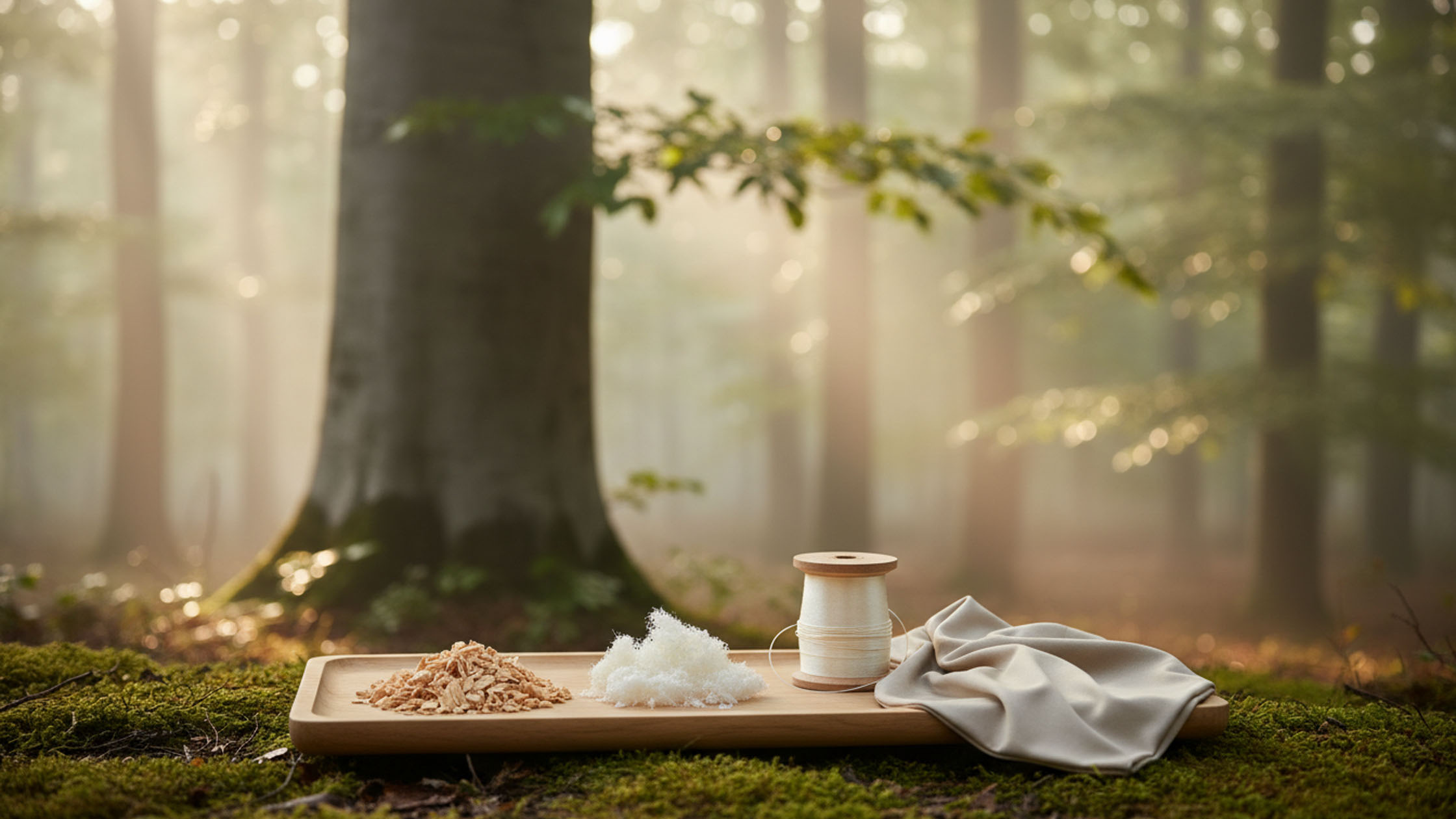
The foundation of the production of this material is nature, specifically beech wood. The process begins in forests, where beech chips are harvested and then treated to extract pure cellulose. This pulp is the base from which the yarn is made. Beech wood is a renewable and local raw material for many European producers, which shortens the transport route. In the factory, the cellulose is dissolved to form a thick liquid, which is then forced through special spinning nozzles with microscopic holes. It is at this stage that an infinitely thin thread is formed. Unlike cotton, which grows as a finished fiber, here man interferes with the form of the raw material, giving it the desired thickness and length parameters. Thanks to this, we obtain a fiber thinner than silk, which retains the natural origin of its building material.
Artificial, synthetic or natural fiber? Terminology Explained
There is a conceptual chaos in the world of textiles, which often misleads even experienced seamstresses. We need to clearly separate natural fibres such as linen or wool from synthetic fibres such as polyester, which is made from petroleum. Micromodal belongs to the third, fascinating category of artificial fibers of natural origin. This means that it is not plastic. Its base is one hundred percent plant-based, but the form of the fiber itself was given in laboratory and factory conditions. This is the so-called second-generation cellulose fiber. This is crucial information for the user, as this material retains all the advantages of the plants from which it is derived, such as breathability and biodegradability, while eliminating the disadvantages of raw natural fibers, such as roughness or uneven structure. You should not be afraid of the term "artificial fiber" in this context, as it refers to the method of thread forming, not to the chemical composition of the raw material.
Why do we call micromodal a semi-synthetic material?
The term semi-synthetic can be misleading, but it accurately reflects the nature of this material. This term is due to the fact that the use of chemical processes is necessary to transform beech hardwood into soft yarn. The cellulose must be liquefied, and this requires the use of solvents. However, in modern production processes, especially those patented by market leaders, these substances are almost entirely recovered and reused. The material is therefore a hybrid. It combines the best of nature, i.e. a biopolymer in the form of cellulose, with advanced chemical engineering, which allows the properties of the fiber to be modified. This allows engineers to control the thickness, strength and absorbency of the material, which is impossible with fibers taken directly from nature without chemical treatment. This combination of nature and science gives us the material of the future.
Understanding the origin of this fiber allows you to get rid of concerns about "plastic" properties and appreciate the advanced technology behind its production.
Micromodal properties – why will your skin love it?
The decision to choose a material for underwear or a summer dress is often made in a split second, at the moment of the first touch. Beech fibers win this first contact unquestionably, offering a sensory experience that is difficult to compare with anything else available on the mass market. However, it is not only a matter of the pleasure of touch, but a number of physicochemical features that affect the comfort of wearing throughout the day.
"Second skin" effect – extraordinary softness and smoothness of the structure
These fibers are much thinner than the standard modal, and their structure is perfectly smooth, devoid of scales characteristic of wool or unevenness typical of linen or cotton. This makes the knitted fabric made of this material fit on the body in an extremely smooth way, without irritating even the most sensitive nerve endings. It is often referred to as the second skin effect, because this material does not form a rigid coating, but follows every movement of the body. This is especially important in the case of clothing worn directly next to the body, such as nightwear, T-shirts or leggings. The smoothness of the surface of the fiber also gives this material a natural, noble shine that does not disappear after washing. For people with dermatological problems or sensory hypersensitivity, such surface characteristics are often the only acceptable choice, ensuring no abrasions and irritation.
Hygroscopicity and thermoregulation – the perfect choice for every season
One of the biggest advantages of beech cellulose is its ability to manage moisture. Studies show that this material can absorb fifty percent more moisture than high-quality cotton. Importantly, this moisture is instantly transported inside the fiber and then evaporated outside, which prevents the formation of a wet film on the skin, which cools the body. It works like natural air conditioning. In summer, the material gives a feeling of coolness and dryness, while in winter it helps maintain optimal body temperature without overheating. This thermoregulatory property is due to the microporous structure of the fiber, which allows air to flow freely. Unlike synthetics, which block gas exchange, here the skin can breathe freely, which drastically reduces the growth of bacteria responsible for unpleasant odors.
Resistance to shrinkage and fading – an advantage over classic cotton
Many cotton clothing users are familiar with the problem of stiffening of the material after repeated washing. This is due to the deposition of limescale from water on the uneven surface of cotton fibers and their pilling. Beech fibre has a smooth surface that prevents detergents and limescale from settling. This ensures that clothes remain soft for years without the need for strong softeners. In addition, this cellulose exhibits much higher dimensional stability. Properly sewn clothing does not shrink in the wash and does not lose its form, which is a common problem with viscose products. This fiber perfectly absorbs dyes and holds them deep in its structure, which means that black remains black and intense colors do not fade even after dozens of washing cycles, which makes this material a long-term investment.
These unique features make this material outclass the competition in the category of comfort and durability of use.
Micromodal vs other fabrics – a great comparison for conscious consumers
Choosing the right material in the maze of available options can be difficult, especially when we are looking for a compromise between luxury, price and ecology. To make an informed decision, it is worth comparing beech fiber with its most popular competitors on the textile market.
Micromodal or silk? Analysis of "vegan silk" in terms of price and luxury
It is often called vegan silk and this is not an exaggerated term. To the touch, both materials are slippery, cool and extremely delicate, but differences appear in use and production ethics. Natural silk is an animal fibre whose sourcing raises ethical controversies, and its care is demanding and expensive, often forcing you to use dry cleaners. Beech fibre offers a similar experience of luxury at a fraction of the price of silk, while being a fully plant-based material and easy to maintain at home. For the sewing person, beech cellulose is also more forgiving and stable when cutting than slippery silk, which reduces the risk of ruining the expensive coupon of the material. Although silk remains a status symbol, its beech counterpart wins in the category of everyday, practical luxury that does not require special treatment.
Duel with cotton – water consumption and durability of the material
Cotton has reigned supreme in our wardrobes for years, but its production is a huge burden on the planet, mainly due to the gigantic consumption of water and pesticides during crops. Beech fibers are produced from trees that do not require artificial irrigation or chemical pest control, making them a much more environmentally friendly alternative. From the user's perspective, the difference is palpable in durability. Cotton tends to peel and lose color, while beech fiber retains its smoothness and color saturation for much longer. While cotton may be cheaper to buy, its life cycle is shorter, making it less economical in the long run. Beech fiber is also more elastic and wrinkle-resistant than pure cotton, which makes clothes look neater throughout the day of wear.
What is the difference between micromodal and regular modal and viscose?
All these materials belong to the cellulose fiber family, but differ in production technology and fiber thickness. Viscose is the oldest technology, often fraught with problems with low wet strength and high shrinkage. Modal is an improved version of viscose, more durable and flexible. Micromodal, on the other hand, is the highest degree of evolution in this group. The thinnest fibers are used for its production, which translates into a much denser weave of knitted fabric. This makes the material even softer and at the same time more resistant to mechanical damage than the usual modal. It can be said that it is a premium version of the standard modal, offering a higher weight while maintaining an ethereal lightness. The difference is noticeable in the grip – the micro version is more flowing and silky than its older cousins.
These comparisons show that beech fiber occupies a unique position in the market, combining the best features of natural and synthetic materials.
How to sew a micromodal? A technical guide for tailoring enthusiasts
For a person who creates their own wardrobe, functional properties are one thing, but the preservation of the material under the foot of the machine is a completely different issue. This knitted fabric, due to its flowing structure and high flexibility, can be a challenge for beginners, but proper preparation guarantees success.
Selection of the right needles and threads for flexible cellulose fibers
The basic mistake when sewing this delicate knitted fabric is to use standard universal needles, which can cut through delicate fibers, causing holes and stitches along the seam. It is imperative to reach for Jersey, Stretch or Super Stretch needles with a rounded tip (the so-called ball) that pulls the fibers apart instead of piercing them. The thickness of the needle should be low, preferably in size 60, 70 or a maximum of 75, so as not to leave large puncture marks. When it comes to threads, modern polyester threads with increased elasticity, which will work together with the material, work best. Avoid old, cotton threads, which are stiff and can break when stretching the finished product. It is also worth paying attention to the quality of the threads, as cheap replacements can fray and break when sewing dense weaves of microfibers.
Cutting the flowing material – proven tricks to stabilize the fabric
This material is "alive" and can escape from under the scissors, so the cutting stage is crucial to maintain the precision of the cut. The best method is to cut on a large self-healing mat using a sharp circular knife, which eliminates the need to lift the material as is the case with scissors. Instead of traditional pins, which can deform the edge of the material, it is worth using tailor's weights to hold the paper pattern. If the material is extremely slippery and difficult to manage, a great trick is to use a stiffening spray (spray starch) on the edges of the knitted fabric. This will stiffen the fabric for the time of sewing, preventing it from rolling, and after the first wash, the center will be completely rinsed, restoring the knitted fabric to its original softness and flowing character.
The best stitches and edge finishes in the home workshop
A 4-thread overlock is ideal for connecting elements made of this knitted fabric, which simultaneously sews and secures the hem, while maintaining the elasticity of the seam. If you sew on a multi-function machine, forget about the straight stitch that will break the first time you put the garment on. Choose a narrow zigzag stitch or a dedicated elastic stitch (often labeled as a lightning stitch). It is also important to reduce the pressure of the foot so that the machine does not stretch the material during transport, which would result in a wavy seam. A double needle will work great for finishing the bottoms of dresses or sleeves, which creates an elastic zigzag on the bottom, and imitates a professional render finish on the top. An alternative is an aesthetic "raw" finish or trimming with a dense rolling stitch, which will add lightness and wavy character to the edges.
Mastering these techniques will allow you to create boutique-quality clothing in the comfort of your home.
Ecology and sustainability – is micromodal friendly to the planet?
In 2026, environmental awareness is no longer a trend, but a necessity. Consumers want to know if their fashion choices are contributing to environmental degradation. Beech fibre is often presented as a model of sustainable production in the textile industry.
Closed Loop Production and Raw Material Recovery
The largest manufacturers of this fibre use closed-loop technology, which is a revolution in the chemical industry. This means that the water and solvents used to process the cellulose are not discharged into the wastewater, but more than ninety-nine percent of it is recovered and sent back to the production cycle. This makes the process almost neutral for local water resources. This is a huge advantage over the production of viscose of the older generation, which was often associated with high environmental pollution. Modern factories also often use energy from biomass generated during woodworking, which further reduces the carbon footprint of the entire process. By choosing this material, you support technologies that minimize industrial waste.
Beech wood and FSC certificates – a guarantee of responsible forest management
The environmental friendliness of a material depends largely on the source of the raw material. Reputable suppliers of beech cellulose only use wood that is FSC (Forest Stewardship Council) or PEFC certified. This ensures that the wood does not come from ancient forests in danger of extinction, but from certified forest crops where sustainable management is carried out. Beech trees have an extraordinary ability to self-regenerate and reproduce through so-called natural renewals, which means that they do not need to be artificially planted after each felling. These forests grow mainly in Central Europe, which means a much shorter supply chain for the European consumer compared to cotton transported from Asia or South America.
Biodegradability of fibers – what happens to clothing after wear?
The problem of textile waste is one of the biggest challenges of the modern world. Synthetic clothing decomposes for hundreds of years, releasing microplastics. Clothes made of one hundred percent beech fiber are fully biodegradable and compostable. If such clothing ends up in a landfill or composter, it will decompose naturally within a few months, returning to the circulation without harming the soil. It is the closure of the product life cycle – from nature to nature. Of course, the condition for full biodegradability is the absence of synthetic admixtures, such as a large amount of elastane or polyester threads, so it is worth paying attention to the composition of the entire clothing, not just the main material.
The ecological profile of this fiber makes it one of the most responsible choices in today's fashion.
Caring for micromodal clothes – how to make sure they last for years?
Investing in a high-quality material requires proper treatment so that it retains its unique properties for a long time. Although beech fiber is durable, its delicate structure does not like aggressive washing methods.
Optimal washing temperature and selection of detergents
The golden rule of caring for this knitted fabric is washing at low temperatures. Thirty to forty degrees Celsius is a range sufficient to remove dirt and at the same time safe for the fibre structure. High temperature can cause irreversible damage to the weave and loss of silky luster. Washing powders should be avoided, the granules of which can act as sandpaper on the delicate surface of the material. A much better choice are liquids for washing delicate fabrics. It is also important not to overload the drum of the washing machine – this material needs freedom so that water can rinse it thoroughly. Excess clothes in the drum increase friction, which can lead to mechanical damage to the surface of the knitted fabric.
Drying and ironing – how to avoid deformation of delicate fibers
The biggest enemy of this material is the tumble dryer. Intense spinning and hot air can shrink the garment and destroy its elasticity. The safest method is flat drying, which prevents the wet, heavier material from stretching under its own weight. If you need to hang clothes, use wide hangers or hang them halfway down the length on the thick dryer bar. When it comes to ironing, this material is quite wrinkle-resistant, often it is enough to shake it off before hanging it. However, if ironing is necessary, do it on the left side, setting the iron to a low temperature (mode for silk or synthetics) or use a steamer, which is the safest option for such noble fibers.
Proper care will make your favorite blouse or dress look like new even after many seasons.
FAQ – Frequently Asked Questions About Micromodal In 2026
Many myths and questions have grown up around this material. Below, we answer those that most often appear in discussions on tailoring forums and in inquiries to fabric stores.
Is micromodal hypoallergenic and safe for sensitive skin?
Yes, it is one of the most recommended materials for allergy sufferers and people with atopic dermatitis. Its smooth surface does not cause mechanical irritation, which is crucial for inflammation of the epidermis. In addition, no toxic pesticides are used in the production process that could remain in the fibres, as is the case with conventional cotton. Its bacteriostatic properties, resulting from the rapid removal of moisture, create an environment unfriendly to the growth of mites and bacteria, which further increases the safety of use by people with sensitive immune systems.
Do micromodal clothes stretch when worn?
Cellulose fiber itself is not as elastic as rubber, but the way the knitted fabric is braided gives it its natural stretch. However, pure cellulose can tend to push out slightly in sensitive areas, such as elbows or knees, after being worn for a long time. Therefore, manufacturers of high-quality knitted fabrics often add a small admixture of elastane (usually two to five percent). Such a mixture guarantees that the garment will fit perfectly to the figure, but will return to its original shape after removal. When buying, it is therefore worth checking the composition and choosing options with elastane if you want a perfect fit.
Why is micromodal more expensive than regular viscose?
The difference in price results from the technological advancement of the production process and the quality of the raw material used. The production of micro fibers requires more precise machinery and tighter control of chemical parameters than the production of standard viscose. In addition, ecological processes such as solvent recovery or wood certification generate additional costs that do not occur with cheap, mass production of viscose in countries with low environmental standards. A higher price is therefore a reflection of higher quality, better performance parameters and care for the natural environment. It is an investment in a material that will last much longer than its cheaper counterparts.