- today
- label News
- favorite 0 Likes
- remove_red_eye 19746 Visits
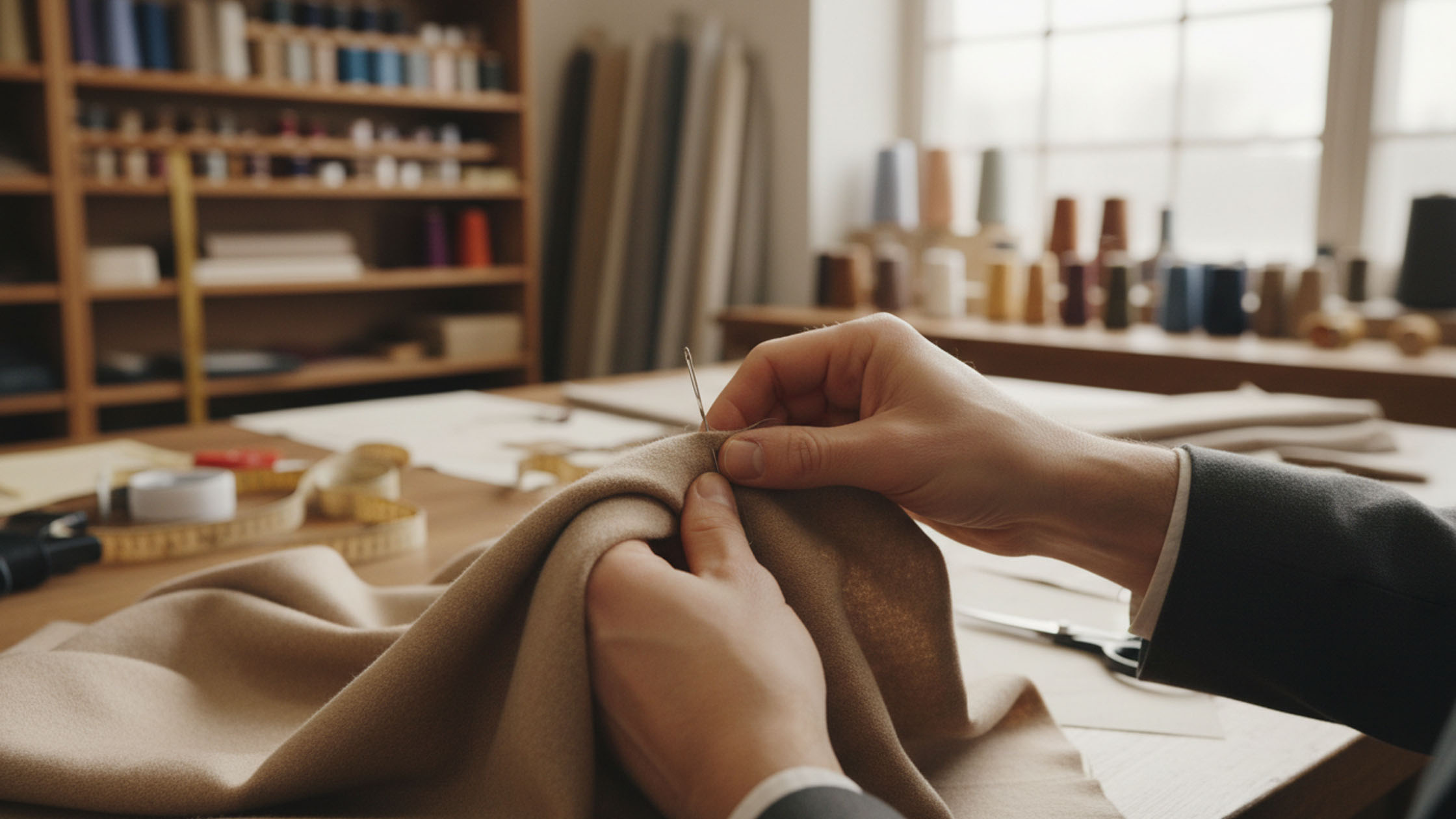
The key step before sewing: preparing and decatizing the cashmere fabric
Before your scissors touch the luxurious fabric, you need to prepare it properly. This stage is absolutely fundamental and determines the final appearance and durability of the sewn garment. Omitting it may result in irreversible shrinkage of the finished design after the first wash. This process, called decatation, is designed to induce controlled contraction of the fibers, so that the fabric stabilizes its dimensions.
Why is the decatation of cashmere necessary?
Cashmere, as a natural protein fiber derived from cashmere goats, has a natural tendency to shrink when exposed to moisture and heat. Imagine spending hours precisely cutting and sewing a perfectly fitting coat that becomes a size too small after the first contact with moisture or dry cleaning. Decantization is your insurance against such a disaster. This process "tames" the fibers, forcing them to shrink before cutting. Thanks to this, you can be sure that the sewn garment will retain its shape and dimensions for years, and you will avoid disappointment and loss of valuable material.
How to safely decatize cashmere at home?
The safest method of decatizing cashmere at home is to use steam. Avoid fully submerging the fabric in water, which could lead to felting and distorting it. Hang the fabric on a hanger in the bathroom and turn on the hot shower by closing the door. Allow the water vapor to penetrate the fibers for about 20-30 minutes. Alternatively, you can use an iron with a strong steam ejection function or a clothes steamer. Keep the appliance a few centimetres away from the fabric, never pressing the soleplate directly against the surface of the iron. After steaming, allow the cashmere to dry completely in a hanging position or laid flat.
Choosing the perfect cashmere sewing needle – what thickness and type to choose?
Choosing the right needle is one of the most important factors affecting the quality of the seams and the protection of the delicate structure of cashmere. Using a needle that is too thick or blunt can lead to unsightly holes, pulling delicate threads, and even permanent damage to the fabric. Think of the needle as a precision surgical tool that needs to penetrate the material smoothly rather than brutally pierce it.
What type of needle is best for cashmere?
Microtex or Universal needles are best for sewing cashmere. Microtex needles are characterized by a very sharp and slender tip, which is designed for precise sewing of densely woven and delicate fabrics. They minimize the risk of damage to the fibers by creating a clean and even seam. Universal needles are a good, versatile choice if you don't have access to Microtex needles. Remember to always start the project with a new needle. Even a slightly blunt tip can cause problems that will be visible on such a noble fabric.
Optimal needle thickness for different types of cashmere
The thickness of the needle, marked with European (e.g. 70, 80) and American (e.g. 10, 12) numbers, must be matched to the weight of your cashmere. For thinner, more airy cashmere fabrics, a 60/8 or 70/10 needle thickness will be the ideal choice. This will ensure minimal interference with the structure of the material. For thicker, coat varieties of cashmere, which are often a mixture with wool, it is safer to reach for an 80/12 thick needle. A needle that is too thin could break when sewing multiple layers of thick fabric, while a needle that is too thick would leave holes visible.
Threads that will love your cashmere: silk, cotton or polyester?
The choice of thread is just as important as the choice of needle. The thread is an integral part of the seam and must work with the fabric and not work against it. The wrong thread can be too weak and break, or too strong and cut through the delicate cashmere fibers during stress. Investing in high-quality threads is a guarantee of durability and aesthetics of your project.
Why is silk thread a premium choice?
Silk threads are considered the best choice for sewing cashmere and other luxury wool fabrics. Silk, like cashmere, is a protein fiber, which makes both materials have similar elasticity and behave in a similar way. Silk threads are extremely strong in relation to their thickness, yet smooth and flexible, allowing them to blend beautifully into the fabric. They create flat, elegant seams that do not stand out when ironed. It is an ideal choice for visible seams, stitching or sewing holes, where every detail counts.
When is it worth reaching for cotton or polyester threads?
High-quality mercerized cotton threads are a very good alternative to silk. They are strong, have a low gloss and work well with natural fibers. Choose threads with a smooth finish to avoid pilling. General-purpose polyester threads can also be used, but choose those from reputable manufacturers. They are very durable and available in a wide range of colors. However, make sure that the thread is not too "sharp", as it could damage the delicate cashmere fibers in the long run. Always make a test seam on a piece of fabric to assess how the thread behaves in combination with your fabric.
How to set up a sewing machine? Optimal stitch length and thread tension
Proper positioning of the sewing machine is crucial to achieve a professional result. Cashmere does not forgive mistakes, and poorly selected parameters can lead to wrinkling of seams, looping threads or stretching of the fabric. Before you start sewing the actual design, take the time to make a few samples on the remnants of the fabric.
Stitch length setting for a perfect seam
The length of the stitch should be matched to the thickness of the cashmere. For thinner and medium thickness fabrics, a standard stitch length of about 2.5mm will be suitable. For thicker, mantle varieties of cashmere, it is worth increasing the stitch length to 3.0 mm or even 3.5 mm. The longer stitch prevents the material from "sticking" into the stitch plate and creates a more aesthetically pleasing, flat seam on thick fabric. Too short a stitch on thick cashmere can lead to unnecessary perforation of the material and weakening of its structure in the seam line.
How to adjust the thread tension to avoid wrinkling?
Ideal thread tension is one where the top and bottom threads meet exactly in the middle of the stitched layers of fabric, creating an identical, flat stitch on both sides. In the case of cashmere, it is often necessary to slightly reduce the tension of the upper thread. Too high tension can cause the seam to wrinkle and unsightly tightening of the delicate fabric. Start with a standard setting (usually 4 or 5) and perform a test stitch. If the material is wrinkling or you see loops of bottom thread on top, gradually reduce the tension. Be sure to test each change on a piece of material.
Secrets of perfect cashmere ironing – how not to destroy the luxurious fiber?
Ironing is an integral part of the sewing process, which shapes and fixes the form of the garment. In the case of cashmere, this is an activity that requires special care. Direct contact of the hot soleplate with delicate fibers can lead to flattening, shining and even burning. The correct ironing technique will emphasize the beauty of the fabric and give your project a professional finish.
Ironing technique through a protective cloth
Never iron cashmere directly. Always use a protective cloth, also known as a press squeeze. It can be a piece of pure, white cotton, linen or a special Teflon iron foot. The cloth creates a barrier that dissipates heat and protects the cashmere fibers from direct exposure to high temperature. Set the iron to the wool program or medium temperature and always use the steam function. The steam helps to loosen the fibers and makes it easier to form seams without the need for strong pressure. Iron on the left side of the fabric to further minimize the risk of shine.
How to properly iron cashmere seams?
When sewing, iron each seam as soon as it is made. First, iron the seam flat as it was sewn to "embed" the threads into the fabric. Then spread the accessories on the seams and gently iron them to the sides, using the tip of an iron and a protective cloth. Avoid moving the iron back and forth. Instead, use the technique of applying and lifting the iron, gently pressing it in each place for a few seconds. To form darts, sleeves or collars, use special tailor's pillows (the so-called presses or hams), which allow you to maintain the three-dimensional shape of the elements.
Related Products