- today
- label News
- favorite 2 Likes
- remove_red_eye 14380 Visits
Does every cashmere pill? The Truth About the Nature of Noble Fibers
Many customers considering buying luxury fabrics are afraid of the pilling phenomenon. We often give up on dreaming of a soft sweater for fear that after a few wear it will lose its aesthetic appearance and become covered with unsightly balls. However, you need to know that pilling wool is not a manufacturing defect or proof of poor quality material. This is a completely natural physical process resulting from the structure of the yarn itself. Understanding the mechanisms that occur in the structure of fibers will allow you to look at this process from a different perspective and enjoy your clothes for years to come. Noble cashmere requires some knowledge and patience from the user, but it rewards with incomparable thermal comfort and softness.
The physics of pilling – why do balls form on the sweater?
The formation of fine balls on the surface of the knitted fabric is a direct result of the loose structure of the yarn. Cashmere fibers are extremely thin and delicate, and to achieve that famous fluffiness and softness, they are not twisted as hard as, for example, cotton or sheep's wool with a thicker weave. During use, the shortest and loosest hairs slowly slide out of the weave onto the surface of the material. Under the influence of friction on other layers of clothing or on our body, these loose ends begin to get tangled together, forming characteristic knots. This is an inevitable phenomenon in the initial phase of wearing a new thing, as any natural yarn must get rid of excess loose fibers that have not been permanently anchored in the thread structure during the spinning process. The physics of this process is simple and applies to even the most expensive products available on the market.
The myth of low quality – does pilling indicate a defect in the product?
There is a common belief that if a sweater pills, it means that it was made of a material of an inferior quality or with an admixture of synthetics. In the case of synthetic fibers, pilling is actually problematic because the balls are hard and very difficult to tear off from the surface of the material, which often ends up damaging the weave. In the case of natural cashmere, the situation is completely different. The appearance of a delicate fuzz and balls in the first weeks of use testifies to the naturalness of the raw material. Synthetic additives such as polyamide are often added precisely to artificially keep the fibers in check and prevent pilling, but this comes at the expense of softness and thermoregulatory properties. Therefore, when you see the delicate balls on your new sweater, you should not panic or advertise the product. This is a signal that you are dealing with a living, natural fiber that behaves according to its nature.
The process of yarn stabilization – when does cashmere stop "peeling"?
The good news for all lovers of wool clothes is that the pilling process does not last forever. It is most intense at the very beginning of use, when the material gets rid of the loosest, shortest hairs. This phenomenon is often called yarn stabilization. After the first few washes and regular removal of the resulting pills, the fibers begin to form and weave together more permanently. Over time, the number of balls formed drastically decreases, and the material acquires a noble smoothness. Usually, after three or four washing and care cycles, the situation calms down. If you survive this initial period and take a moment to properly maintain, your sweater will stop "peeling" and will look impeccable for the next seasons. Patience in the first weeks is the key to many years of satisfaction from wearing this unique fabric.
To sum up this part, pilling is a natural stage in the life of any cashmere wool product and disappears with time.
Prevention and babywearing, or how to reduce cashmere pilling on a daily basis
While it's not possible to completely eliminate pilling, the way we use our clothes has a huge impact on the intensity of the phenomenon. Proper habits can significantly extend the life of the fibers and make the need to remove pills appear much less frequently. Treating noble fabrics with due attention does not require much effort, but only a change in a few habits. Conscious wearing is the best prophylaxis that allows you to preserve the original structure of the material and its unique properties. Remember that the durability of clothing is determined not only by the quality of the raw material, but above all by the daily culture of its use.
The golden rule of 24 hours – why does wool need to "rest" after putting it on?
Natural fibers, unlike synthetics, need time to regenerate. Cashmere is a resilient fiber that stretches and deforms when worn under the influence of body movements and moisture released by the skin. That is why it is so important not to wear the same wool sweater day after day. After a full day of wearing, the garment should "rest" for at least twenty-four hours. During this time, the fibers have a chance to return to their original shape, evaporate the accumulated moisture and regain their elasticity. Continuous wear without interruption weakens the structure of the yarn, which makes it more susceptible to pulling, cracking and, consequently, more intense pilling. Give your wardrobe time to breathe, and it will repay you with much better condition and appearance for a long time.
Effects of mechanical friction – beware of handbags, seat belts and jewellery
The biggest enemy of delicate knitted fabrics is friction. It is the mechanical rubbing of the surface of the material against rough elements that causes the fibers to be pulled out and balls to form. Pay close attention to the places where your clothing comes into contact with other items. A handbag strap worn on the shoulder, a rough jacket lining, seat belts in the car or sharp-pointed jewelry are the most common causes of local pilling of sweaters. You'll often notice that the balls only form on one side of your hip or on your shoulders – it's a clear sign that your purse or backpack is the culprit. If you are planning an active day or you know that you will be carrying a heavy bag, it is better to give up delicate cashmere on this day. Avoiding unnecessary friction is the simplest and most effective method of prevention, which protects the structure of the material from mechanical damage.
Hand wash or the modern "wool" program – which protects the structure of the fiber better?
Many of us are afraid to wash wool, assuming that water is harmful to it. This is wrong thinking. Cashmere fibers love water, which helps them moisturize and get back in place. Regular, gentle washing helps to remove debris that acts as sandpaper on the fibers, accelerating pilling. Hand washing in lukewarm water is safe, as long as you don't rub and wring out the fabric. However, modern washing machines equipped with certified wool programs often cope with this task better than human hands. The constant, low temperature and minimal drum movements minimize the risk of felting, and proper spinning removes excess water more effectively than squeezing into a towel. It is important to use specialized wool washing liquids that contain lanolin, which protects the fibers from drying out and breaking.
Proper clothes rotation, avoiding friction and regularly moisturizing through washing are the foundations that will keep your clothes in perfect condition.
Safe pilling – an overview of tools and techniques
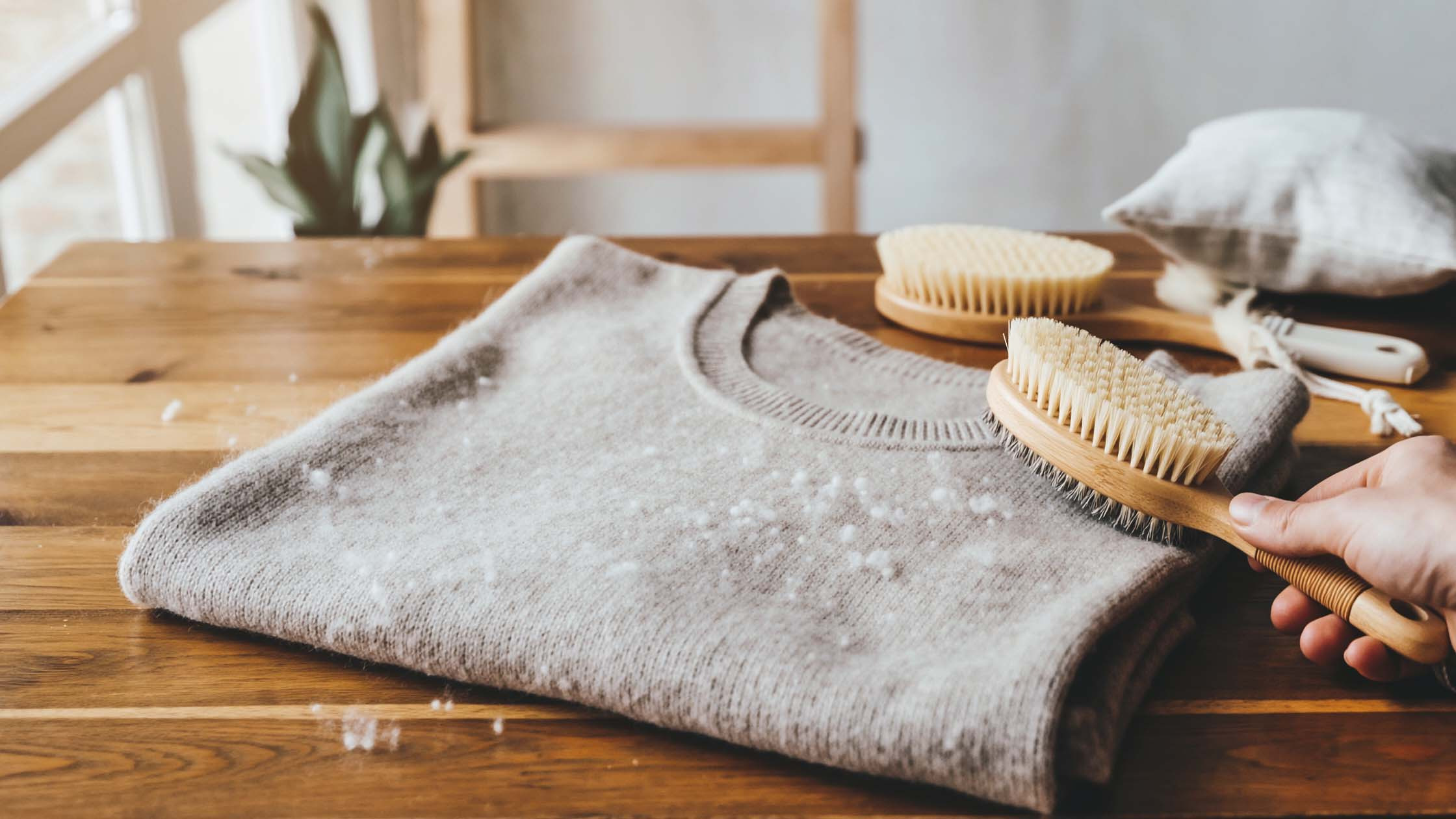
Once the first balls appear on your favorite sweater, it's time to intervene. It is crucial to carry out this process wisely and with the right tools. Improper removal of the pilling can lead to irreversible damage to the plexus and even the formation of holes. The market offers many accessories dedicated to wool care, from straight combs to advanced electric shavers. The choice of the right method depends on the thickness of the weave and your skill. Remember that the goal is to remove only those fibers that are already sticking out from the surface, without disturbing the structure of the knitted fabric itself. Regular "shaving" of a sweater is a normal part of caring for a wardrobe made of natural materials.
Cashmere comb vs. electric clothes shaver – what to choose?
The choice between a manual comb and an electric shaver depends mainly on the type of knitted fabric you are dealing with. A special cashmere comb is a precise and delicate tool. It is perfect for thin, delicate sweaters with a smooth weave. It allows for full pressure control and minimizes the risk of thread pulling. It is a safer choice for beginners and for the noblest varieties of wool. An electric clothes shaver, on the other hand, is irreplaceable for thicker weaves and larger surfaces. It works faster and removes large pills more effectively. However, you should choose high-quality models that have protection against too deep cutting. Cheap shavers can have uneven blades that, instead of cutting the balls, will tear out the fibers, worsening the condition of the garment. It is worth having both of these tools at home and using them interchangeably depending on your needs.
Step-by-step instructions for shaving a sweater – how to remove balls and not make holes
To safely remove pills, you need to prepare a suitable workplace. Spread the sweater on a flat, hard surface, such as a table or ironing board. Never remove the balls when you are wearing the garment or when you are holding it in the air, as the tension of the material is then uneven, which risks jamming. If you are using a comb, pull the piece of fabric slightly with one hand and comb the knitted fabric along the weave with a firm but gentle movement with the other. For an electric shaver, make slow, circular motions without pressing the device too hard against the fabric. Let the blades do the work. Focus on the most pilled areas, usually under the armpits and on the sides. After the treatment, it is worth combing the sweater with a soft clothes brush to remove the remnants of the cut fibers and smooth the surface.
What absolutely not to do? The most common mistakes during care
The biggest and, unfortunately, the most common mistake is to tear off the balls manually. When you see a pill, the natural reflex is to want to pull it with your fingers. Never do this. By pulling the ball, you pull out more healthy fibers from the weave, which will soon become tangled again, creating an even bigger problem. What's more, you can disrupt the structure of the thread and lead to a hole. Another mistake is to use regular scissors or razors to shave your beard. They are too sharp and do not have the right distances, which means that one careless stroke can cut the warp thread. Also, avoid shaving the sweater right after washing it while it is still damp. Wet fibers are more stretchy and prone to damage. Always carry out care treatments on completely dry material.
By using the right tools and techniques, you can restore the shine of your clothes without the risk of damaging them.
Storage and protection against pests – the secret to the longevity of the fabric
Even the best-cared for cashmere can be destroyed if we do not take care of its proper storage, especially outside the autumn and winter season. Natural protein fibers are unfortunately a delicacy for clothing moths, which can ruin an entire collection of sweaters in a short time. In addition, the way you arrange your clothes in your closet has a direct impact on their style. Wool is a plastic material that is easily deformed under the influence of gravity. Taking care of the conditions in the wardrobe is just as important as washing or shaving clothes. Proper wardrobe preparation is an investment that protects your capital invested in high-quality clothing.
Cedar, lavender and modern pheromones – effective ways to treat clothing moths
Clothing moths are attracted not so much by the wool itself, but by the smell of sweat, epidermis and food residues left on clothes. Therefore, the basic rule of protection is to hide only clean and washed things in the closet. Cedar wood and lavender are perfect as natural repellents. The essential oils contained in them are irritating to moths and effectively discourage them from feeding. It is worth placing bags with dried lavender or cedar blocks in the closet, remembering to replace them regularly or refresh them with sandpaper when the smell has stalled. To be sure, it is also worth monitoring the wardrobe with pheromone traps. They attract male moths, which allows you to quickly detect the presence of pests before they have time to lay eggs on your favorite sweaters. This is a simple and safe method of prevention.
Fold or hang? How to prevent deformation of the cut in the off-season
The answer to this question is unambiguous: we never hang knitwear on hangers. Cashmere, especially the looser weave, is relatively heavy. Under the influence of its own weight, the sweater hanging on a hanger will begin to stretch in the shoulders, creating unsightly protrusions, and the entire cut will be elongated and deformed. The only proper way to store them is to fold your clothes into cubes and arrange them on shelves. However, remember not to stuff them too tightly. The fibers need a little air to keep their fluffiness. If you're hiding your clothes for the summer season, it's best to place them in cotton or linen covers that provide air circulation while protecting against dust and pests. Avoid plastic and vacuum bags, as lack of ventilation can lead to dampness and yellowing of the delicate fibers.
Proper storage is a guarantee that when you take them out of the closet in the next season, your clothes will look as good as they did on the day of purchase.
Frequently Asked Questions About Cashmere Properties (FAQs)
Many myths and questions have grown around cashmere that often stop customers from buying. As fabric experts, we encounter doubts every day about the comfort of wearing or changes in the material during use. We want to dispel these doubts based on facts and many years of experience in the textile industry. This knowledge will allow you to consciously choose products of the highest quality and enjoy their full use.
Does cashmere "bite" people with sensitive skin?
This is one of the most frequently asked questions by people with sensitive skin. Real, high-quality cashmere should not bite or irritate the skin. Its fibers are many times thinner than a human hair and have a smooth cuticle structure, which makes them extremely delicate to the touch. The biting sensation is characteristic of thicker sheep's wool, whose fibers are stiffer and can prick the epidermis. Cashmere is a hypoallergenic material and is often recommended even for babies and people with dermatological problems. However, if you feel discomfort wearing a sweater marked as cashmere, it may indicate a low-quality raw material that contains thicker goat top hair, or an admixture of other, cheaper wool.
Why does the sweater become softer with each wash?
Many users notice that their cashmere clothes become more and more pleasant to the touch over time. This is a phenomenon that distinguishes noble natural fibers from synthetics, which lose their quality with each wash. Water and gentle detergents cause the fibers to loosen and "puff" them slightly, which in the textile industry is called "blooming" of wool. With each wash, the fibers open a little more, which increases their volume and softness. This is proof that cashmere is a material that refines with age, as long as it is treated with proper care. Your sweater may be even more comfortable after a year or two than on the day the couriers brought it.
Related Products