

- today
- label News
- favorite 0 Likes
- remove_red_eye 23539 Visits
Wedding trends for spring 2026 – what are brides choosing?
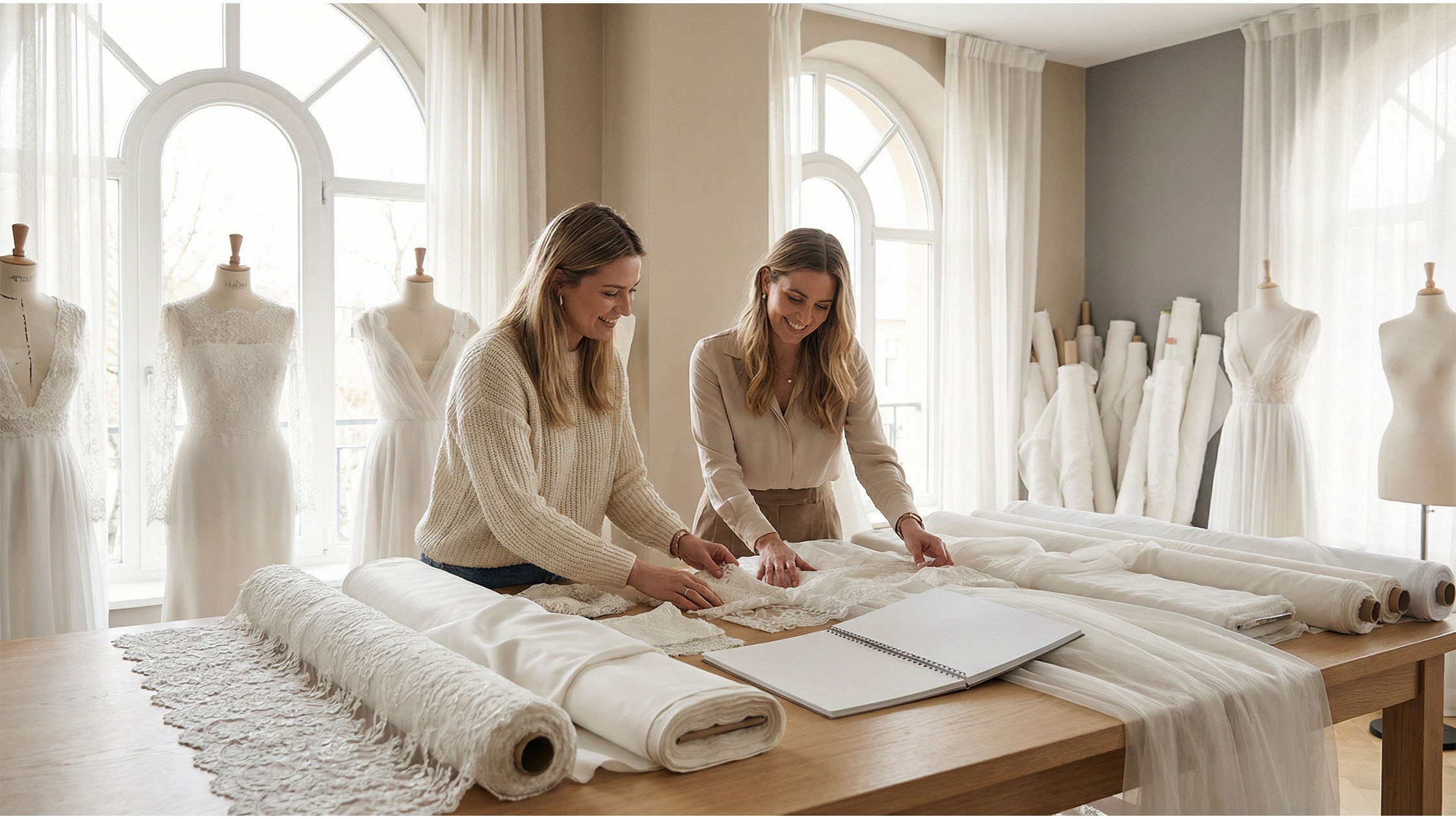
The 2026 spring wedding season brings a clear shift in the approach to ceremonial fashion, where aesthetics give way to ethics and the quality of the raw material. Future brides are increasingly turning away from ready-made options from the high-street chains, opting for made-to-measure sewing, which allows full personalisation and a choice of top-class materials. We are seeing a move away from opulence towards conscious minimalism, where the main role is played by fine wedding dress fabrics with an impeccable weave.
A return to nature and Quiet Luxury – why does a fine fibre composition play the main role?
The Quiet Luxury movement, which dominated the catwalks in previous years, has taken firm root in the bridal industry in 2026. Brides are looking for authenticity, which only natural fibres can guarantee. Polyester and cheap synthetics are being displaced by silks, lightweight wools and premium viscoses. Customers are increasingly well informed and can appreciate the difference in the handle of a material and how it behaves in movement. Choosing a fine composition is not only a matter of prestige but above all of the comfort and durability of the gown. A fabric of natural origin breathes, works with the body and ages gracefully, which matters enormously to women who plan to keep the dress as a memento or to remake it after the wedding in the spirit of zero waste.
Structured jacquards and 3D effects – a modern alternative to classic embellishment
This season, smooth surfaces are giving way to intriguing textures. Designers and seamstresses are increasingly reaching for jacquards with raised weaves, which create three-dimensional effects without any need to sew on beads or sequins. Materials of this kind are an ornament to the gown in themselves, removing the need for extra jewellery or complicated updos. Floral patterns embossed on the fabric or geometric mikado weaves give an outfit a modern, architectural character. It is the ideal solution for women who value minimalism of form but expect a unique character from their gown. A structured fabric masks any imperfections of the figure very well and holds its shape superbly, which makes it a favourite of the spring collections.
Shades of the 2026 season – does classic white still dominate over cream and powder pink?
An analysis of our customers' choices points to the definitive twilight of the era of snow white, which is often unflattering for Slavic complexions. In spring 2026 broken, warm, enveloping shades reign. The most popular are cream, off-white and delicate ivory tones, which naturally brighten the complexion. Subtle pastels are also making bolder inroads, including powder pink, peach and even a washed-out blue, especially in the under-layers of tulle gowns. Such a palette brings out the depth of lace and embroidery, which often lose their definition against a pure white background. Matching the shade of the fabric to the complexion has become as important as choosing the style, and brides readily use samples to check the colour in daylight.
Choosing the right material is the foundation on which the whole project of the dream gown rests.
What should guide you when choosing fabric for a wedding dress?
The decision to buy a particular material should not rest on visual qualities alone but must take a number of practical factors into account. How the fabric will behave during many hours of celebration depends on its weight, its weave and the raw material it is made from. A professional approach to made-to-measure sewing requires analysing the conditions in which the ceremony will take place and the bride's expectations regarding comfort.
Season and thermal comfort – the best materials for an outdoor spring wedding
Spring is a capricious time of year, so the choice of fabric must guarantee thermal comfort both in full sun and on a cooler evening. For outdoor weddings, which are growing in popularity, breathability and hygroscopicity of the material are key. Here natural silks and high-grade viscoses prove unbeatable, drawing moisture away from the body. Avoid heavy, synthetic satins, which can act as an impermeable barrier and lead to overheating. Instead it is worth choosing silk crêpe or muslin, which allow air to circulate. If the wedding takes place in early spring, fabrics with a denser weave, such as mikado or jacquard, are a good solution, giving adequate protection from the wind without losing any elegance.
Reception style and the base of the gown – what suits a glamour style and what a rustic barn?
The character of the reception determines the choice of base material, because the gown must correspond with its surroundings. A glamour-style wedding, held in palatial interiors, calls for fabrics that reflect light and build prestige, such as silk satin, taffeta or richly decorated lace with sequins. A rustic or boho celebration, held in a barn or a garden, in turn dictates matte materials with a natural, sometimes even slightly raw structure. Cotton laces, silk muslins or crêpes with a sandy texture will work ideally here. Understanding the context of the venue helps avoid a stylistic clash. A heavy, shiny satin will look unnatural in a woodland setting, while an airy cotton batiste may prove too modest for a ballroom with crystal chandeliers.
Style and construction – which fabrics will hold an architectural shape and which will flow softly?
Every tailoring project needs a different raw material to achieve the intended visual effect. If the bride's dream is a gown with an architectural, rigid form and clearly defined lines, you need wedding dress fabrics with high stiffness, such as mikado, taffeta or technical organza. These materials allow you to model three-dimensional ruffles, stand-up collars and wide skirts that will not collapse under their own weight. On the other hand, Grecian-style gowns, which flow close to the body and emphasise the figure, require fabrics that are substantial yet pliable, such as cady or bias-cut silk satin. An attempt to sew a flowing gown from stiff jacquard will end in failure, as will an attempt to build a corset structure from limp chiffon without suitable stiffening.
Understanding the physical properties of materials leads us to the queen of all fabrics.
There is only one queen: natural silk and its exclusive varieties
Silk has remained a synonym of luxury in bridal fashion for centuries and, despite the development of textile technologies, no synthetic is able to fully reproduce its unique qualities. Its thermoregulating properties and unrepeatable handle make it the first choice for the most demanding brides and for seamstresses who value working with the highest-quality raw material.
Italian silk versus synthetic substitutes – how to recognise premium quality and avoid disappointment?
Telling real silk from high-end polyester can be difficult for an untrained eye, but it is crucial for wearing comfort. Italian silk is characterised by a subtle, uneven sheen (as opposed to the harsh, plastic glare of synthetics) and by the fact that it quickly takes on body temperature. The surest test is the burn test, which can be done on a small scrap of a sample. Real silk burns slowly, smells like burnt hair and leaves a crumbly ash, whereas polyester melts, forming a hard bead and giving off a chemical smell. An investment in silk is a guarantee that the material will not build up static and will let the skin breathe, which is impossible to achieve with synthetic fabrics, even those sold as synthetic silk.
Silk crêpe (cady) – matte elegance and a perfect fit to the figure
Cady, also known as kady or Moroccan crêpe, is one of the most sought-after fabrics in modern bridal tailoring. It is a double-weave material, which makes it substantial, heavy and exceptionally elegant. Its greatest advantage is a matte or semi-matte surface and the ability to fall flawlessly on the figure. Cady does not cling to the body ruthlessly like thin satin but wraps it softly, masking minor flaws. It is an ideal choice for gowns with a minimalist cut, simple column dresses and modern wedding suits. Thanks to its structure it is also relatively crease-resistant, which brides appreciate during celebrations lasting many hours.
The noble sheen of silk satin – a choice for demanding brides
Silk satin is a proposal for women who want to shine on their wedding day in the literal sense of the word. Its smooth, mirror-like surface reflects the light superbly, giving the outfit three-dimensionality and depth. It is an extremely demanding fabric for both the seamstress and the figure, because it ruthlessly exposes any construction error and imperfection of the body. However, a properly cut silk satin gown, especially one sewn on the bias, gives the effect of liquid gold flowing over the body. It is worth remembering that satin is a delicate material prone to snagging, so it requires particular care when worn, but the visual effect it offers is worth the risk.
For lovers of more defined forms, shape-holding fabrics are an alternative to flowing silks.
Structure and dignity: mikado and taffeta in a modern version
When the design of a gown involves a lot of volume, spectacular folds or geometric details, you need to reach for materials with a high weight and a stiff handle. Mikado and taffeta are enjoying a renaissance, becoming the base for the most fashionable princess-cut and A-line gowns of this season.
Mikado fabric – why is it number one for A-line and princess-cut gowns?
Mikado is a fabric of Japanese lineage that has revolutionised bridal fashion. Made from silk or a blend of silk and high-grade synthetic fibres, it is characterised by a delicate ribbing and a subtle sheen. Its greatest asset is stiffness combined with relative lightness. As a result, a voluminous gown made of mikado does not need many layers of heavy petticoats to keep its shape. This material works superbly with light, giving the outfit a sculptural character. It is the absolute favourite for creating gowns with clean lines, deep pleats and architectural elements such as bows or peplums.
Silk taffeta and its characteristic rustle – a proposal for bold designs
Taffeta is a material for women with character who like to be heard before they are noticed. Its trademark is a distinctive, "papery" handle and a characteristic rustle with every movement. Taffeta is a plastic material that can almost be sculpted in the hands, which allows complex draping and updos that will not drop during the wedding. It comes in plain and crushed versions, which gives designers wide scope. It is worth remembering, though, that taffeta is a material that creases easily, which is part of its nature and charm and not a flaw. It works ideally in avant-garde designs and historical styling.
How to sew stiff fabrics? Tips for seamstresses and designers
Working with fabrics such as mikado or taffeta requires specific skills and tools from the seamstress. Because of the dense weave, these materials do not forgive mistakes – every needle puncture leaves a permanent mark. That is why it is so important to fit the pattern precisely on a test fabric (cotton calico) before cutting the actual material. Use very sharp, fine needles (Microtex type) and high-quality silk or polyester thread to avoid puckered seams. Stiff fabrics also require suitable pressing – always through a cotton cloth, to avoid making the material shiny. Seams in such constructions often need pressing open flat and stiffening with interfacing so that they keep a perfect line.
Materials dedicated to the boho style set us completely different challenges.
Romantic lightness: lace, tulle and muslin for the boho style
The boho and rustic styles continue to inspire brides who want to feel free and ethereal on their wedding day. The key to success here is layering and the transparency provided by delicate laces, misty tulles and airy muslins.
French lace and guipure – a review of the most fashionable floral patterns for 2026
In 2026 we are moving away from heavy, baroque patterns towards lightness and inspiration from wild nature. The most fashionable French laces (Chantilly type) are characterised by extraordinary precision of workmanship and the delicacy of a spider's web. The dominant patterns are fine tendrils, wildflowers and leaf motifs that look as if they are "climbing" the gown. Guipures, laces with a raised structure and no mesh background, are used to create striking appliqués on bodices and sleeves. Modern brides often choose to combine different kinds of lace in one design, which creates a unique, three-dimensional composition. It is important that the lace is soft and pleasant to the touch, since it often has direct contact with the skin.
Silk tulle versus synthetic – how to get a "mist" effect without stiffness?
Tulle is a material that in the popular imagination is associated with stiff, scratchy petticoats, yet in its premium version it shows a completely different face. Silk tulle is a luxurious material, extremely soft, fluid and delicate, which creates a mist-like effect around the figure. It is ideal for veils and outer layers of skirts that are meant to flow in movement. Synthetic tulle, although cheaper, is often stiffer and less pleasant to the touch, yet modern high-quality nylon tulles are getting better and better at imitating the properties of silk. The choice depends on the desired effect – if the gown is to be a "little cloud", we choose silk; if we need volume and structure, a high-end synthetic will be better.
Airy muslin and organza – ideal solutions for dynamic dancing gowns
For brides who plan to dance all night, the best choice will be wedding dress fabrics with plenty of movement, such as muslin and organza. Silk muslin is a semi-transparent, matte and extremely soft material that works beautifully in movement, rippling with every step. It is a classic in empire-line gowns and airy boho designs. Organza, in turn, being stiffer and more sheer, is suitable for creating modern, transparent sleeves or layered skirts that reflect light in a subtle way. Both materials, however, require suitable linings to provide full coverage in strategic places.
And speaking of what is underneath, we cannot overlook the key role of layers invisible to the eye.
The invisible heroes of comfort: linings and under-layers
What is closest to the body has the greatest effect on the bride's wellbeing. A common mistake is to invest in an expensive outer fabric and economise on the lining, which results in discomfort, excessive sweating and a gown that builds up static.
Why is a viscose or silk lining a necessity, not a luxury?
A lining serves as a second skin. In a wedding dress, which is worn for a dozen or so hours, often under stress and during vigorous movement, this material must show the highest hygroscopicity. A polyester lining acts like a film, blocking the removal of moisture, which will quickly lead to a feeling of discomfort. It is therefore absolutely essential to use linings of viscose, acetate (a cellulose fibre) or silk. These materials are cool to the touch, anti-static and let the skin breathe. An investment in a natural lining is an investment in the bride's peace of mind and confidence all night long.
Construction fabrics – what to choose so the corset is comfortable all night?
The construction of the corset is the heart of a wedding gown. For it to keep its shape and at the same time not restrict movement, specialist technical fabrics such as cotton drill or coutil must be used. These are materials with a very dense weave that do not stretch and form the skeleton for the boning and cups. Using ordinary cotton instead of a professional corset fabric can result in the corset becoming deformed and unsightly creases forming at the waist. A well-built corset on a suitable material base transfers the weight of the gown to the hips and waist, relieving the shoulders, which is crucial with heavy gowns with a train.
The question of weight and the amount of material leads us to the stage of planning the purchases.
Made-to-measure sewing through an expert's eyes – how to calculate fabric consumption?
One of the questions customers ask most often is: "how many metres do I need?". The answer is never clear-cut and depends on the fabric width, the style of the gown, the bride's size and the pattern on the fabric. Mistakes at this stage can be costly, so it is worth consulting your seamstress before placing the order.
Calculating yardage for full-circle gowns, trains and dense gathers
Gowns with a lot of volume are real material-eaters. A full circle in a floor-length skirt can require from 3 to as much as 6 metres of fabric, depending on its width. If the design involves dense gathers at the waist (a so-called heavily gathered skirt), we multiply this consumption by two or three. A train is an additional challenge – every metre of train length means an extra running metre of fabric, plus an allowance for pinning up. With narrow fabrics (for example some laces are only 90 cm wide), widths have to be sewn together, which increases consumption because of the need to match the pattern. We always recommend buying an allowance of around 10-15%, in case of cutting mistakes or the need to make extra elements (such as a belt or covered buttons).
"Bias cutting" – how does the nature of the material affect the amount of fabric needed?
Bias cutting is a technique that allows astonishing flexibility and drape in a non-stretch fabric such as satin or crêpe. Gowns cut in this way skim the body beautifully, but are very fabric-hungry. Laying the pattern at 45 degrees to the straight grain generates a lot of waste material that cannot be used for larger pieces. If you choose a 1930s-style or slip-style gown, you should expect fabric consumption about 30-40% higher than with straight-grain cutting. It is the price we pay for a perfect fit and wearing comfort.
The last step is completing the transaction safely.
How to order wedding dress fabrics online safely?
Buying materials online gives access to an unlimited range of fabrics from around the world, including exclusive Italian silks that may not be available locally. To make the process stress-free, though, it is worth following a few safety rules.
Fabric samples – why are they a key stage before the final order?
You should never buy material for a wedding dress on the basis of a photograph alone. The feel, the handle, the thickness and the way the fabric works with the light are impossible to judge through a monitor. Ordering samples is a small cost that spares you disappointment. A sample lets you check that the lace is not scratchy, that the silk is not too transparent and that the shade of white suits the complexion. It is worth taking the sample with you to a fitting with the seamstress so she can judge its suitability for the specific design.
Checking colour on screen versus reality – how to avoid mistakes with off-white shades?
Every monitor displays colours slightly differently, and with shades of white the nuances are crucial. What looks like warm cream on screen may in reality turn out to be a cool optical white. Colour descriptions ("ecru", "ivory", "champagne") can also be subjective. That is why, besides ordering samples, it is worth asking the shop for photos of the fabric in daylight, held against a white sheet of paper. Such a reference point lets you better judge the real colour temperature of the material.
Logistics and lead time – when to order the material to finish sewing before the wedding?
Made-to-measure sewing of a wedding gown usually takes from 3 to 6 months. The material should be at the tailoring workshop by the first fitting at the latest. Allowing for shipping time and possible courier delays, fabrics should be ordered with a suitable lead. If the material is imported to order (for example from Italy), the waiting time may be longer. It is not worth leaving this purchase to the last minute – the stress of waiting for a parcel two weeks before the wedding is an unnecessary burden on the future bride.