

- today
- label News
- favorite 0 Likes
- remove_red_eye 8236 Visits
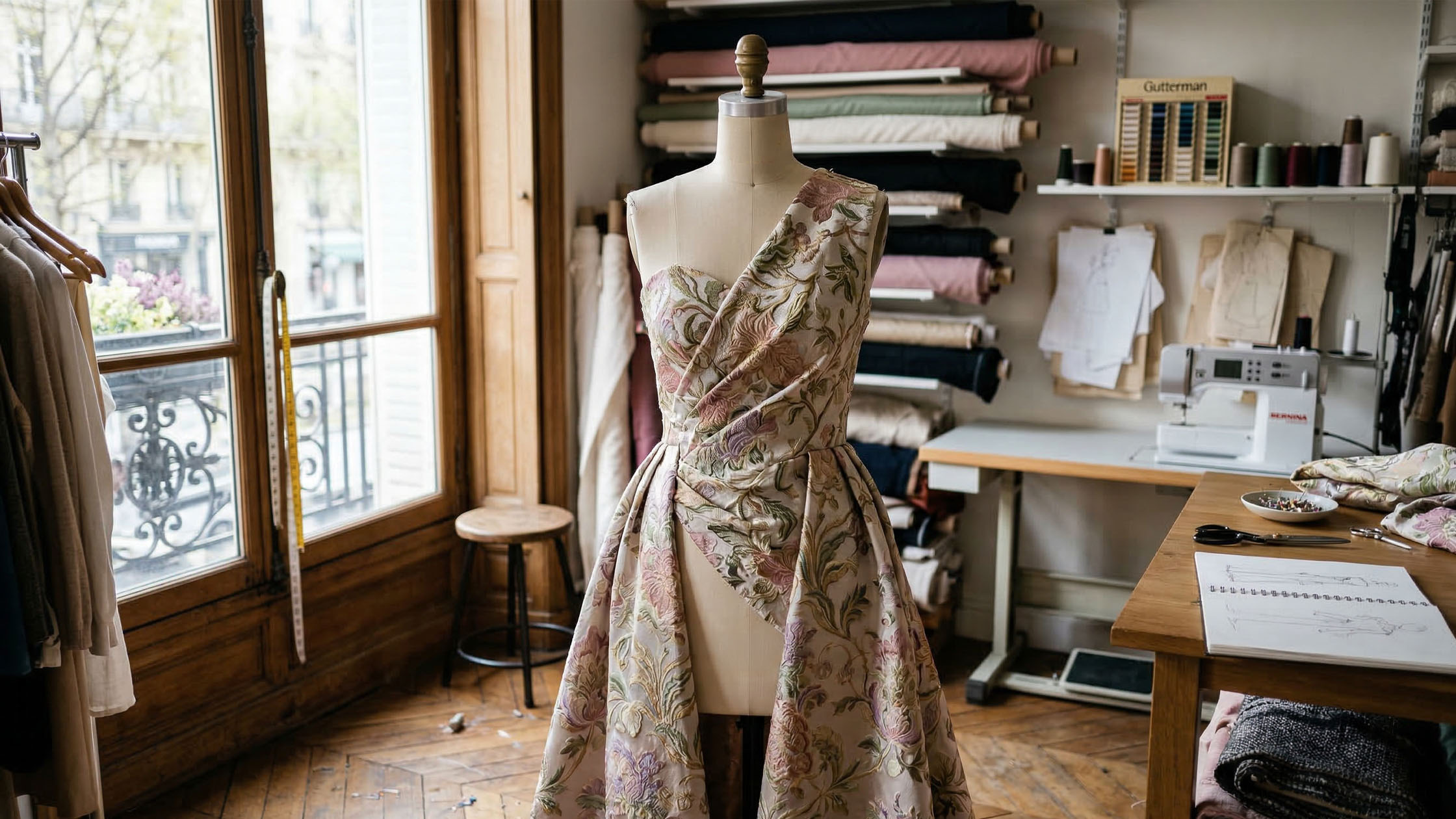
What is jacquard? Discover the fascinating history of a luxury fabric
Spring collections remind us of materials with a rich craft past. Understanding where this fabric comes from helps us appreciate its present value in fashion.
From the hand loom to Jacquard's revolutionary machine
The beginnings of creating complex patterns on fabrics were bound up with extremely laborious manual work. Craftsmen had to lift individual warp threads by hand to create the right motif. The process took many weeks and demanded enormous precision and experience. The situation changed at the start of the nineteenth century thanks to a French inventor. Joseph Marie Jacquard built a mechanism that used special punched cards to control the threads. This mechanism automated the weaving of large-scale patterns and greatly sped up production. Thanks to this solution, jacquard became a material more accessible to a wider audience. The technology gave birth to the modern textile industry.
The evolution of jacquard in European premium fashion
At first, patterned weaves adorned only the interiors of palaces and aristocratic courts. In time, European tailors began to see the potential of this stiff material in making clothing. Italy and France quickly became the main centres for producing the most refined variants of this fabric. Haute couture designers appreciated the possibility of weaving gold and silver threads directly into the structure of the garment. The material stopped being merely decorative and became a symbol of social status. Today's fashion houses in Paris and Milan regularly reach for these historical archives. They use old floral and geometric motifs to create modern silhouettes.
History shows an evolution from craft to applied art. Today's processes combine this tradition with modernity and precision.
How is modern jacquard made in 2026? Secrets of production
Today's weaving mills use advanced computer technology. The traditional weave gains a new quality thanks to this year's innovations.
Selecting the highest-quality fibres and yarn
The process of creating the ideal material begins with a rigorous selection of raw materials. In 2026 manufacturers are betting on precise blends of natural and synthetic fibres. An addition of Italian silk gives the surface a subtle sheen and remarkable smoothness to the touch. Using fine wool or cashmere increases the thermal insulation of the finished product. New-generation synthetic fibres are responsible for dimensional stability and resistance to mechanical damage. Mills carefully test the strength of every batch of yarn before weaving begins. The right choice of warp and weft threads decides the final look and behaviour of the material.
The importance of weight in weaving multidimensional patterns
The density of the threads directly affects the weight and stiffness of the finished material. A high weight makes it possible to achieve deep, distinct embossing on the surface. Heavier variants work superbly in projects that need to hold a specific architectural form of garment. Lighter weaves with a lower weight provide better air circulation and a soft drape on the figure. Modern numerically controlled looms allow the weaving density to change smoothly within a single COUPON of material. This gives designers unlimited possibilities in building three-dimensional visual effects. You must always choose this parameter with the planned tailoring use in mind.
Precise production guarantees excellent material parameters. This translates into how it behaves later in wear and washing.
The unique properties of jacquard fabric: why choose it?
Choosing the right raw material decides the success of the whole tailoring project. This particular weave offers a number of practical advantages for the user.
Durability and excellent resistance to everyday creasing
The dense and complex weave of the threads gives remarkable mechanical durability. Garments sewn from this material cope very well with intensive use and frequent travel. The structure of the fabric is naturally springy and instantly returns to its original shape after being deformed. This removes the problem of unsightly creases formed during long periods of sitting in the office or the car. Clothes keep a flawless, fresh look all day without any need for extra ironing. This property makes the material an ideal choice for intensive days full of business meetings. The durability of the weave also prevents the material from wearing through at critical points.
Double-faced character and a wealth of unique textures
The weaving process creates the pattern through the appropriate interlacing of warp and weft threads. The result of this technique is a negative of the pattern on the wrong side of the material. Many variants allow both sides of the fabric to be used in a single tailoring project. This makes it possible to create interesting contrasts on collars or cuffs without using additional materials. The surface structure has a raised, three-dimensional quality that can be felt under the fingers. The play of light on the uneven texture heightens the impression of luxury and depth of colour. Such a construction of the material effectively masks any imperfections of the figure.
Combining aesthetics with durability makes this choice extremely practical. These properties fit the needs of modern designers and wearers perfectly.
Jacquard rediscovered: why is it returning to designers' spring collections?
The spring season brings a clear return to structured forms in clothing. Fashion makers are once again appreciating the possibilities of building three-dimensional silhouettes.
Hot inspirations from the biggest European catwalks
This year's shows in Milan and Paris were dominated by richly decorated materials with a tangible texture. Designers are moving away from flat, plain fabrics in favour of distinct weaves. Spring collections are full of short jackets and flared skirts sewn from thick materials. Makers are keen to reach for motifs drawn from historical weaving archives and reinterpret them. The catwalks show bold pairings of large geometric patterns with intense spring colours. This trend is a clear answer to the growing demand for expressive, eye-catching fashion. Garments take on a sculptural character and become the focal point of every outfit.
A harmonious combination of classic elegance and modern trends
The current approach to this historical material is about breaking conventions. Classic floral motifs are combined with modern, asymmetric cuts. The weight of the fabric is balanced by plunging necklines and bold slits. Designers use this material to sew everyday wardrobe pieces such as bomber jackets or wide trousers. This takes away the stigma of excessive formality and lets people wear the clothes every day. The fabric fits the quiet luxury aesthetic perfectly, where the quality of the material plays the main role. The modern interpretation of tradition appeals to the tastes of younger customers looking for unique solutions.
The catwalks set the direction for street and formal fashion for the coming months. This trend is quickly filtering into the everyday outfits of conscious consumers.
Exclusive silk jacquard – the ideal choice for tailoring enthusiasts
Demanding projects need raw materials of the highest class. Fine blends completely change the character and behaviour of the finished garment.
Why is Italian silk a guarantee of a luxurious final effect?
Silk fibres imported from renowned European mills have inimitable physical properties. Their presence in the weave gives the material remarkable softness and a fluid drape on the figure. Light reflects off the natural threads in a multidimensional way, creating a subtle and elegant sheen. Silk has excellent hygroscopicity, which provides the highest thermal comfort when worn. The material breathes and adapts to the wearer's body temperature. Fabrics with such an admixture are much lighter than their cotton or polyester counterparts. The finished product looks flawless and keeps its noble appearance for many years.
How to recognise an authentic, top-quality premium material without error?
Identifying a high-grade raw material requires attention to a few details. A true premium weave has perfectly sharp pattern definition on both sides of the COUPON. The threads must not separate or form unsightly lumps on the surface. When you touch the material you should feel a distinct structure, but without any impression of roughness or artificiality. Natural fibres quickly take on the temperature of the hand, unlike cool synthetics. A crush test lets you judge the springiness of the material: once you release your hand the fabric should quickly return to a smooth form. The edges of the COUPON in luxury products are always carefully finished and protected against fraying.
An investment in fine fibres always brings excellent results in the workshop. A conscious choice guarantees full satisfaction with the finished garment.
Which jacquard works best for summer dresses?
Warm months call for a specific approach to choosing clothes and materials. A suitable weave structure provides comfort even at very high temperatures.
Light, breathable and airy weaves for warm spring days
When planning to sew a summer outfit you must pay particular attention to the weight of the chosen material. Spring-summer collections are based on fabrics with a looser weave of warp threads. Such a construction makes it easier for air to flow freely and prevents the body overheating. Blends with a high content of natural viscose or thin cotton work best. The material should skim the figure softly and not form a rigid shell around the body. A suitably chosen weight allows gathers and ruffles without the unwanted effect of adding bulk. Light weaves work perfectly with the movement of the body and give complete freedom on summer walks.
The most fashionable floral and geometric motifs this season
The look of summer clothes is based on distinctive, cheerful patterns. This year large, oversized floral motifs inspired by exotic flora dominate. The flowers are woven with contrasting threads, which gives them a three-dimensional look. Alongside botanical motifs, sharp, regular geometry remains a strong trend. Small diamonds, checkerboards and abstract lines work well in simple, minimalist dress cuts. The colour palette hovers around pastel shades of pink and blue and strong neon accents. Choosing the right motif allows you to model the figure optically and emphasise its assets.
Summer designs gain from well-chosen motifs and weights. Such a choice guarantees wearing comfort and a fashionable look.
Jacquard in elegant outfits: blazers, skirt suits and light coats
Outerwear needs materials that hold a given tailored shape well. A structured weave works ideally in such demanding constructions.
How to choose the right stiffness and weight of material for a project?
The construction of a jacket or coat rests on stable cutting lines. For such tasks you must choose a material with a higher weight and a tight thread weave. A fabric that is too soft will cause the shoulders to droop and the collar to deform when worn. A stiff material allows the lapels to be worked precisely and the sleeves to be set perfectly into the armholes. Before buying, it is worth checking how the material falls in folds and whether it keeps its shape under its own weight. Outerwear often needs additional fusing with interfacing, which should be taken into account when choosing the raw material. Well-chosen stiffness eases the tailoring work and guarantees a professional look for the finished garment.
Sewing sophisticated outerwear from jacquard fabrics
Creating elegant coats and skirt suits from patterned materials requires careful planning. Large motifs demand precise pattern matching at the seams joining the individual pieces. The front of the blazer must form a coherent, logical whole visually. French darts and ordinary darts should be placed so as to disturb the continuity of the woven picture as little as possible. It is worth giving up complicated construction details in favour of simple, clean forms. The material itself is the main ornament of the design and needs no competition in the form of unnecessary seams. The lining in outerwear protects the inside of the weave from damage and makes the garment easier to put on.
A well-cut blazer in such a material serves for many seasons. It is a solid foundation of an elegant, timeless wardrobe.
Sewing with jacquard in practice: a guide for beginners and experts
Working with a demanding material imposes certain strict rules in the tailoring workshop. Proper preparation eliminates the risk of costly construction mistakes.
How to prepare jacquard material for cutting correctly and safely?
Before you start cutting, you must carefully secure the edges of the COUPON against fraying. Loosely woven threads tend to slide out of the warp, which makes later sewing harder. Decatising the material before cutting is absolutely essential to avoid the finished garment shrinking after the first wash. The pattern should be laid on the fabric in one direction, paying attention to the direction of the pile and the reflection of the light. Pinning the layers should be done only within the seam allowances so as not to damage the structure of the weave. Cutting requires very sharp, heavy tailor's shears that guarantee a smooth edge line. Precise preparation is the foundation of a successful project.
Professional choice of needles, thread and haberdashery for luxury weaves
The thickness and type of the machine needle must match the density of the woven material perfectly. For thicker variants use size ninety needles with a slightly rounded point. This prevents the delicate warp threads from being cut as the needle goes into the material. Sewing thread should have high breaking strength and a smooth surface. Core-spun polyester threads work best, providing flexibility and durable seams. The choice of zips and buttons must match the weight of the fabric. A light invisible zip will not hold the shape of a thick coat and will quickly be damaged in use.
Using proven tailoring techniques makes the whole process of making a garment easier. The finished product gains in durability and professional finishing of details.
Jacquard versus other popular materials: a comparison in practice
The textile market offers many alternatives for spring and summer tailoring projects. Understanding the differences helps you make the right buying decision.
Jacquard or fine viscose – which is better to choose for spring?
Viscose is a cellulose fibre characterised by remarkable softness and an excellent drape over the figure. This material is flat and cool to the touch, which makes it ideal for hot days. A fabric with a structural weave offers completely different visual and tactile sensations. Its surface is three-dimensional and the material holds a given shape better and does not cling tightly to the body. Viscose has a strong tendency to crease, whereas thicker weaves stay flawlessly smooth all day. The choice between these materials depends on the planned style of the garment. For airy dresses choose viscose, and for garments with an architectural form, a structural weave.
Key differences between jacquard fabric and classic cotton
Cotton in its basic plain weave is a simple, one-dimensional material in its construction. Patterns on cotton are most often created by surface printing with textile dyes. In the material discussed here the pattern is an integral part of the structure and is formed from coloured threads during weaving. This guarantees that the motif will not wash out or fade over time. Classic cotton is usually thinner and less formal in character. Structural weaves bring an element of sophistication and luxury to an outfit that plain cloth cannot offer. The difference lies in the durability of the pattern and the overall aesthetic impression of the finished garment.
Every material has its specific use in modern tailoring. A conscious comparison of their features makes it easier to plan a year-round wardrobe.
Ecology in the world of fabrics: sustainable development in jacquard production
Environmental awareness shapes today's production processes in the fashion industry. Weaving mills are adapting their methods to strict environmental standards.
Using certified yarns that are fully safe for the environment
Modern European mills base their production on raw materials from controlled farming. Natural fibres come from farms that follow the principles of organic agriculture without harmful pesticides. The dyes used to colour the threads must meet strict standards on the content of heavy metals and toxins. Certificates such as Oeko-Tex guarantee the safety of the material in direct contact with human skin. Manufacturers are increasingly reaching for recycled fibres, thereby reducing the amount of textile waste. A conscious choice of yarn is the first step towards creating fashion that is kind to our planet. The quality of the raw material goes hand in hand with responsibility for the natural environment.
How are modern weaving mills effectively reducing their carbon footprint in 2026?
The weaving process requires an enormous amount of electricity to power the machines. Leading European textile plants are investing in renewable energy sources such as solar panels and wind turbines. Modern looms are designed for maximum efficiency and minimum power consumption. Closed water circuits in the dye works allow the same resource to be reused many times and cut industrial effluent. Optimising logistics processes and choosing local yarn suppliers shortens supply chains. These actions really do reduce greenhouse gas emissions into the atmosphere. The textile industry proves that the production of luxury materials can be carried out with respect for nature.
By choosing materials from responsible sources you support active environmental protection. Sustainable fashion production is an absolute standard of our times.
Caring for jacquard clothing: how to wash and iron this material?
Proper care of sewn items significantly extends their life and appearance. Structural weaves require a specific, gentle approach to cleaning.
Proven and safe methods of cleaning fabrics with silk and wool
The presence of fine natural fibres completely rules out aggressive detergents and high temperatures. These garments are best taken to professional dry cleaners who specialise in delicate materials. If you decide to wash by hand at home, use only lukewarm water and liquids dedicated to silk. The material must not be rubbed hard, wrung out or soaked for a long time. Excess water should be gently pressed out into a clean terry towel, and the garment then dried flat away from the sun. Spinning in an automatic washing machine will irreversibly destroy the three-dimensional structure of the fabric. Caution when washing guarantees that the garment keeps its beautiful appearance.
Correct storage of luxury clothes so they keep their natural shape
How you store things in the wardrobe has an enormous effect on the condition of structured materials. Heavy coats and blazers must hang on wide, contoured hangers matched to the size of the shoulders. Thin wire hangers will cause unsightly bagging of the material and permanent deformation of the garment's shape. Dresses and skirts are worth protecting with cotton covers that guard against dust and accidental snagging of threads. Clothes made from this material should not be squashed in an overfull wardrobe, because they need space to hang freely. Regular airing of the garments gets rid of small creases and refreshes the fibres. The right conditions in the wardrobe prolong the life of luxury designs.
Following the care rules lets you enjoy the flawless look of your clothes every day. Proper care protects delicate and expensive fibres from destruction.
Fashionable outfits with jacquard: from grand occasions to casual street style
Richly decorated wardrobe pieces need a suitable backdrop and setting. Skilful outfit-building helps you avoid overdoing your everyday image.
How to combine patterned jacquard skilfully with plain wardrobe pieces?
The golden rule of styling distinctive materials is to keep the right proportions. If you choose a richly decorated blazer, pair it with simple trousers in a solid colour. A plain background will let the complex pattern and three-dimensional texture of the main piece stand out fully. The base colour of the accompanying garments should echo one of the shades in the patterned fabric. Avoid combining several different motifs in one outfit so as not to introduce visual chaos. A structured skirt looks great alongside a plain silk top or a classic white shirt. Such balance guarantees an elegant and well-considered look whatever the occasion.
Stylish accessories that will perfectly emphasise the unique character of jacquard fabric
Accessories chosen for such distinctive garments should be minimalist and of high-quality workmanship. A leather handbag of simple geometric form will not compete with the rich weave of the material. Jewellery must be subtle and delicate: give up chunky necklaces in favour of fine chains. Shoes in neutral colours such as beige or black are a safe and elegant finish to the whole. If the material contains metallic threads, it is worth matching the bag hardware and jewellery in the same shade of gold or silver. Too many embellishments will overwhelm the figure and distract attention from the tailoring craft of the garment. A conscious choice of details shows an excellent sense of style.
A balanced outfit draws the eye and emphasises the natural beauty of the material. Handling proportions consciously is the basis of a good, modern look.
Buying materials online: how to calculate the yardage of jacquard for a specific pattern?
Ordering textiles online requires precise, well-thought-out calculations. Mistakes in estimates lead to serious problems when cutting in the workshop.
Precise and easy planning of fabric consumption for a dream summer dress
The basis for calculating the amount of raw material needed is a careful analysis of the instructions that come with the sewing pattern. Pay attention to the stated fabric width, because European standards often differ from one another. With a standard width of one hundred and forty centimetres, a simple dress usually needs one dress length plus a sleeve length. Flared styles and voluminous ruffles drastically increase the demand for material. Always add ten per cent to the final result to allow for the shrinkage of the material during the compulsory decatising. Running short of fabric while cutting is the worst-case scenario for any maker of clothes. Accurate body measurements and checking against the size chart are a must before buying.
A safe allowance for matching complex patterns and repeats
Materials with large, distinct motifs require buying a considerably greater number of running metres. A repeating pattern, called a repeat, forces the pattern pieces to be shifted so they match perfectly at the seams. The larger the individual motif, the more material you have to add to your basic order. With very large flowers or stripes, a safe allowance is often from half a metre to a whole metre of fabric. Ignoring this rule will lead to an asymmetric placement of the pattern on the finished garment, which looks very unprofessional. Online shops give the size of the repeat in the product description, which makes it easier to do the calculations correctly. It is better to order more material than to risk ruining the whole project.
Careful planning of purchases eliminates stress when working on a dream tailoring project. Conscious calculations are a guarantee of success at the cutting table.
International delivery of premium fabrics: fast shopping without any borders
Distance is no longer any barrier to access to luxury tailoring products. Modern logistics systems guarantee fast order fulfilment across Europe.
Transparent costs and preferential courier shipping rates to Germany and the EU
Customers from abroad often worry about hidden costs linked to transporting heavy materials. Professional online shops offer a clear, legible price list for international delivery that is visible even before a product is added to the basket. Working with global courier companies such as DHL ensures fast delivery of the parcel in Germany and throughout the European Union. Transport costs are optimised for the weight and dimensions of the order, which allows very competitive rates to be offered. The system automatically recalculates the charges and shows the final amount to pay in the chosen currency. This removes uncertainty and lets you plan your textile shopping budget precisely. The process of ordering from abroad is simple and completely secure.
Safe and attractive packing of luxury materials for transport
High-grade fabrics need particular protection on the long journey to the customer. COUPONS of material are carefully wound onto rigid cardboard tubes to prevent permanent creases and kinks in the weave. Delicate silk fibres are protected with an additional layer of acid-free paper and moisture-proof film. The outer carton must be made of thick, rigid cardboard that resists knocks and crushing in courier sorting depots. The look of the packaging reflects the luxurious character of the contents and makes unpacking the parcel a pleasant experience. Every parcel is carefully insured against damage in transit. Attention to the details of shipping builds lasting trust among demanding customers from all over Europe.
Efficient and safe delivery lets you start the planned tailoring work in the workshop quickly. Transparent shipping rules are the basis of modern online trade.
Jacquard FAQ: the most frequently asked questions about this remarkable fabric
Customers often look for specific, quick information before making a final purchase decision. A summary of the most common doubts makes the whole buying process easier.
Are stylish jacquard clothes suitable for very hot days?
Thermal comfort depends solely on the fibre composition and weight of the chosen material. Weaves made of pure cotton, viscose or with an admixture of silk cope very well with high air temperatures. They provide suitable circulation and do not block the skin's natural process of perspiration. Variants with a high content of coarse polyester or wool should be firmly put aside for the cooler autumn months. Always read carefully the composition given by the manufacturer before planning a summer wardrobe. Light, airy weaves are an excellent choice for summer parties and walks in full sun. The right choice of raw material is the key to comfort.
How can you quickly tell real woven jacquard from cheap printed material?
Identifying the technique used to make the pattern is very simple and only requires looking at the wrong side of the material. In real woven material you will see on the back a distinct negative of the pattern formed from interlacing coloured threads. With cheap printed fabrics the wrong side remains completely smooth and most often uniformly white or grey. Running your hand over the surface of an authentic weave you will feel distinct raised areas and differences in texture. A surface print is always perfectly flat and has no spatial structure. This simple method allows an instant check on the quality of the textile product on offer in any shop. This knowledge protects against dishonest sellers.
Where can you safely buy exclusive, genuine jacquard fabrics online?
Choose only proven online shops with an established position in the textile market. Professional sellers always give a detailed fibre composition, the weight and close-up photos of the surface and the wrong side of the material. It is worth looking for shops that offer the option of ordering small samples before making the actual purchase of a whole COUPON. Read other customers' reviews and check whether the company has a transparent returns and complaints policy. Reputable shops work directly with European manufacturers, which guarantees the authenticity and highest quality of the products on offer. Avoid unverified auction platforms, where it is easy to buy material with understated parameters. Safe shopping is the foundation of successful tailoring.
Reliable knowledge allows fully informed and safe textile shopping on the internet. The answers to these questions dispel the most common worries of novice adepts of the tailoring art.