

- today
- label News
- favorite 0 Likes
- remove_red_eye 12383 Visits
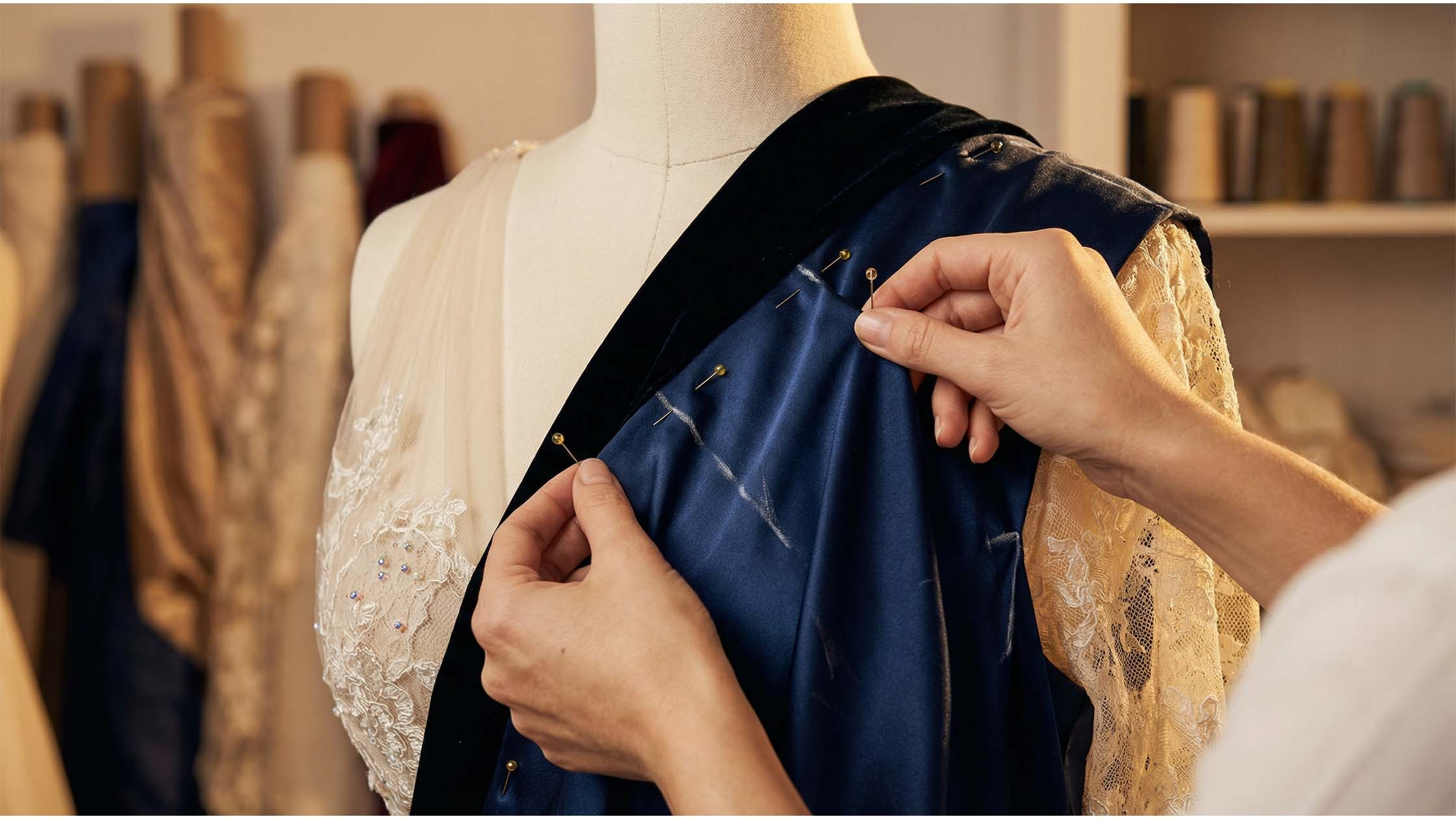
What sets luxury dress fabrics apart and why is it worth investing in them?
The decision to have a dress made to measure is often a search for something more than just a garment. It is a wish to express your own style and a need for an outfit that fits your figure and the occasion perfectly. Choosing the right fabric is the foundation of this process and determines the final visual effect and the comfort of wearing it. Premium fabrics differ from mass-market products not only in price but above all in the production process, the origin of the fibres and durability. An investment in a high-grade material pays off in a garment that ages gracefully, does not lose its shape after a single wash and lets the skin breathe even during celebrations lasting many hours. A conscious choice of raw material is the first step towards creating a wardrobe that resists passing trends and serves for years.
Natural composition and thermoregulating properties – the advantage of silk and viscose over synthetics
Thermal comfort is one of the most important aspects that distinguishes luxury dress fabrics from their synthetic counterparts. Fabrics such as natural silk or high-grade viscose have the ability to absorb moisture and draw it away from the body. As a result, even in summer heat or during intense dancing, the skin stays dry and the garment does not cling to the body in an unflattering way. Polyester, although it often imitates silk visually, forms an airtight barrier that leads to overheating. Natural fibres respond to the ambient temperature, cooling in summer and retaining warmth on cooler days. When choosing a material for an important occasion, it is worth putting physiological comfort first, which translates directly into confidence and freedom of movement throughout the event.
Italian quality and unique design as the mark of true luxury
Italy has been regarded for centuries as the cradle of textile craftsmanship, and a Made in Italy label of origin is still a guarantee of the highest quality. Italian mills are famous for their attention to detail at every stage of production, from the selection of raw yarn to the final finishing of the fabric. It is there that unique patterns are created, often hand-painted before being transferred to the material or woven in complex jacquard weaves that cannot be copied in mass production. By choosing Italian fabrics you gain certainty that your gown will be one of a kind. Unlike the high-street chains, which produce thousands of identical pieces, access to limited runs of materials lets you create a dress that you will not see on anyone else at the same party. It is the uniqueness of the design and the nobility of the finish that define true luxury in made-to-measure tailoring.
How to recognise a premium fabric? Weight, weave and handle
Recognising a high-quality material requires paying attention to several technical aspects that are well known to professional tailors. The first is handle, that is, the impression the material leaves to the touch. Luxury fabrics are usually substantial, springy and pleasant against the skin, and when crumpled in the hand they quickly return to their original shape or fall into noble folds. The next element is the weave, which in premium fabrics is dense and even, without visible gaps or weaving flaws. The weight of the material should be appropriate to its intended use. A silk that is too light may be fragile and hard to sew, whereas a well-chosen weight gives beautifully falling folds and no see-through effect. Analysing these parameters lets you separate average products from those that will become the basis for a spectacular evening gown.
A review of the finest evening fabrics – characteristics and uses
The world of evening fabrics offers an enormous variety of textures, sheens and plastic properties. Understanding the characteristics of individual materials is essential if the design vision is to meet reality. Not every material suits every style, and mistakes at the stage of choosing the fabric are the hardest to put right in the sewing process. Classifying fabrics into fluid, stiff and decorative ones helps to organise the decision-making process. Whether you plan to sew a minimalist slip dress or a sweeping ball gown, there is a type of material dedicated to that very purpose. Knowing the differences between satin, taffeta and lace allows you to manipulate form and light consciously, which is the key to achieving a wow effect.
Silk satin, crêpe and chiffon – the kings of flowing summer dresses
Fabrics in a satin weave, such as silk satin, are characterised by exceptional smoothness and a sheen that reflects the light beautifully, emphasising the movements of the body. They are an ideal choice for summer parties and weddings, where lightness and breathability count. Satin, however, demands a flawless figure or suitable underwear, since it ruthlessly exposes any unevenness. An alternative for those who prefer a matte finish is silk crêpe. Its grainy structure makes the material more crease-resistant and wraps the body more subtly, without clinging excessively. Chiffon, in turn, is a mist that works perfectly in multi-layered skirts, sleeves or wraps, adding an ethereal character to a gown. What all these materials share is drape, which means they "flow" over the figure, creating soft lines ideal for boho or glamour styles.
The structural beauty of jacquards and taffeta – an ideal choice for gowns with architectural forms
If your aim is to create a gown with a distinct, three-dimensional shape, you need to reach for materials that have shape "memory" and suitable stiffness. Jacquards are fabrics with complex, woven-in patterns that are an ornament in themselves and do not require complicated cuts. Their thicker structure allows you to model the figure and hide any figure flaws. Taffeta, known for its characteristic rustle and papery handle, is irreplaceable in designs with draping, large bows or voluminous skirts. Thanks to its stiffness, taffeta lets you build architectural volumes that do not collapse under their own weight. It is an excellent choice for ball gowns and cocktail dresses that are meant to draw the eye with their form, not just their colour or pattern.
Lace, guipure and embroidered tulle – romance and detail in bridal and formal fashion
Openwork and decorated materials serve as jewellery in evening fashion. French laces, delicate and flat, are perfectly suited to finishing necklines and sleeves or as an outer layer over a satin underlayer. Guipures are much heavier, more raised and more pronounced, which makes them look great in simple, geometric styles where the richness of texture plays first fiddle. Embroidered tulles, often decorated with beads or sequins, introduce an element of three-dimensionality and sparkle. Working with these materials takes precision, especially when matching patterns at the seams, but the final effect is spectacular. They are irreplaceable in bridal fashion and in outfits for the mother of the bride, offering a balance between elegance and decorativeness. Using them in a design lets you play with transparency, which adds lightness and tasteful sensuality to an outfit.
How to match the fabric perfectly to the style of dress and body type?
Success in tailoring depends on harmony between the design and the material used. Even the most beautiful silk will not rescue a badly chosen style, and the best cut will lose its charm if it is made from an unsuitable fabric. The choice of material should take into account not only aesthetics but above all the laws of physics acting on the fabric and the anatomy of the person who will wear the dress. Different body types require a different approach to building proportions. Some materials add volume, others take it away. Understanding how a fabric behaves in movement and how it responds to construction seams lets you shape the figure consciously, emphasise its assets and correct proportions without needing uncomfortable shaping underwear.
Soft, fluid fabrics – the best solutions for bias-cut and draped styles
Bias cutting is a technique that lets the fabric achieve maximum flexibility and fit the curves of the body perfectly without the use of darts. For this purpose the best materials are soft, fluid ones that are heavy in relation to their volume, such as crêpe de Chine, silk satin or viscose of high weight. These fabrics work perfectly for cowl necklines and in mermaid-style dresses. The softness of the material means it skims the hips and bust without forming angular folds, which is crucial for hourglass or pear figures that want to emphasise feminine curves. Remember that these materials do not build structure but follow the body, so they require precise fitting and often a suitable lining, which will prevent static and the dress clinging to the legs.
Stiff, shape-holding materials – what to choose for flared and corseted dresses?
For figures that need new proportions built, for example adding volume at the hips or emphasising the waist, fabrics with a stiffer handle will be best. Mikado, taffeta, thick jacquard or organza are materials that keep the shape given to them once folds or pleats have been formed. They are ideal for A-line dresses, full-circle styles and corsets, which have to support the bust and shape the waist. A stiff material acts like a corset, smoothing the figure and hiding any bulges. Thanks to their structure, these fabrics let you create striking puff sleeves or standing collars, which are a fashionable element of contemporary evening wear. By choosing such a material you can be sure the dress will keep its form all night, however vigorously you move.
The role of a suitable lining in building the final visual effect and comfort
The lining is the invisible hero of every successful outfit, often wrongly overlooked or treated as an afterthought. In dresses made from luxury materials the lining serves not only a finishing but also a constructional function. With sheer fabrics such as chiffon or lace, it forms the background that brings out the depth of colour and pattern of the top layer. With wool or jacquard fabrics, on the other hand, it protects the skin from roughness and prevents the material from bagging at critical points such as the elbows or the seat. The best choice for luxury dresses is linings of habotai silk or viscose, which allow air to circulate. Avoiding polyester linings is crucial so as not to cancel out the thermoregulating properties of the expensive outer fabric. A well-chosen lining makes the dress hang better, not ride up when walking and give full wearing comfort.
Working with difficult materials and caring for them – a guide for sewing enthusiasts
Sewing with premium fabrics yourself, or commissioning such a service, requires knowledge of the specifics of working with fine fibres. Silks, velvets or delicate laces will not forgive mistakes that could be hidden when working with cotton. Each material needs a different choice of needles, thread and even sewing-machine foot. Knowledge of what happens to the garment after it is sewn is just as important. Proper maintenance guarantees that the investment in an expensive material will not be wasted at the first wash or ironing. Technical awareness helps you avoid disappointment and enjoy your own handmade creation for many seasons, keeping its original lustre and properties.
Cutting and sewing slippery and delicate fabrics – essential accessories and techniques
Working with silk or satin can be a challenge even for experienced seamstresses because of its slipperiness and tendency to shift. The key to success is proper preparation of the work area. Cutting should be done on a large surface covered with a cotton underlay or paper, which stops the material from slipping away. It is essential to use very sharp scissors and fine pins, which will not leave marks in the delicate structure of the fibres. For machine sewing, use Microtex needles in size 60 or 70 and high-quality polyester or silk thread. It is also worth investing in a walking foot, which helps the layers of material feed evenly. With very limp fabrics it may help to stiffen them lightly with spray starch or to sew through parchment paper, which is gently torn away once the seam is made.
Decatising and care – how to look after luxury materials so they last for years
Most natural fabrics, including viscose and some silks, shrink under the influence of moisture and temperature. This process is irreversible, which is why decatising, that is pre-shrinking the material before you start cutting, is so important. You can do this by ironing with plenty of steam or by lightly soaking in lukewarm water, unless the manufacturer recommends dry cleaning only. After sewing, the care of the finished dress should be adapted to the most delicate element of its construction. Silks are best washed by hand in cool water with dedicated detergents or taken to a trusted dry cleaner. Ironing should always be done on the wrong side or through a cotton cloth, to avoid making the material shiny. Evening gowns, especially heavy ones, are best stored lying flat or on specially shaped hangers, in breathable garment bags, away from sunlight.
When is it worth ordering a fabric sample before deciding to buy?
Shopping for fabrics online gives access to a huge choice of patterns and colours, but makes it impossible to judge handle and texture directly. With expensive materials for important occasions, the risk of a wrong shade or thickness can be costly. That is why ordering samples is a step that should not be skipped. It lets you hold the material up to your face and check how a given colour goes with your complexion. You can also do a crease test, check the transparency against the light and see how the fabric lies in the hand. A sample also lets you test how the material reacts to ironing or contact with water. For those who sew, it is an invaluable help in choosing the right haberdashery, such as thread, zips or buttons, even before buying the actual yardage of fabric for the gown.