

- today
- label News
- favorite 0 Likes
- remove_red_eye 7276 Visits
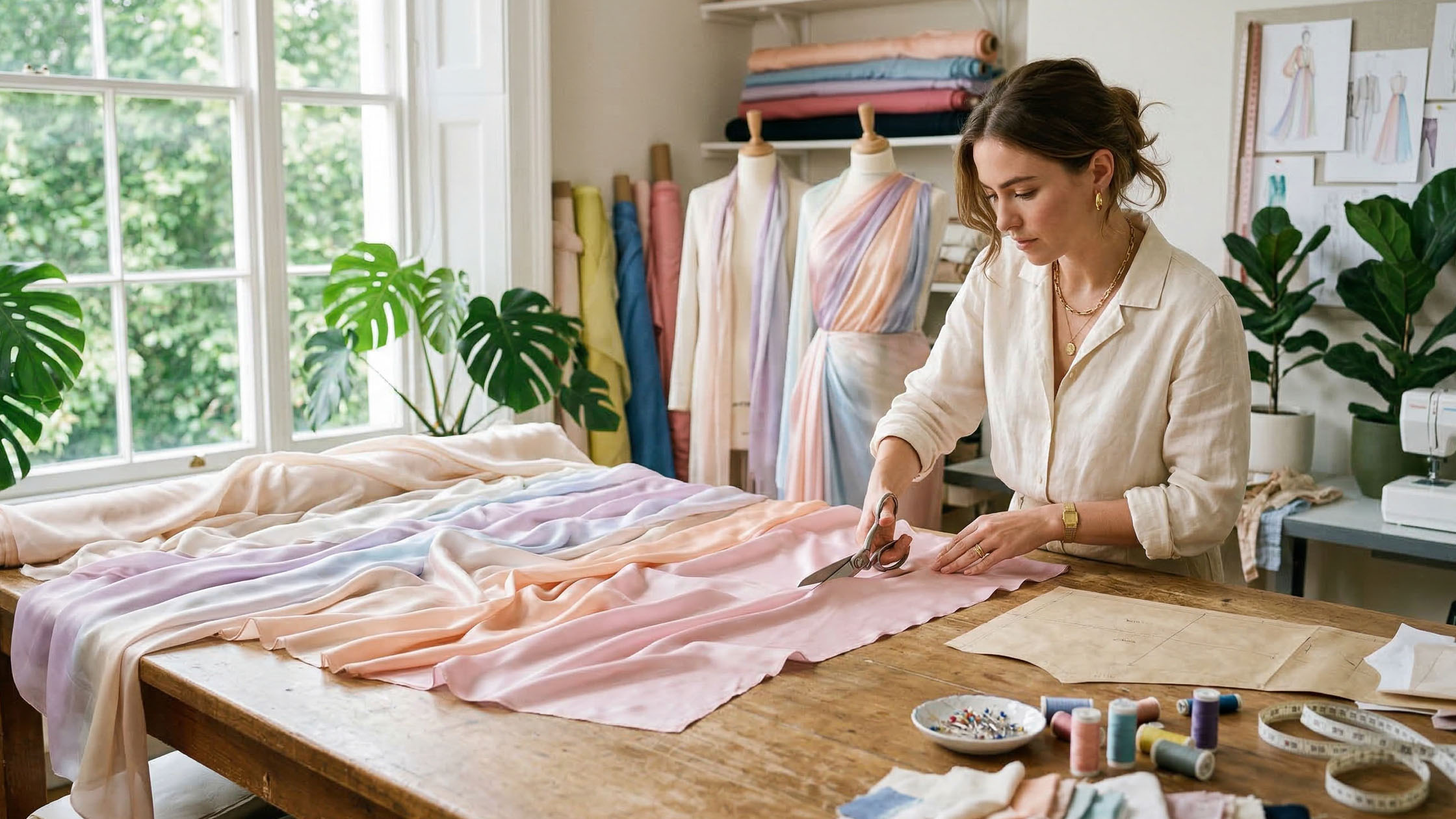
Silk fabric in the spring wardrobe: why is it the ideal choice?
Spring 2026 brings a return to natural raw materials of the highest quality. Choosing the right material for warmer days decides the comfort and look of the finished garment. It is worth understanding the unique characteristics of this noble fibre before you start work.
Hypoallergenic and hygroscopic properties of a luxury raw material
Natural silk fabric has a protein structure similar to human skin. This construction makes the material completely safe for people prone to allergies and contact irritation. Mulberry silk fibres do not attract dust mites or dust, which makes them an excellent choice for clothing worn close to the body. An additional advantage is high hygroscopicity, which lets the material absorb moisture amounting to one third of its weight without the feeling of a wet compress on the skin. This gives a constant feeling of freshness even on the most demanding spring days. These properties give luxury tailoring projects a health-promoting dimension and make them an investment in everyday wellbeing. Using such a naturally advanced raw material raises the value of every garment you sew.
Thermoregulation and the highest wearing comfort on warmer days
The ability to thermoregulate actively is the most important feature of clothing meant for changeable spring weather. The structure of the silk thread traps microscopic air bubbles, which act as natural insulation. On cooler mornings this material gently warms the body, preventing heat loss. In the afternoon sun, in turn, the structure of the fibres allows air to circulate freely and quickly carries excess heat away. This intelligent mechanism lets the skin breathe freely, and the wearer feels no discomfort from overheating. Clothing sewn from this raw material falls on the figure like a second skin, giving unrestricted freedom of movement. It is precisely these physical properties that decide the undiminished popularity of this material in premium spring collections.
Understanding these natural properties lets you fully appreciate the value of the material. A conscious choice of raw material is the first step towards a luxurious and functional wardrobe.
Preparing the material before cutting, a secret of professional seamstresses
Skipping the preparation stage is the most common mistake leading to the ruin of a finished garment. Treating the fibres properly before cutting guarantees that the ideal dimensions are kept after sewing. This process requires patience and knowledge of the specifics of natural yarns.
Decatising silk step by step at home
Natural fibres tend to shrink on first contact with water or steam. The purpose of decatising is to bring about this shrinkage before you start cutting out the individual pattern pieces. At home the best method is gentle soaking in lukewarm water with a mild detergent. The material should be submerged completely, avoiding vigorous rubbing, wringing or stretching. After a dozen or so minutes the water should be gently pressed out, using a clean, dry terry towel. The fabric is then laid flat on a large surface, away from direct heat sources and sunlight. Drying in a horizontal position prevents deformation of the weave and creases that are hard to remove. Carrying out this process carefully guarantees that the finished dress or blouse will not change size after the first wash.
Safe washing and gentle steam pressing
An alternative method of preparing the material is to use a steam generator, which works for thicker weaves. Remember that the iron's soleplate must never touch the right side of the material directly. Pressing is done only on the wrong side, using an additional protective cotton cloth. The temperature of the appliance must be set to the lowest possible level, intended specially for delicate fibres. Too high a temperature will irreversibly melt the structure and leave unsightly, shiny marks. The jet of steam should be diffused and the iron's movements smooth and steady, without stopping in one place. Such a treatment not only stabilises the dimensions but also smooths the surface, making it easier to lay out the pattern precisely at the next stage of work.
Proper preparation of the raw material eliminates the risk of later deformation of the garment. It is the foundation on which the whole process of making premium clothing rests.
Essential accessories for working with slippery materials
Choosing the right tools decides how smoothly the work goes and how good the final product looks. Ordinary tailoring accessories often fail on contact with such a delicate structure. Putting together specialist equipment is an investment in the highest quality of seams.
Choosing the optimal needle: why Microtex 60 and 70 are the basics
Standard universal needles have slightly rounded points, which push the fibres apart instead of piercing them, and on slippery surfaces this leads to snags and puckering. For work with luxury materials, Microtex needles in size 60 or 70 are essential. They are exceptionally slim and have a sharply pointed tip that penetrates the dense weave smoothly without damaging individual threads. A fine needle leaves microscopic holes that become invisible once the seam is pressed. It is important to replace the needle with a new one before starting every larger project, because even a minimal blunting of the point results in skipped stitches and damage to the expensive material. A precise tool is a guarantee of a perfectly smooth seamline, which testifies to the craftsmanship of the garment.
Polyester or silk thread for joining seams
The choice of thread raises many doubts among people beginning their adventure with made-to-measure tailoring. Although intuition suggests using thread of the same raw material, in practice thin, high-strength polyester threads work best. They resist breaking and friction, which ensures the durability of seams in places exposed to strain. Natural threads, though beautiful and noble, are much weaker and may snap when the garment is used intensively. It is worth choosing threads with a smooth structure and a light sheen, which will blend perfectly with the surface of the material. Threads made from natural raw material are best kept for finishing details by hand, such as working buttonholes or attaching decorative appliqués, where their look plays the most important role.
Professional tools significantly reduce the stress of working with demanding raw materials. Using them is a guarantee of avoiding costly workshop mistakes.
Technical machine settings for delicate structures
Even the best tools will not do their job without proper calibration of the sewing equipment. A slippery surface requires a specific approach to the feed mechanism and tension. Precise adjustment of the parameters is a necessary condition for a perfect stitch.
Precisely adjusting the feed dog height to 0.4 mm
The standard setting of the feed dogs in a multi-function machine is too aggressive for thin, slippery weaves. Sharp teeth can catch on the fibres, causing microscopic damage and uneven feeding of the layers of material. To prevent this, lower the feed dog height to a level of about 0.4 millimetres above the stitch plate. Such a setting ensures a gentle but stable feed of the material under the presser foot. On some machine models this is achieved by changing the presser foot pressure, which together with lowered teeth creates ideal working conditions. If the machine has no feed dog height adjustment, it helps to place a thin sheet of tissue paper under the material, which takes up the friction and prevents damage to the structure while sewing.
Correct bobbin thread tension to prevent puckering
Puckering seams are the most common problem and result from poor balance between the upper and lower thread tensions. Delicate fabrics need both parameters loosened considerably. Start the calibration with the bobbin thread, gently unscrewing the adjusting screw until the thread unwinds with minimal, smooth resistance. Then adjust the upper thread tension, making numerous tests on a double-folded scrap of the target material. The ideal stitch is formed when the interlocking of the threads takes place exactly in the middle of the thickness of the layers being sewn. Tension that is too strong will pull the material into a concertina, while tension that is too weak will result in unsightly loops on the wrong side of the work. Patient testing of the settings is the only way to a professional result.
Understanding the mechanics of how the machine works gives full control over the process of making a garment. Proper calibration is the secret of perfectly flat and smooth joins.
Cutting without mistakes: how to tame unruly mulberry silk
Transferring the pattern to a slippery material is the stage that needs the most concentration and suitable working space. Traditional cutting methods work exceptionally poorly here, leading to distorted pieces. Introducing modern surface stabilisation techniques is the basis of success.
Using tailoring pattern weights instead of traditional pins
Pushing metal pins into a smooth surface risks permanently spreading the weave and leaving visible holes. In addition, material pinned in place lifts, which upsets the precision of the cutting line. Modern made-to-measure tailoring relies on specialist pattern weights, which stabilise the paper pattern on the fabric without interfering with its structure. The weights are placed strategically on the edges and inside the pattern pieces, which ensures they lie completely flat against the table. This method allows you to trace the outlines freely with a vanishing marker or to cut directly along the paper's edge. Eliminating pins speeds up the work and protects the expensive raw material from accidental damage at the very start of the creative process.
Precise cutting on a single layer with a non-slip mat
Cutting double-folded material with a slippery texture almost always ends with the bottom layer shifting and symmetrical pieces being distorted. Professionals recommend laying out the fabric in a single layer, which gives full control over the placement of the straight grain and the pattern. To stop the material sliding off the table, it is worth covering the work surface with a large non-slip mat or a thin blanket of unbleached cotton. A rough underlay blocks the movements of the slippery structure, making perfectly straight cuts possible. For cutting it is best to use a sharp rotary cutter, which presses the material against the mat and eliminates the edge-lifting characteristic of working with traditional tailor's shears.
Using stabilisation techniques guarantees that the finished garment will sit perfectly on the figure. Precision at the cutting stage determines the quality of the whole project.
The best finishing seams for luxury clothing
High-end clothing is recognised by the way the wrong side is finished, which must be as neat as the right side. Traditional zigzag overlocking of edges lowers the visual value of elegant designs. Using haute couture techniques raises the status of every garment sewn.
The French seam as a synonym of the highest aesthetics and durability
The French seam is a double-stitching technique that completely encloses the raw edges of the material inside a tunnel, preventing them from fraying. The process begins by putting the pieces together with wrong sides facing and making the first line of stitching close to the edge. The seam allowance is then trimmed to a width of three millimetres, and the material is turned and pressed with the right sides inwards. The second line of stitching closes the trimmed edges in a neat channel. This method is irreplaceable for making sheer blouses and summer dresses, where the inside seams are visible from the outside. The French seam not only delights with its clean form but also significantly strengthens the construction of the garment, protecting delicate fibres from mechanical damage during wear and washing.
Neat hem turning with a dedicated rolled-hem foot
Finishing the hem of an airy skirt or the edge of a scarf requires an exceptionally narrow and discreet hem. Pressing millimetre-wide folds by hand on a slippery surface is an extremely time-consuming and difficult task. The solution to this problem is to use a specialist rolled-hem foot, which automatically turns the edge of the material over to a width of two or three millimetres just before the needle strikes. This tool takes practice in feeding the material correctly, but once the technique is mastered it allows a lightning-fast and perfectly even finish to the longest edges. The narrow roll obtained in this way adds lightness and a professional character to designs, fitting premium fashion standards perfectly.
Investing time in learning advanced finishing techniques pays off in the flawless look of the finished garment. It is precisely the details that decide the luxurious character of spring outfits.