

- today
- label News
- favorite 0 Likes
- remove_red_eye 7566 Visits
The phenomenon of taffeta in evening fashion
Genuine taffeta is a material with an extraordinary history and unique properties. Its presence on the catwalks and red carpets in 2026 confirms its undiminished popularity among designers and tailoring enthusiasts.
What exactly is taffeta and where does it come from?
You are thinking about choosing the right material for your next tailoring project. The choice of fabric determines the final look of the outfit. The material in question is a densely woven fabric in a plain weave. It is made from tightly twisted warp and weft threads. This way of weaving gives it its characteristic stiffness and smooth surface. It was originally woven only from natural silk in ancient Persia. The name comes from a Persian word meaning spinning. Today it is also made from synthetic fibres. This makes it possible to obtain different properties and price levels. Understanding the construction of this material lets you plan the sewing process consciously. The dense weave means the material holds its shape superbly. It does not fall softly along the body like viscose or thin cotton. This requires choosing a style to suit the specifics of the fabric. In this way you will discover the full potential hidden in every running metre.
The royal history of a rustling fabric
The history of this rustling material is inseparably bound up with royal courts and the aristocracy. For centuries the natural silk version was a symbol of luxury and social status. Monarchs across Europe chose it for their most magnificent ball and coronation gowns. The stiff structure allowed the creation of voluminous skirts and complicated draperies. The court fashion of the time demanded it. In the twentieth century the material gained a new lease of life thanks to the great fashion houses. Designers such as Christian Dior and Cristóbal Balenciaga happily used its sculptural properties. They made iconic silhouettes from it that defined the elegance of post-war Europe. Today's tailoring enthusiasts draw on this rich heritage. By sewing with this fabric you refer back to the centuries-old tradition of made-to-measure tailoring. Every garment you make becomes part of this fascinating fashion story.
Knowing the origin and history makes it easier to appreciate the value of this material. It lets you create designs with a deeper meaning.
Unique properties and characteristics of the material
Understanding the physical characteristics of the fabric is the foundation of a successful tailoring project. It helps you avoid mistakes and make full use of the potential of the chosen material.
The characteristic rustle and natural sheen
You will recognise this material with your eyes closed thanks to its characteristic sound. The rustle that accompanies every movement is the hallmark of a well-woven fabric. This acoustic effect gives evening gowns remarkable dynamism and an aura of mystery. Just as important is the natural sheen of the surface. It results from the dense weave and the smoothness of the threads. Light reflects off the material unevenly. This creates a fascinating play of shadows and highlights on the folds of the fabric. Silk versions have a deep, noble glow. Synthetic variants can reflect light more strongly. When choosing a material for a specific occasion you must take the type of lighting into account. Under the artificial light of ballrooms the sheen becomes even more pronounced. It draws the eye and makes the outfit stand out from the crowd.
The stiffness of taffeta and sculpting an architectural silhouette
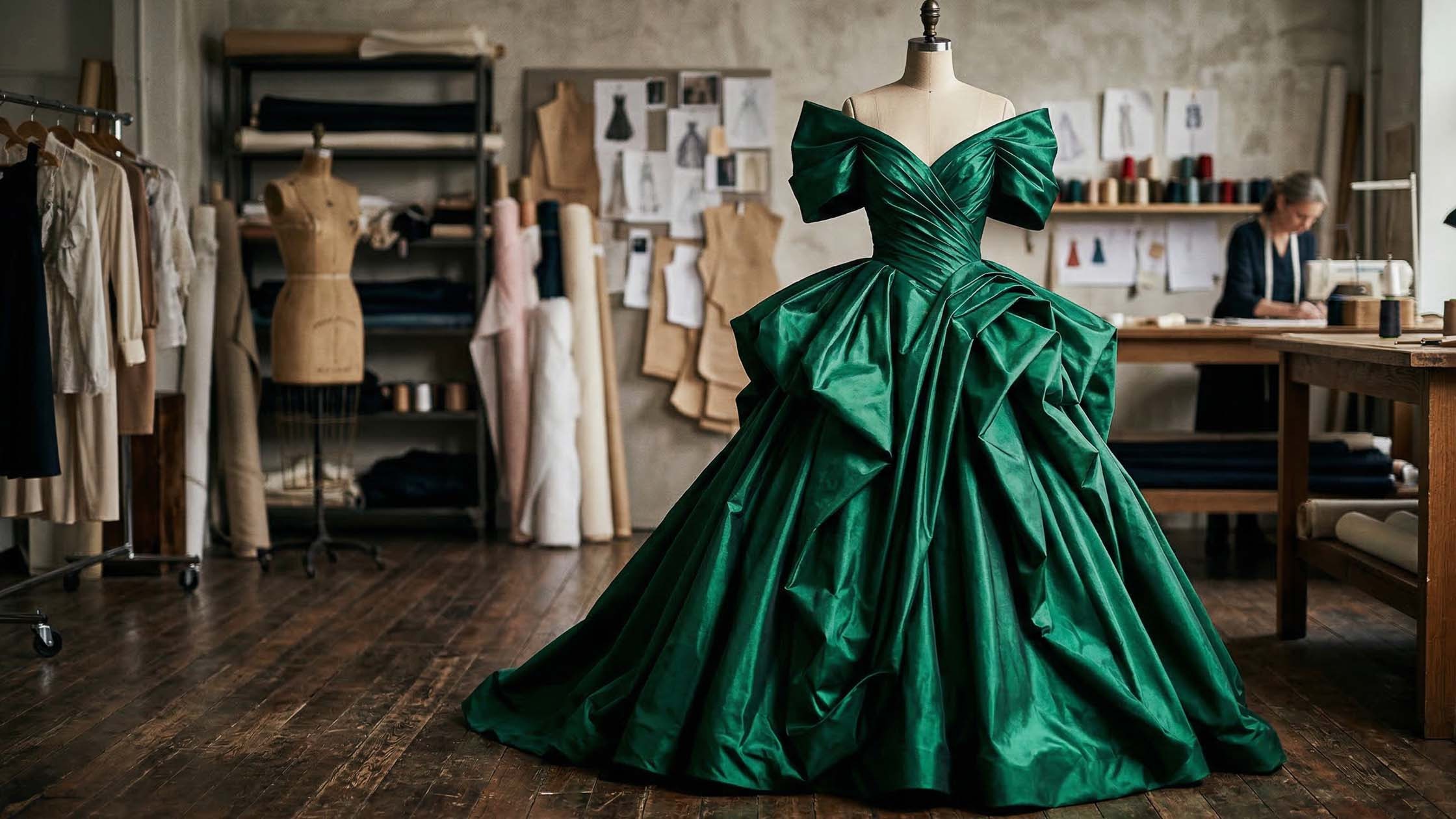
Stiffness is the feature that determines the choice of this material for particular styles. This fabric does not drape softly around the figure. It builds a new form around it. This makes it possible to create architectural, sculptural gowns. You can build voluminous puff sleeves from it. You can shape standing ruffles and deep pleats. The stiff material masks figure imperfections superbly. It keeps the shape given to it all night. This does, however, require a well-thought-out cut. Too much stiff material will overwhelm a petite figure. Proper modelling of darts and construction seams is the basis of the work. It takes practice and precision. The final result rewards the effort put in. You get an outfit with a striking, unforgettable line.
Conscious use of rustle and stiffness opens up new design possibilities. Your outfits will gain a professional and refined character.
Types of taffeta available in fabric shops
In 2026 the textile market offers a wide choice of variants of this material. Each has slightly different properties and uses.
Silk taffeta – uncompromising premium luxury
Natural silk is a raw material of the highest standard. The silk version is an investment in quality and timeless elegance. It is remarkably light while keeping adequate stiffness. It provides excellent air circulation. This guarantees wearing comfort even during celebrations lasting many hours. The sheen of silk is subtle and deep. This material falls beautifully in folds and drapes. It does, however, call for care when sewing and maintaining. It is sensitive to creasing and to water. It is an ideal choice for unique wedding dresses and exclusive evening gowns. It will be appreciated by those looking for top-shelf materials. Buying from a reputable shop gives certainty that the fibres are authentic.
Polyester and synthetic taffeta – durability for years
Synthetic fibres have revolutionised the market for evening fabrics. The polyester version offers a similar visual effect with much greater durability. It resists creasing and mechanical damage. It is considerably easier to keep clean. Modern production technologies in 2026 make it possible to obtain materials with high breathability. Synthetic equivalents are usually heavier and stiffer than silk. They work very well in projects that need strong construction. It is an excellent choice for maxi skirts and corsets. They are also an attractive price alternative to natural silk. This makes it possible to realise spectacular designs on a smaller budget.
Jacquard and crushed taffeta – textures with character
You are looking for a material with an unusual texture. The jacquard variety is a fabric with a raised pattern woven in. It is made on special looms and is an integral part of the material. These are often floral or geometric motifs. It gives an outfit three-dimensionality and richness. The crushed variety has a surface that is creased at the factory. Small, irregular creases create an interesting visual effect. Such a material reflects light superbly and masks any imperfections in sewing. It needs no ironing, which is a huge advantage in use. Both these varieties let you create unconventional, modern outfits. They stand out against plain, solid-colour fabrics.
Choosing the right variant decides the success of the whole project. It is worth analysing the properties of each available option carefully.
Taffeta in the 2026 fashion trends
Watching current trends lets you create modern, sought-after designs. The year 2026 brings interesting interpretations of classic materials.
Red-carpet gowns and inspiration from social media
On the red carpets in 2026, gowns with sculptural forms dominate. Designers are happy to reach for stiff materials to build exaggerated proportions. We are seeing a return of 1980s aesthetics in a modern edition. Social media is full of inspiration showing enormous bows and puff sleeves. Intense, saturated colours reign. Emerald green, cobalt or fuchsia look superb on a shiny surface. The younger generation is rediscovering this material. It pairs elegant skirts with casual wardrobe pieces. This creates an interesting contrast and breaks down the formal character of the fabric. Watching these phenomena gives a fresh view of traditional tailoring.
Which evening gown styles most often use this material?
The stiffness of the fabric dictates certain construction solutions. A-line gowns are the most popular. The flared bottom shows off the properties of the material superbly. We just as often meet princess styles with a tightly fitted bodice and a voluminous skirt. In 2026 asymmetric cuts and deep slits that expose the legs are fashionable. The stiff material allows standing ruffles to be formed on off-the-shoulder necklines. Short cocktail dresses with a puffball cut are also popular. This material does not work in lingerie-style and closely fitted styles. Understanding these relationships makes it easier to choose the right pattern.
Following trends lets you create outfits that answer the market's current needs. Combining classic with modern gives the best results.
Bridal fashion and spectacular outfits for grand occasions
A wedding and a wedding reception are occasions that call for exceptional visual presentation. The choice of the right material for the outfit plays a decisive role here.
Taffeta as the ideal choice for wedding dresses
Designing a wedding dress requires a material with exceptional parameters. This fabric meets these expectations perfectly. Its stiffness allows a majestic, regal silhouette to be built. The smooth surface is the ideal background for rich embellishment with lace or stones. The silk version in cream white or ivory is a classic of bridal fashion. This material falls beautifully in long trains and wide skirts. It guarantees the bride a flawless look throughout the ceremony. The rustle accompanying her steps towards the altar adds gravity and magic to this special moment. It is a choice for women who value tradition and timeless elegance.
Minimalism versus opulence in bridal designs
Contemporary bridal fashion divides into two distinct currents. The first is a return to maximalism and opulence. Enormous volumes, complicated draperies and rich embellishment reign here. The stiff material is the ideal base for building such constructions. The second current is raw, architectural minimalism. The smooth surface of the fabric speaks for itself. The gowns are free of additional decoration. All the attention is focused on the perfect cut and masterly modelling of the figure. Sharp cuts and geometric forms underline the modern character of the design. Both approaches demand a material of the highest quality. Only then will the final result meet expectations.
Choosing fabric for bridesmaids' dresses and wedding guests
Finding the right outfit for wedding guests is a common challenge. A rustling material is an excellent choice for elegant bridesmaids' dresses. It lets you create a coherent look for the whole group. A rich colour palette makes it easier to match the theme of the wedding. Wedding guests happily choose this material for evening outfits. It works superbly at elegant receptions in palatial interiors. It guarantees a flawless look and resistance to creasing during the party. It is worth choosing lighter synthetic variants that give freedom of movement. A well-chosen style will emphasise the figure's assets and ensure comfort all night.
The right choice of fabric guarantees the success of every occasion outfit. It is worth investing in proven, noble materials.
Other uses of taffeta in an elegant wardrobe
The use of this material goes far beyond wedding and ball gowns. It works superbly in many other pieces of an elegant wardrobe.
Stunning maxi skirts and flared midi styles
The skirt is a wardrobe piece that offers enormous styling possibilities. Maxi-length styles sewn from a stiff material make a spectacular impression. They work very well at formal galas and theatre premieres. They need to be paired with a fitted top to keep the proportions of the figure. Flared midi-length skirts are just as popular. They refer back to the aesthetics of the 1950s. They show off the waist superbly and mask wider hips. They are a great base for creating elegant outfits for family celebrations. Using pleats or box pleats further emphasises the volume of the material. It is a versatile wardrobe piece for women of any age.
Elegant jackets, formal corsets and blouses
The stiffness of the material predisposes it to making clothing with a strong construction. Elegant jackets in this fabric are a proposal for businesswomen. They hold their shape superbly and add professionalism to every outfit. Formal corsets require a material that resists stretching. The fabric described here meets this condition perfectly. It is a stable base for sewing in boning and modelling the figure. Elegant blouses with puff sleeves are the hit of the 2026 season. The stiff material makes it possible to achieve spectacular volume around the shoulders. Wardrobe pieces of this kind bring a touch of luxury to everyday outfits. They require precise sewing and attention to detail.
Using noble fabrics in smaller forms is a great way to add variety to your wardrobe. It lets you come into contact with luxury materials more often.
Working with taffeta in a home sewing room
Sewing with demanding materials is a challenge for every tailoring enthusiast. Proper preparation and knowledge of techniques guarantee the success of the project.
How to prepare the material for cutting properly?
Preparation for cutting is the stage that decides the final shape of the outfit. A stiff material needs to be laid out properly on the cutting table. Avoid folding the fabric into sharp creases. Any creases that form are hard to remove. Synthetic versions are worth decatising before cutting. Silk versions require care and avoiding contact with water. Sewing patterns should be pinned densely with fine pins. Thick pins will leave permanent marks in the structure of the material. Cutting requires sharp tailor's shears. Blunt blades will tear the edges and make further work harder. Precision at this stage makes joining the pieces easier and guarantees beautiful-looking seams.
Choosing the right thread and needles for a rustling fabric
The dense weave resists the needle of the sewing machine as it pierces. Choosing unsuitable tools will damage the material. Use thin, sharp Microtex needles. They ensure a smooth passage through the structure of the fabric. Thick needles will leave visible holes in the sewing lines. The choice of thread depends on the type of material being sewn. For silk versions use silk or fine polyester thread. It will provide suitable flexibility and strength of seams. Avoid thick cotton threads. Sew seams slowly and precisely. Every unpicking leaves permanent marks on the smooth surface. The right choice of accessories is the basis of a professional finish.
The most common challenges when sewing demanding materials
Working with stiff fabrics brings specific challenges. The main problem is the edges fraying after cutting. This requires securing the edges immediately with an overlock stitch or binding. Another challenge is easing the material around arcs and curves. The stiff structure makes it hard to lay the fabric smoothly. This requires clipping the seam allowances and careful pressing. Inserting invisible zips is also difficult. The smooth surface shows up any unevenness and strain. This requires precise tacking and careful guiding of the machine. Patience and care let you overcome these difficulties. The experience gained pays off in later complicated projects.
Knowledge of tailoring techniques makes work with any material easier. Precision of execution shows a seamstress's mastery.
How to choose the type of taffeta for your planned project?
Choosing the right variant of the material is a decision that affects the whole creative process. You need to take into account the style of the outfit and the visual effect you want.
Fabric weight and the desired visual effect and volume
Weight describes the heaviness and thickness of the material. Light variants with a low weight work very well in projects that need a lot of gathers. They let you build volume without overloading the figure. This is an excellent choice for puff sleeves and multi-layered skirts. Heavier variants with a high weight are characterised by greater stiffness. They are ideal for creating architectural forms and smooth surfaces. They hold their shape superbly in corsets and flared gowns. The choice of weight must work with the planned style. A material that is too heavy will overwhelm a delicate design. One that is too light will not hold the desired architectural form.
Plain or patterned – which will work better for your outfit?
The surface of the material affects how the whole outfit is perceived. Plain variants in solid colours are the classic of elegance. They let you focus attention on the perfect cut and figure. They work very well in minimalist and modern designs. They reflect light evenly and predictably. Patterned variants bring dynamism and richness to an outfit. Jacquard weaves and printed motifs mask any imperfections in sewing. They do, however, require simpler styles. Complicated cuts will disturb the pattern and introduce visual chaos. The choice depends on the occasion and personal preference. A plain surface gives more scope for styling and choosing accessories.
A conscious choice of fabric parameters is half the success. It guarantees that the vision matches the final result.
Comparing taffeta with other luxury materials
Understanding the differences between exclusive fabrics makes it easier to make the right buying decision. Each material has unique features that define its purpose.
Taffeta versus satin – key differences in sheen and structure
Satin and the fabric discussed here are the two most popular choices for evening gowns. The main difference lies in the structure and the way they fall on the figure. Satin is soft and fluid. It skims the body, emphasising its natural lines. It has a very intense, one-sided sheen. The material discussed here is stiff and holds its shape. It builds volume and stands away from the body. Its sheen is subtler and slightly shimmering. Satin demands a flawless figure and suitable underwear. A stiff material forgives more and lets you model proportions. The choice depends on the desired effect. Satin is sensuality, while a stiff fabric is sculptural elegance.
When to choose flowing silk and when to opt for stiff taffeta?
Natural silk comes in many varieties. Flowing variants such as crêpe or chiffon are synonymous with delicacy and airiness. They are ideal for summer parties and romantic boho gowns. They need a lot of material to create beautiful draping. The stiff variant of silk is a proposal for formal occasions and grand outings. It guarantees a flawless look and a majestic silhouette. Flowing silk follows every movement of the body. The stiff structure stays unmoved, building an architectural form. The decision depends on the character of the celebration and the preferred style. Airiness versus construction is the main dilemma when choosing a luxury fabric.
Comparing properties makes it easier to match the material to specific needs. It lets you avoid disappointment when sewing.
Care and maintenance of evening outfits
Luxury fabrics require proper treatment. Correct maintenance extends the life of garments and keeps them looking flawless.
How to wash and clean soiled taffeta safely?
The method of cleaning depends on the fibre composition of the material. Versions made of natural silk require professional dry cleaning. Washing in water will destroy their structure and deprive them of their characteristic sheen. Synthetic variants are more resistant to water. They can be hand washed in cool water with a mild detergent. Avoid rubbing and wringing the material. This leads to permanent creases and damage to the fibres. Stains should be removed on the spot and immediately after they occur. Always check the manufacturer's recommendations on the label before cleaning. Professional care guarantees the safety of the most expensive outfits in your wardrobe.
Ironing without risk of damaging delicate fibres
Ironing stiff, shiny materials requires caution and a suitable temperature. An iron that is too hot will melt synthetic fibres or scorch natural silk. Always iron garments on the wrong side. Use a protective cotton cloth between the iron and the material. This prevents unsightly shiny patches on the right side. Avoid using steam with natural silk. It can leave permanent water marks on the smooth surface. Synthetic variants tolerate steam ironing better. Iron slowly and lay the material out carefully on the board. Avoid joins and thick seams so they do not leave an imprint on the right side of the outfit.
Storing stiff garments correctly in the wardrobe
The way you store clothes affects how they keep their shape. Stiff outfits need suitable space in the wardrobe. They should not be squashed between other clothes. This leads to permanent creases. Store gowns and skirts on wide hangers with rounded shoulders. This prevents the material bagging around the shoulders. Heavy outfits with a lot of material are worth storing flat in large boxes. Protect them with acid-free parchment paper. This protects the material from dust and from sunlight. Long exposure to the sun causes colours to fade. Correct storage is an investment in the durability of a luxury wardrobe.
Attention to detail at the maintenance stage ensures that garments look excellent. It takes time and the right knowledge.
Styling taffeta gowns and clothes
Putting together a coherent outfit takes a sense of proportion and the choice of suitable elements. A stiff material imposes certain aesthetic limits.
Which accessories go perfectly with a very glossy fabric?
The shiny surface of the material is a strong point of any outfit. It needs to be balanced appropriately by the other elements. Choose accessories with a matte or suede texture. This creates an interesting contrast and prevents an effect of excess. Avoid combining a shiny gown with an equally shiny handbag and shoes. Opt for elegant clutch bags made of smooth leather or velour. For cooler evenings, choose an outer layer in matte wool or cashmere. Shawls and stoles in matte silk will also work superbly. Restraint in the choice of textures lets you show off the beauty of the main material of the outfit. Too much shine introduces visual chaos.
Choosing jewellery and footwear for striking, rustling outfits
A striking outfit needs a suitable jewellery setting. The smooth surface of the fabric is an excellent background for bold jewellery. Large statement necklaces with precious stones or pearls work superbly. With richly decorated gowns, opt for minimalist forms. Delicate earrings and a thin bracelet are entirely enough. Footwear should complete the character of the outfit. With long, flared gowns choose classic pointed-toe stilettos. They visually lengthen the figure and add lightness to heavy forms. Avoid heavy platform shoes and thick heels. They will upset the proportions of an architectural outfit. A precise choice of details shows refined taste.
The right accessories can completely change the character of a garment. This ensures a coherent and elegant look at any celebration.
Taffeta and different types of female figure
Understanding the effect of the material on the proportions of the body makes it easier to choose the right style. Stiff fabrics offer enormous possibilities for modelling the figure.
How does a stiff material visually model body proportions?
The stiff structure of the material allows volume to be built in strategic places on the figure. Material that stands away from the body masks wide hips and heavy thighs superbly in flared styles. Building a wide shoulder line with puff sleeves evens out the proportions of a pear-shaped figure. This material does not cling to the body and does not emphasise its flaws. It does, however, require the waist to be clearly marked. A lack of waist definition with a large volume of material will visually widen the whole figure. Vertical construction seams and darts slim the figure. Conscious use of these properties lets you create an outfit that fits your needs perfectly. The right style can work wonders.
The best taffeta styles for curvier and petite women
Women with fuller figures should choose A-line styles. A flared bottom will conceal the hips, and a smooth bodice will emphasise the bust and waist. Avoid abundant gathers and ruffles around the stomach. Darker, matte variants of the material will slim the figure further. Petite women must be careful with too much volume of stiff fabric. Enormous gowns will overwhelm a short figure. Shorter cocktail dresses or styles with an asymmetric hem will be a better choice. Light puffs at the shoulders will add proportion to a small upper body. Matching the style to height and size is the key to the success of every outfit.
An individual approach to proportions guarantees an excellent look. Every figure will find its ideal style.
A buying guide for those seeking the highest quality
Buying luxury materials requires knowledge and caution. The market offers products of varying quality and parameters.
How to recognise high-grade premium taffeta?
Recognising a premium material requires assessing a few key parameters. A high-grade fabric has an extremely dense, even weave. It is not see-through and has a uniform structure across its whole surface. Its rustle is distinct and clean. The sheen of natural silk is deep and noble. Premium synthetic versions are soft to the touch and allow air through well. Cheap substitutes are as stiff as paper and unpleasant against the skin. It is worth paying attention to the material's country of origin. Italian and French mills are famous for producing evening fabrics of the highest quality. An investment in quality guarantees an excellent final result.
Shopping online – how to judge a material's properties accurately from a distance?
Buying fabrics online requires a careful analysis of the information available. Pay attention to detailed product descriptions in online shops. Reputable shops give the exact fibre composition, the weight and the fabric width. Look at high-resolution photos that let you zoom in on the weave. Look for videos showing how the material behaves in movement. Pay attention to information on the drape and stiffness of the fabric. Order material samples before making a larger purchase. This lets you judge the colour, sheen and texture in your home lighting. Buying from proven suppliers minimises the risk of a mistake.
Why is it worth investing in certified European fabrics?
European textile factories are subject to rigorous quality and environmental standards. By choosing certified materials you can be sure they are safe to use. They contain no harmful dyes or chemicals. European production is a guarantee of respect for workers' rights and the natural environment. Italian silks and French jacquards are synonymous with luxury and craft precision. Their quality leaves cheap products from mass Asian production far behind. The higher price reflects durability and exceptional aesthetic properties. An investment in European fabrics is an investment in the timeless value of your outfits. Conscious consumer choices shape the textile market.
Knowledge of materials is the best protection against a wrong purchase. It is worth using the offer of proven and reputable sellers.
Ecology and sustainable development in the textile industry
In 2026 the fashion industry places enormous emphasis on ecological issues. Conscious consumers look for materials that are kind to the planet.
Ecological innovations in the production of modern materials
Fabric manufacturers are introducing innovative solutions that reduce the impact on the environment. Synthetic versions are increasingly made from recycled polyester. This reduces the use of fossil raw materials and the amount of plastic waste. Dyeing processes are becoming more energy-efficient and need less water. The production of natural silk is also evolving towards sustainable development. Certified farms look after animal welfare and eliminate harmful chemicals from mulberry cultivation. These innovations make it possible to create beautiful materials without harm to the ecosystem. By choosing such products you support positive change in the textile industry.
The timelessness and durability of taffeta in the slow fashion movement
The slow fashion movement promotes conscious, thoughtful purchases. A stiff evening fabric fits this philosophy perfectly. Its remarkable durability allows an outfit to be used for many years. A classic gown in this material resists passing trends and seasonal fashions. Handed down from generation to generation, it gains sentimental and historical value. Resistance to mechanical damage guarantees a flawless look after many wearings. An investment in one excellent outfit replaces the purchase of several garments of poorer quality. This approach reduces textile waste and promotes responsible consumption. True luxury is durability and timeless style.
An ecological approach to fashion is a necessity of our times. Choosing the right materials is a step in the right direction.
FAQ Frequently asked questions about taffeta
Doubts about the properties and use of materials are common. We have gathered answers to the questions that come up most often.
Does taffeta visually add bulk to the figure when worn?
The question of visual bulk depends on the chosen style and the weight of the material. The stiff structure builds extra volume around the body. Using abundant gathers and ruffles in the wrong places will indeed widen the figure. Smooth, fitted bodices with vertical seams will have the opposite effect. They will slim the waist and improve the proportions of the figure. Flared skirts will hide heavy thighs without adding centimetres to them. The key is skilful handling of volume and avoiding a build-up of material at the widest points of the body. A well-cut outfit in a stiff fabric always works in favour of the figure.
Do elegant taffeta outfits crease a lot?
Susceptibility to creasing depends on the fibre composition. Versions made one hundred per cent of natural silk are prone to creasing. Creases form during sitting and wearing. They are a natural feature of this noble raw material and add authenticity to it. Synthetic variants and fibre blends are definitely more crease-resistant. They keep a smooth surface even after many hours of wear. When choosing a material you have to accept its natural properties. Proper storage and transport of outfits in special garment bags minimises the risk of unsightly creases.
How much does genuine taffeta with a silk admixture cost on average?
The price of a material reflects its quality and fibre composition. In 2026 fabrics with an admixture of natural silk are a higher-price product. The cost of one running metre depends on the proportion of fibres and the reputation of the manufacturer. European fabrics with a high silk content cost in the region of several hundred zloty per metre. Fully synthetic versions are much cheaper and easier to get. They are a good alternative for people with a smaller budget. An investment in silk is a guarantee of an inimitable sheen and wearing comfort. It is worth considering this expense when designing exceptional, unique outfits.
Reliable knowledge dispels doubts and makes decisions easier. It lets you be fully satisfied with the projects you carry out.