

- today
- label News
- favorite 0 Likes
- remove_red_eye 2329 Visits
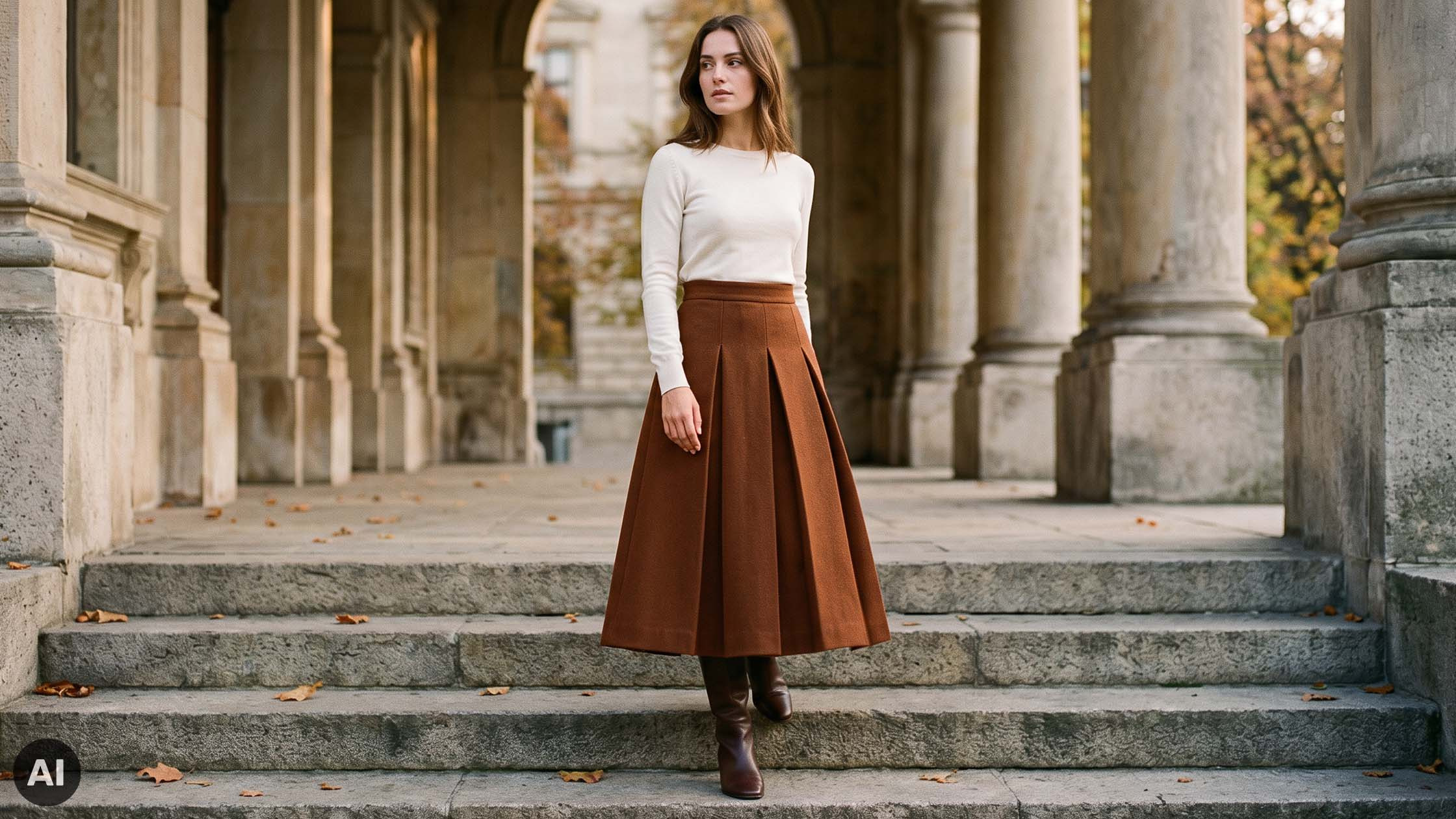
Autumn skirts with box pleats: why choosing the right fabric is the key
The physical properties that decide how long a sculptural shape lasts
The stiffness of the fabric is responsible for keeping the sharp edges of pressed pleats. Soft, fluid fabrics quickly lose their shape under their own weight. Autumn clothing calls for materials with a higher weave density. Such a construction prevents garments from becoming deformed when you sit or move. Your skirt will keep its sculptural character only if you use a fabric that resists when bent. Fibres with high resilience naturally return to their original position. Pay attention to the density of the weave when browsing the offers in premium fabric shops. Compact structures cope better with the moisture in the autumn air. A properly chosen material means the box pleats stay deep and distinct for many seasons.
Stiffness, weight and body: a glossary for the conscious seamstress
Weight describes the heaviness of a square metre of fabric and directly affects its thickness. Autumn projects call for values above two hundred grams per square metre. Body means the impression of fullness and volume when you touch it. Full-bodied fabrics fall beautifully into deep pleats and do not look flat. Stiffness is the ability of a fabric to keep the shape it has been given without additional support. You must analyse these three parameters together before deciding to buy. High weight without stiffness will give a heavy, droopy skirt. A stiff fabric of low weight will resemble paper and crease quickly. Using these terms consciously will make it easier to talk to sellers and to match the fabric precisely to the pattern.
Autumn trends from the catwalks and the functionality of the chosen fabric
Current collections bet on bold silhouettes and architectural shapes. Designers choose fabrics that can build volume around the hips without weighing them down. Autumn fashion combines aesthetics with protection from the cold. Your choice should take into account the thermal insulation offered by thicker weaves. A midi skirt with deep box pleats needs a fabric resistant to the creases that form under outer garments. Long coats and thick jumpers put pressure on the fabric of the skirt. A functional fabric immediately regains its original shape once you take your coat off. Combining trends with a practical approach to the physical properties of fabrics guarantees the success of your sewing project.
Knowing the technical parameters helps you avoid disappointment while sewing. You will build the perfect shape of the skirt through a conscious selection of fabrics.
Taffetas with a distinct structure as a guarantee of perfectly set box pleats
Crisp, smooth surfaces catch the eye and give garments an evening character. This particular kind of fabric works superbly with geometric cuts.
What characterises the highest-quality taffetas in premium projects
True quality shows in a dense weave and a noble sheen. Cheap substitutes have an artificial shimmer and quickly build up static. By choosing taffetas with a distinct structure, you are investing in silk or high-quality blends. They offer unrivalled smoothness and a characteristic sound with every movement. A premium fabric does not come apart at the seams even under great strain. The high density of warp and weft threads creates a compact surface that resists mechanical damage. Luxury versions of this fabric reflect the autumn light beautifully. Using such a material raises the prestige of everything you sew and guarantees it lasts for many years.
How taffeta works on the figure and why it holds a pressed shape so well
The natural stiffness of this fabric makes the box pleats stand away from the body in the way you want. The fabric creates sculptural forms resembling architectural volumes. Pressed edges stay sharp and do not need constant correcting. Taffeta does not fall flat along the legs. The volume it builds is kept whatever the weather. This fabric remembers the shape the iron gives it. As a result the skirt looks flawless even after many hours of wear. Properly cut taffeta shapes the figure and hides its flaws beneath the geometric folds of the fabric.
DIY sewing tips: cutting and safely pressing stiff taffeta
Cutting requires sharp shears and securing the edges against fraying. Use thin dressmaking pins so as not to leave permanent holes in the structure. Sew with a stitch of medium length, using fine Microtex needles. Fuse the waistband with stiff interfacing for better stabilisation. Always press through a cotton cloth. Direct contact of a hot iron with taffeta will cause unsightly shine marks. Match the temperature to the fibre composition of the blend. Press the box pleats in sections, holding them down with a wooden tailor's clapper to set the creases.
Working with this fabric requires precision and proper preparation of your workspace. The end result, a sculptural skirt, rewards the time you spend.
Jacquard fabrics: a wealth of patterns and uncompromising stiffness for cooler days
Complex weaves create raised patterns of high aesthetic value. A thick structure insulates superbly against the cold and holds the shape of garments.
Why jacquard is the ideal choice for autumn skirts with a geometric cut
A multi-layered weave gives this fabric exceptional dimensional stability. By using jacquard fabrics, you can be sure there is no deformation under the garment's own weight. Geometric cuts need a fabric that will keep straight lines and sharp angles. Jacquard naturally stands out, creating the volume you want in the lower part of the figure. The thickness of the fabric makes the box pleats deep and distinct. Autumn chills are no problem thanks to the high weight and density of the weave. Such a skirt does not need extra stiffening petticoats. The fabric itself is a sufficient supporting structure for the whole project.
The most fashionable textures and weaves of the season for the discerning
Autumn promotes botanical motifs and large geometric concave and convex forms. Metallic threads woven into the structure add elegance and brighten matte surfaces. Embossed patterns create a three-dimensional effect visible from afar. Combinations of contrasting colours underline the richness of the weave. Style lovers look for unique pattern repeats that are not available in mass production. Luxury versions combine silk with wool, giving amazing tactile sensations. By choosing such a fabric you invest in a work of weaving art. A skirt sewn from bold jacquard becomes the focal point of any outfit.
Sewing jacquard: how to reinforce the waistband and secure the seams properly
The edges of this fabric have a strong tendency to shed straight after cutting. Overcasting immediately on the overlocker protects the edges from damage. The waistband needs a fusible interfacing of high stiffness. This will stop the fabric from rolling at the waist in wear. The seams joining the individual panels with box pleats must be pressed extremely carefully. Use steam and a heavy clapper to flatten thick seam allowances. When sewing many layers of fabric around the waistband, slow down the machine. Thick denim needles will make it easier to get through the bulk of the weave.
Choosing patterned weaves lets you create clothing with a unique character. The solid construction of the fabric makes it easier to shape complex details.
Classic suiting fabrics for office skirts and smart outings
The office dress code calls for elegance combined with high comfort in use. The right fabrics give a professional look throughout a busy working day.
Wool and its luxury blends: warmth that works perfectly with box pleats
Pure sheep's wool responds superbly to heat treatment. Pressed pleats hold firmly thanks to the plastic properties of natural fibres. A touch of cashmere or silk softens the handle and gives the surface a noble look. Such blends do not itch and are extremely pleasant against the skin. Wool fibres naturally regulate body temperature, preventing overheating in heated offices. The resilience of the yarn means that creases formed while sitting disappear by themselves once the garment is hung on a hanger. Using wool guarantees the longevity of the skirt you sew. It is an investment in timeless elegance and everyday comfort.
Choosing the right weight for business outfits
When choosing suiting fabrics for skirts, you must check their weight so that they drape well. Fabrics that are too thin will be see-through and cling to tights. A weight of three hundred grams is a compromise between durability and comfort. Such a thickness hides the lines of underwear and shapes the figure. Box pleats made of fabric of this weight fall heavily and evenly. You will avoid the skirt flying about with every movement. Heavier fabrics stand up better to everyday use and frequent cleaning. Pay attention to the density of the crêpe weave, which gives the fabric resistance to creasing.
Caring for woollen suiting fabrics after the autumn-winter season
Natural fibres require gentle handling and avoiding high temperatures when washing. Always take such skirts to a professional dry cleaner. Airing in the fresh air effectively removes everyday odours and refreshes the fabric. Use wide hangers with clips protected with felt so as not to crush the waistband. Before putting the garment away for summer, clean it thoroughly of any dirt. Clothes moths are attracted to dirt and the skin cells left on the fabric. Store skirts in cotton covers that allow air to circulate. Proper care will extend the life of your favourite sewing projects by many years.
Classic solutions work in every professional situation. Natural materials repay you with a flawless look if they are properly cared for.
The most frequently asked questions about choosing fabrics for skirts
We clear up doubts about matching fabrics to specific styles. The answers below will help you make your final buying decision.
Which fabric will keep sharply pressed box pleats the longest
The clear favourites in this category remain fabrics with a high degree of stiffness. Closely woven wool with a touch of synthetic fibres has excellent shape memory. Jacquards, thanks to their multi-layered construction, do not lose their shape in wear. Stiff taffeta creates sharp creases that do not disappear even after many hours. Avoid fabrics with a loose weave and low weight. Choose fabrics intended for outerwear or heavy suiting. Using the right temperature and pressure when pressing sets the form of the fibres. Always test how the fabric behaves under the iron on a small piece before cutting the whole thing.
Will viscose and fluid fabrics work for this style
Fluid fabrics completely change the character of a box-pleat skirt. Instead of a sculptural shape you get softly falling waves of fabric. Viscose does not have the natural stiffness needed to keep sharp creases. Pressed pleats will quickly come apart and lose their original shape. Such a choice will only work in relaxed summer projects. Autumn styles need a structure that builds volume. If you care about a geometric look, give up dress fabrics. Using viscose with this style will lead to disappointment at the lack of the visual effect you expected.
How to stiffen a soft fabric so that it keeps its volume
Improving the properties of soft fabrics requires extra construction layers. Underlining the whole piece with thin cotton organza will stiffen the shape without adding thickness. Using a stiff taffeta lining will lift the skirt and give it the volume you want. Reinforce the waistband and the upper part of the hips with a suitably chosen tailoring interfacing. Cutting the fabric on the bias sometimes helps to get a better hang of the pleats. Artificial stiffening will never replace the natural properties of heavy fabrics. This process lengthens the sewing time and complicates the finishing. You will achieve the best results by choosing a fabric that is matched to the demands of the pattern from the start.
Conscious planning of a project eliminates mistakes at the stage of choosing fabrics. Understanding the physics of fabrics is the basis of tailoring mastery.