

- today
- label News
- favorite 0 Likes
- remove_red_eye 1783 Visits
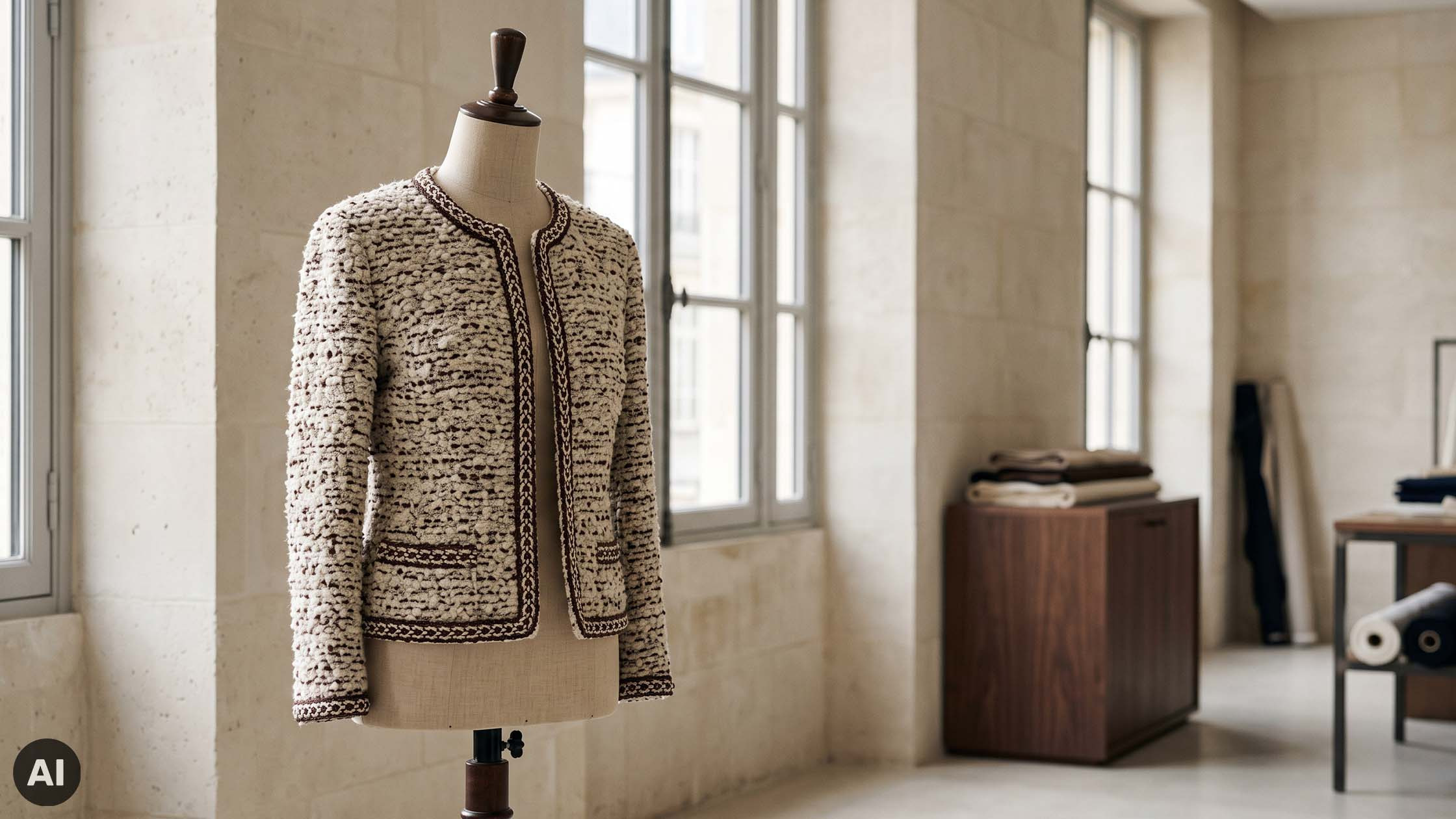
Chanel-style fabrics: why sewing a classic jacket is a tailoring challenge
What characterises the loose bouclé weave
The bouclé weave stands out for its irregular texture and great softness. It is made from yarn of varying thickness and changing tension. Such a structure gives an amazing visual effect and guarantees high comfort in everyday wear. It also means the threads inside the fabric move a lot. When you cut Chanel-style fabrics you will notice the weave loosening immediately at the edges. The fibres do not hold together firmly as they do in smooth shirting cotton. This calls for a lightning reaction from you and immediate securing of every piece you cut out. If you leave the cut-out front of the jacket on the table without proper treatment, its dimensions will change within a few hours. Understanding this specific trait lets you avoid ruining an expensive fabric. Work in batches and secure the edges straight after using the scissors.
The most common problems with fraying while you work
Fraying is a natural feature of loose woollen weaves. When you transfer the pattern from paper to fabric, the warp and weft threads begin to slip out. Every movement of the scissors produces loose fringes on the edges. This way you lose precious millimetres of seam allowance. Uncontrolled fraying leads to deformation of the whole pattern. The pieces stop fitting together when you baste them. It forces you to stretch the fabric under the machine foot. Such a mistake results in wavy seams and a crooked hang of the finished garment on the figure. You must treat the edges with great delicacy, from the moment of cutting until the final stitching together. The right working technique prevents the cut pieces from losing their original shape.
Why a luxury jacket always needs proper stabilisation
Stabilisation is the foundation of bespoke tailoring at the highest level. A soft bouclé fabric on its own will not hold the shape of a complex garment. Without proper stiffening your jacket will quickly lose its shape at the shoulders and waist. It will start to resemble a stretched jumper instead of an elegant blazer. Correct interfacing makes the garment keep the form it was given for many years of wear. It is responsible for the collar sitting perfectly and for a smooth transition across the bust line. Stabilisation protects the delicate fibres from tearing at the seams during everyday movement. This is the stage that separates amateur attempts from professional craft. Using the right interfacings is an investment in the durability of your project.
Understanding the nature of the bouclé weave is the first step to success. Proper preparation will save your project from losing the shape you want.
The tailor's kit: what you need to prepare before you start sewing
Gathering the right materials and tools makes the whole making process easier. A demanding fabric needs specialist extras. Setting up your workstation lets you concentrate solely on precise sewing.
Garment interfacings and knitted interfacings for flexible stabilisation
Choosing the right interfacing decides the final look of the garment. For loose bouclé weaves you must use only knitted interfacings. They differ from ordinary interfacing in that they work together with the fabric. They have stretch in one or two directions. This lets them stiffen the shape without taking away its natural softness. Stiff woven interfacings will make the jacket hard and uncomfortable, like armour. Pay attention to the weight of the interfacing and match it to the thickness of the yarn. An interfacing that is too thin will not support the weight of the wool. One that is too thick will ruin the fluffy texture of the luxury fabric. Testing different weights on scraps is a compulsory stage of preparation.
Basting thread and specialist needles for the weave
Basting is an absolute requirement when working with bouclé. Use soft cotton thread for it, which you can easily remove from the finished piece. Slippery polyester thread damages the delicate fibres when it is pulled out. The choice of machine needle matters hugely for the quality of the seam. Use needles in size 80 to 90 with a slightly rounded point. Such a profile lets the needle push the thick yarns apart instead of cutting them. Cutting a thread in a loose weave leads to a hole that quickly grows. Replace needles with new ones regularly to avoid pulling the fabric while topstitching. A blunt needle will destroy the structure of the weave in a fraction of a second.
Decorative trim tapes and cotton binding
A neat finish to the edges is the hallmark of the French style. The right decorative trim tapes mask imperfections and give the whole a unique character. Use ready-made braids from the haberdashery, or make your own fringe from leftover main fabric. Thin cotton binding will come in handy for securing the inner seams. Using binding prevents the edges inside the garment from fraying. It hides the raw edges and raises the neatness of the jacket's inside. Choose bindings that are soft and easy to shape on curves. Choosing these details carefully makes the work easier at the final stage of sewing.
Carefully choosing sewing notions saves time and eliminates many mistakes. Professional tools guarantee durability and a perfect look for the finished product.
Interfacing and stabilisation: the secret of a jacket that fits perfectly
Stiffening the pieces properly is the most important stage of the work. It guarantees that the shape you want is kept throughout the life of the garment. Using the right interfacing techniques decides the success of your project.
Choosing the right fusible interfacing for loose yarns
Testing the interfacing on a small piece of fabric is a rule you must always follow. Fuse a sample of knitted interfacing to a scrap of bouclé and judge the effect once it has cooled. The fabric should keep its fluffiness and soft handle. The adhesive from the interfacing should not strike through to the right side of the fabric. If you notice shiny dots of adhesive on the right side, you must switch to an interfacing with less adhesive. The temperature of the iron must be matched to the interfacing manufacturer's recommendations. A temperature that is too low will make the interfacing come unstuck after the first dry clean. Take the time for thorough heat tests.
A technique for gently fusing whole pieces without losing softness
Fusing whole pieces takes patience and precision. Do not slide the iron over the fabric as you would when ordinarily pressing clothes. Lay the iron down spot by spot, one place after another. Press lightly and wait a dozen or so seconds. Sliding the iron will stretch the loose weave and deform the cut piece. After the interfacing has been fused over the whole surface, leave the fabric flat on the table until it has cooled completely. Warm adhesive is pliable, and lifting the piece at this moment will ruin your work. Only a cold, stable piece is ready for further work on the sewing machine.
Extra reinforcement of the shoulder lines, armholes and neckline cut-outs
Some zones of the jacket bear greater loads in wear. The shoulder line and the neckline are inclined to stretch under the weight of the garment. In these places you must use extra reinforcement. For this, use narrow strips of interfacing with chain-stitch stitching. Fuse them onto the seam allowances along the edge of the neckline and armhole. The tape will block the fabric from stretching on the bias. It will keep the perfect curve of the neckline and prevent the shoulders from drooping. This simple measure significantly extends the life of the shape of your garment. It protects the construction from distortions caused by everyday wear.
Precise stabilisation is the invisible foundation of elegant clothing. A properly fused fabric works with you in the later stages of sewing.
Decorative trim tapes: how to give a jacket a luxurious look
Decorative edges define the character of clothes inspired by Parisian fashion. These details catch the eye and show high craftsmanship. Applying them correctly takes care and proper planning.
Ready-made decorative trimmings or a unique home-made tape
The choice between ready-made products and making your own trims depends on your vision. Ready-made braids give a quick and predictable visual effect. They only need to be sewn on evenly along the edge. Making your own tape from leftover main fabric guarantees a perfect colour match. It consists of pulling the warp threads out of a narrow strip of fabric until you get the fringe length you want. Such an original trim raises the prestige of your project. The edge of the fringe needs to be secured with a dense stitch to prevent the fabric from unravelling further. Handwork brings great satisfaction and lets you create a one-of-a-kind garment design.
A technique for safely fraying threads out of the main fabric
Begin preparing your own fringe by cutting a strip of fabric exactly along the warp thread. Sew this strip on the machine with a dense straight stitch, one centimetre from the edge. This stitching marks the limit of the fraying and stops the unravelling. Then gently pull out single weft threads with a thick needle or an awl. Make this movement slowly so as not to break the fibres you are pulling out. Once you have the full length of fringe, press it with plenty of steam. The steam will smooth the fibres and give them an elegant look. Protect the finished tape from accidental tangling until it is sewn on.
Hand-sewing the decorative trim step by step
Applying trims on the edges takes handwork. Sewing the tape on by machine flattens it and takes away its three-dimensional character. Pin the tape densely along the edge of the neckline and fronts. Use a single cotton thread and a fine needle. Sew the tape on with a small slip stitch, catching only the underlying layers of the trim and the top layer of the fabric. The stitch should not be visible on the right side. Control the thread tension so as not to draw in the edge of the jacket. Hand sewing lets you lay the trim perfectly on the curves and corners of the garment. It gives you full control over the final look of the edge.
Carefully finished edges are the crowning touch to your work on the form. Perfected details turn a well-made garment into a real work of tailoring art.
Jacquard linings for jackets: hidden elegance in the premium style
The inside of a luxury garment must look just as good as its outside. The right inner fabric protects the seams and makes it easier to put the garment on. Choosing the right lining fabric affects comfort in wear.
Why soft jacquard is the best choice for exclusive clothing
Ordinary polyester linings do not suit fine wool. They build up static and do not let air through, which lowers comfort in wear. Ideal choices are jacquard linings for jackets made of viscose or silk. Jacquard has a woven-in pattern that reflects the light beautifully. This gives the inside of the garment a luxurious character. Viscose lets the skin breathe and draws moisture away superbly. The slippery surface of the jacquard means the jacket slides smoothly on over a blouse or shirt. Such a lining does not restrict movement and works perfectly with the soft form of bouclé. It guarantees the highest standard of finish for your project.
How to match the colour and pattern of the lining harmoniously to multicoloured bouclé
Matching the colour of the inside takes a feeling for aesthetics. Bouclé yarns are made up of many shades. Choose one of the less dominant colours in the outer fabric and match the colour of the lining to it. This will create a cohesive, elegant whole. Choose a lining in an intense colour if you prefer a strong contrast. A contrasting inside is a common device in the collections of well-known designers. The jacquard pattern should not be too aggressive. Delicate floral or geometric motifs go best with a rich outer texture. A muted pattern underlines the classic character of the whole garment.
Sewing in the lining with cascading ease, guaranteeing freedom of movement
The traditional way of joining the lining to the main fabric stiffens the garment. In classic French tailoring a different technique is used. The lining is sewn with loose ease, creating delicate folds at the bottom of the jacket and in the sleeves. This allowance prevents the outer fabric from pulling when you lift your arms. Hand-tacking the lining to the side seams stabilises it inside the garment. The inside does not shift or roll up during wear. This labour-intensive method guarantees the highest level of comfort and a perfect hang on the figure. It takes time, but the results can be seen every time you put the jacket on.
An elegant inside completes the process of creating an exceptional piece of wardrobe. Carefully sewing in the lining shows your professionalism and attention to every detail.