
- today
- label News
- favorite 0 Likes
- remove_red_eye 8068 Visits
The secret of thermoregulation and breathability in linen fibres
The structure of this fibre lets air flow freely close to the skin. The open weave means your skin can breathe even in a sun-baked city. Natural linen acts like a shield against hot air from the surroundings. The cool handle of the cloth brings instant relief on sweltering afternoons. Clothing made from this fibre prevents dangerous overheating of the body in full sun. A loose cut further helps air to circulate continuously beneath the fabric.
Excellent hygroscopicity for a feeling of freshness in the heat
This fabric can absorb moisture amounting to a fifth of its own weight. Even so, it does not feel wet to the touch. Quickly drawing perspiration away from the surface of the skin prevents unpleasant odours from developing. The fibres give the collected water back to the air in no time. The evaporation process cools your body further on muggy days. A damp patch on your back disappears in a fraction of the time other fabrics need to dry.
Understanding these physical mechanisms makes it easier to put together a summer wardrobe. Proper ventilation of the body is the foundation of feeling good.
Premium linen fabrics versus high-street chain fabrics – what makes the difference?
The market offers fabrics of wildly differing quality. A conscious choice of material affects the look and the lifespan of your clothes.
Authentic quality and the strict standards of European cultivation
High-grade yarn comes from controlled crops grown in Europe. The plants grow in an optimal climate that yields long, strong fibres. By investing in premium linen fabrics you get a product that has been tested for strength. Cheap substitutes are often made from short fibres that are prone to breaking. European producers follow generations-old traditions of processing the raw material. Precise weaving prevents unevenness on the surface of the fabric.
Fibre durability that will last through many intensive seasons
Top-class fabrics are characterised by remarkable resistance to abrasion. The structure of the yarn actually strengthens with regular contact with water. Clothes from high-street chains lose their shape after only a few washes. A noble fibre keeps its form through many years of wear. The fibres do not pill at vulnerable spots. A strong weave prevents seams from splitting in fitted cuts.
An ecological process without harmful dyes and chemicals
Production in reputable mills rules out the use of toxic substances. Natural methods of retting the fibres protect water systems from pollution. Safe dyes penetrate deep into the structure of the yarn without harming the ecosystem. Cheap fabrics often contain pesticide residues that irritate sweaty skin. Conscientious producers minimise water use during the production cycle. By choosing certified products you support the sustainable development of the textile industry.
The quality of the raw material translates directly into luxurious comfort in use. The differences in the production process are noticeable from your very first contact with the fabric.
Linen vs. cotton – which to choose for a summer capsule wardrobe?
Putting together a functional wardrobe requires an analysis of the properties of the individual fibres. Comparing the two most popular fabrics makes it easier to make the right buying decision.
Comparing breathability and wearing comfort
Flax fibres have a distinctive structure resembling hollow tubes. This construction provides much better ventilation than densely woven cotton. The fabric does not cling to a sweaty body in summer heat. Cotton holds moisture and becomes heavy on contact with perspiration. The stiff structure keeps the fabric at a certain distance from the skin. This creates an insulating layer that naturally cools the body.
Susceptibility to creasing and differences in everyday care
Cotton is more forgiving when it comes to creases and is easier to iron. Linen calls for a specific approach to everyday care. Creases form faster because of the low elasticity of plant fibres. Ironing these clothes takes longer and needs plenty of steam. Linen fabrics gain a noble look despite their natural creases. The demanding care is made up for by the exceptional durability of the fabric.
The decisive showdown during extreme summer heatwaves
At temperatures above thirty degrees cotton stops doing its job. Wet fabric chills the body unpleasantly and dries slowly. Linen clothing wicks perspiration away instantly and stays dry to the touch. The thermoregulating properties of this fibre save you from fainting. The ability to reflect sunlight is an additional advantage. A light breeze passes easily through the open weave of the fabric.
A conscious choice of fabrics raises the quality of your life in the summer season. Understanding the physical differences helps you avoid painful fashion mistakes.
The ideal linen for dresses – how to choose fabric for your dream project?
Making your own creations requires precisely matching the properties of the fabric to the style. The right decision guarantees the success of the whole sewing project.
The best fabric weight for airy summer outfits
Light fabrics weighing less than a hundred and fifty grams work well in loose cuts. Thin dress linen drapes beautifully in frills and gathers. A medium weight gives better opacity and suits simple office styles. A fabric that is too thick will stiffen the silhouette and rob the outfit of its summer lightness. Fine weaves need carefully finished seams to prevent fraying. The choice of fabric weight decides the wearing comfort of the finished garment.
Popular blends of linen with silk or viscose
Adding other fibres dramatically changes the properties of the raw fabric. A combination with silk gives the cloth a subtle sheen and a soft handle. Such a blend flows beautifully and suits evenings out. A touch of viscose significantly reduces the fabric's tendency to crease. Clothes made from such yarn keep a smart appearance all day at the office. Blends make ironing easier and reduce the stiffness of a new fabric.
Fashionable patterns and floral inspiration straight from social media
Modern printing technology makes it possible to transfer intricate patterns onto a natural base. Botanical motifs dominate the summer collections of well-known European designers. Large floral prints mask the small creases that form during wear. Stripes and geometric shapes bring a modern accent to a traditional fabric. Plain fabrics in pastel shades are the basis for minimalist outfits. The choice of print underlines the character of your sewing creation.
A well-chosen fabric makes work easier at a home sewing machine. The final result depends on matching the fabric to the chosen pattern.
The health benefits of linen you need to know about before you buy
Natural fibres offer benefits that go beyond appearance alone. Wearing the right fabrics supports the proper functioning of your body.
Hypoallergenic qualities and complete safety for sensitive skin
Pure yarn does not trigger allergic reactions in people prone to allergies. The smooth structure of the fibres does not irritate the epidermis during vigorous movement. People with atopic dermatitis feel relief when wearing clothes made from this fibre. The absence of chemical additives in production guarantees safe use. The fabric does not build up static and does not attract specks of dust from the surroundings. An environment free of mites is good for the health of the respiratory system.
A natural shield that blocks harmful UV radiation
The dense weave of plant fibres stops a considerable share of dangerous sun rays. Clothing made from this fibre protects your skin from burns on hot days. Light colours additionally reflect light, preventing the body from overheating. This protection does not weaken with successive wash cycles. The natural filter works reliably on long walks in open sunshine. Thin layers of fabric provide a barrier without weighing down the figure.
A barrier against the growth of bacteria and fungi
The fibres have strong natural bacteriostatic properties. Rapid evaporation of moisture eliminates an environment that favours the multiplication of microorganisms. Perspiration does not break down on the surface of the fabric, which prevents unpleasant odours. Clothes stay fresh even after many hours of wear in the city. These properties work perfectly in conditions of high air humidity. Less frequent washing extends the life of your favourite wardrobe pieces.
The health aspect is an important argument when choosing fabrics for summer. Your body will appreciate safe contact with a natural fibre.
The truth and the myths about wearing clothes made of one hundred per cent linen
Many unfair misconceptions have grown up around this fibre. Understanding the nature of the fabric lets you make full use of its fashion potential.
Does pure natural linen have to feel stiff to the touch?
Raw yarn really does have a noticeable hardness. New clothes feel rough the first time you put them on. This impression is perfectly normal for fabrics without synthetic admixtures. This stiffness is what keeps a beneficial distance between the cloth and the skin. It does not mean a lack of comfort when wearing summer clothing. The fibres give way to the movements of the body and do not restrict freedom.
The phenomenon of the fabric improving with every wash
The structure of the fibres gradually loosens under the influence of water and friction. Clothes become noticeably softer each time they come out of the washing machine. The fabric gains a pleasant handle without losing its original strength. We call this process softening-in, and it is unique to this fibre. After a few months of wear the fabric drapes more beautifully on the figure. The fibres become smooth and gentle on sensitive skin.
Factory solutions that soften the yarn in premium collections
Manufacturers use mechanical finishing methods to improve the handle of the fabric. Enzyme washing removes roughness at an early stage of production. Fabrics that have been decatised do not shrink and are ready to sew straight away. By choosing premium linen fabrics you skip the stage of taming a stiff fabric. Luxurious clothing offers the highest comfort from the very first wear. Softening at the factory does not weaken the structure of the precious fibres.
Knowing the properties of the fibre makes it easier to take sound buying decisions. Time works in favour of your favourite natural clothes.
The problem of see-through fabric – what to watch for when choosing summer fabrics?
Light fabrics often carry the risk of unwanted exposure of underwear. Proper planning eliminates this problem at the shopping stage.
The importance of weave density for the final degree of opacity
Loosely woven fabrics let through more light and warm air. Such a structure helps ventilation, but it reveals what is underneath. Dark colours usually have better opacity than shades of white or beige. A denser weave increases the weight of the fabric and drastically reduces its transparency. Holding the fabric up to the light lets you check its transparency before buying. Thin yarns call for careful selection of seamless, skin-coloured underwear.
In which sewing projects is a lining essential?
Office skirts and fitted dresses need full opacity in every situation. A thin cotton lining solves the problem of light-coloured fabrics being see-through. The extra layer prevents the fabric from bagging at the knees and seat. Loose shirts and beach tunics work very well without an inner finish. Choosing a lining made from a natural fibre preserves the thermoregulating properties of the whole garment. Synthetic undersides defeat the whole point of wearing breathable clothing on the outside.
Anticipating how a fabric will behave helps you avoid stressful sewing mishaps. A well-thought-out construction guarantees freedom of movement in the city.
The charm of noble creases, or why linen has the right to crumple
Creasing is a natural trait resulting from the construction of this tough fibre. Accepting this fact changes your approach to wearing summer clothes.
Why do plant fibres have such naturally low resilience?
Cellulose fibres cannot return to their original shape after being bent. This lack of elasticity means that every fold in the fabric is permanently set. Moisture from the surroundings and perspiration further intensify the formation of deep creases. Sitting or leaning leaves an immediate mark on the surface of the garment. The stiff structure of the yarn breaks at the points of greatest stress. It is a physical phenomenon that cannot be eliminated entirely.
How to embrace creases in the luxury aesthetic of quiet luxury?
Contemporary fashion treats creases as proof of authenticity and high quality. The nonchalant look fits perfectly into the popular trend of quiet luxury. A rumpled shirt signals the ease and self-confidence of the person wearing it. A lack of perfection becomes a desirable element of elegant summer outfits. Affluent consumers deliberately choose fabrics that show off their natural origin. Smooth, artificial fabrics are now associated with cheap mass production.
Simple styling tricks to hide excessive creases
Choosing fabrics with a thicker weave or with an admixture of other fibres reduces the problem. Dark colours and dense patterns effectively mask the way light breaks on creases. Loose, oversized cuts crease far less than close-fitting ones. Misting the fabric with a water spray quickly smooths out the worst creases. Storing clothes properly on wide hangers prevents creases forming in the wardrobe. Small measures let you keep control of how your wardrobe looks through the day.
Understanding the nature of the fabric is the road to fashion success. Creases become your ally in building a unique style.
Proper garment care – how to wash premium linen fabrics correctly?
High-quality clothing needs gentle, thoughtful treatment. Proper washing extends the life of the fibres and preserves their deep colour.
Optimal washing temperature and choice of gentle detergents
The recommended water temperature should not exceed forty degrees Celsius. Water that is too hot makes the fibres shrink and the colours fade quickly. Use mild liquids designed for washing delicate fabrics. Strong detergents and bleaches destroy the structure of natural yarn. Do without fabric softeners, which coat the fibres and reduce their hygroscopicity. The right laundry products protect premium linen fabrics from premature wear.
Protecting the fibres from mechanical damage in the washing machine
Avoid overloading the drum of the washing machine during routine washing. Loosely arranged clothes crease less and do not suffer abrasion. Set the machine to a delicate programme with minimal spin speed. High spin speeds cause permanent creases that are hard to iron out. Wash clothes with small buttons in special protective bags. Do up zips and turn clothes inside out before putting them in the drum. Care over details prevents mechanical damage to the precious fabric.
Why should you categorically avoid the tumble dryer?
The hot air in a tumble dryer is the greatest enemy of natural fibres. Intensive drying makes the fabric shrink drastically and the yarn break. Clothes lose their shape and become unpleasantly stiff. The best method is to dry them flat in a shaded, airy spot. Avoid exposing wet fabrics directly to harsh sun. Hanging damp clothes on wide hangers makes ironing easier later.
Caring for natural fabrics is a ritual that demands your attention. The right washing habits protect your investment in summer clothing.
The art of safely ironing clothes made of natural linen
Bringing a crumpled fabric to perfect condition takes the right technique. Ironing becomes easier when you follow a few proven rules.
The key role of high temperature and a strong burst of steam
Plant fibres call for the highest temperature settings on a household iron. A cool soleplate will not cope with set-in creases. An intense burst of steam loosens the structure of the yarn and makes it easier to smooth. A steam generator does this job far better than a traditional iron. A continuous stream of hot steam penetrates all the layers of a thick fabric. Dry ironing risks scorching the fabric and permanently damaging the fibres.
The advantages of ironing still slightly damp fabric on the wrong side
Do not wait for clothes to dry completely after taking them out of the washing machine. Ironing damp fabric is much quicker and more effective. The water trapped in the fibres evaporates under the iron, smoothing the fabric from the inside. Always iron clothes turned inside out. A hot soleplate causes unsightly shine marks on dark fabrics. Protecting the outer layer preserves the colour and texture of your favourite things.
Correct ironing is the last step in garment care. Well-ironed clothing looks elegant and highly professional.
Using linen in tailoring – from suits to casual shorts
The versatility of this fibre allows a wide variety of wardrobe pieces to be made. The properties of the fabric prove their worth in many everyday business and private situations.
Light clothing for office work in the hot months
A summer office dress code demands elegance despite high temperatures. Jackets made from a natural fibre give a professional look and thermal comfort. Shirts with a simple cut are the ideal base for business outfits. Blends with viscose work well in smart creased trousers, preventing excessive creasing. Light colours reflect sunlight on the way to work. Breathable clothing lets you stay fully focused during long meetings.
Comfortable trousers and airy skirts for holiday trips
Packing a suitcase for a holiday calls for functional, lightweight clothes. Wide palazzo trousers protect your legs from the sun and give freedom of movement. Floaty midi skirts are perfect for evening strolls along the beach. Short shorts with an elasticated waist are the foundation of holiday ease. This fabric dries quickly after washing, which makes it easy to freshen clothes while travelling. Natural creases fit perfectly with the informal atmosphere of holiday resorts.
The wealth of uses makes this fabric indispensable in summer. The right design brings out the best qualities of natural yarn.
Production costs – why is high-grade linen an investment for years?
The high price of the fabric in shops stems from the enormous difficulty of obtaining it. Understanding the production process explains the high value of the finished product.
The complex, time-consuming process of obtaining yarn from the crop
Flax plants need specific soil and climate conditions to grow properly. Harvesting often takes place by hand so as not to damage the long fibres. The retting process, that is, separating the fibres from the stem, takes many weeks. Traditional processing methods are labour-intensive and demand enormous experience. Spinning fine threads from tough fibres is a technological challenge for mills. Weaving a smooth fabric without slubs generates additional production costs.
A commitment to sustainability and an almost zero carbon footprint
Growing this plant does not require intensive irrigation or strong pesticides. The whole plant is used in industry, which eliminates waste. Natural processing methods minimise the consumption of electricity in the mills. The fabric biodegrades completely at the end of its useful life. Local production in Europe shortens the supply chain and reduces exhaust emissions. The higher price is the cost of responsible, sustainable textile production.
Awareness of production costs makes it easier to appreciate the clothes you own. You are buying a product of exceptional durability and a rich history.
International shopping and shipping – how to order European linen online safely?
The search for unique fabrics often means using foreign online shops. Secure transactions are the foundation of successful online shopping.
Recognising quality certificates on foreign platforms
Reputable sellers always give information about the origin of the fabrics they offer. Look for marks such as European Flax, which guarantee cultivation in Europe. The Oeko-Tex Standard 100 certificate confirms the absence of harmful chemical substances. Read product descriptions carefully, paying attention to the fabric weight and fibre composition. Honest shops provide clear, close-up photos of the fabric's texture. Checking certificates protects you from buying cheap fakes from Asia.
Secure payments and fast delivery of fabrics within the EU
Use trusted payment providers that offer buyer protection programmes. Check international shipping costs before adding products to your basket. Reputable shops work with fast courier companies operating across Europe. Parcel tracking lets you monitor the journey of the package from the warehouse to your door. Pay attention to the returns policy in case you receive damaged fabric. Clear complaint rules show a shop's professional approach to its customers.
Online shopping opens up access to the best European textile mills. Proper preparation eliminates the risk of a failed cross-border transaction.
Timeless outfits – what to wear with linen clothing this season?
Building a coherent look requires skill in choosing accessories. The raw texture of the fabric goes wonderfully with certain natural accessories.
Natural accessories that emphasise the raw texture of the fabric
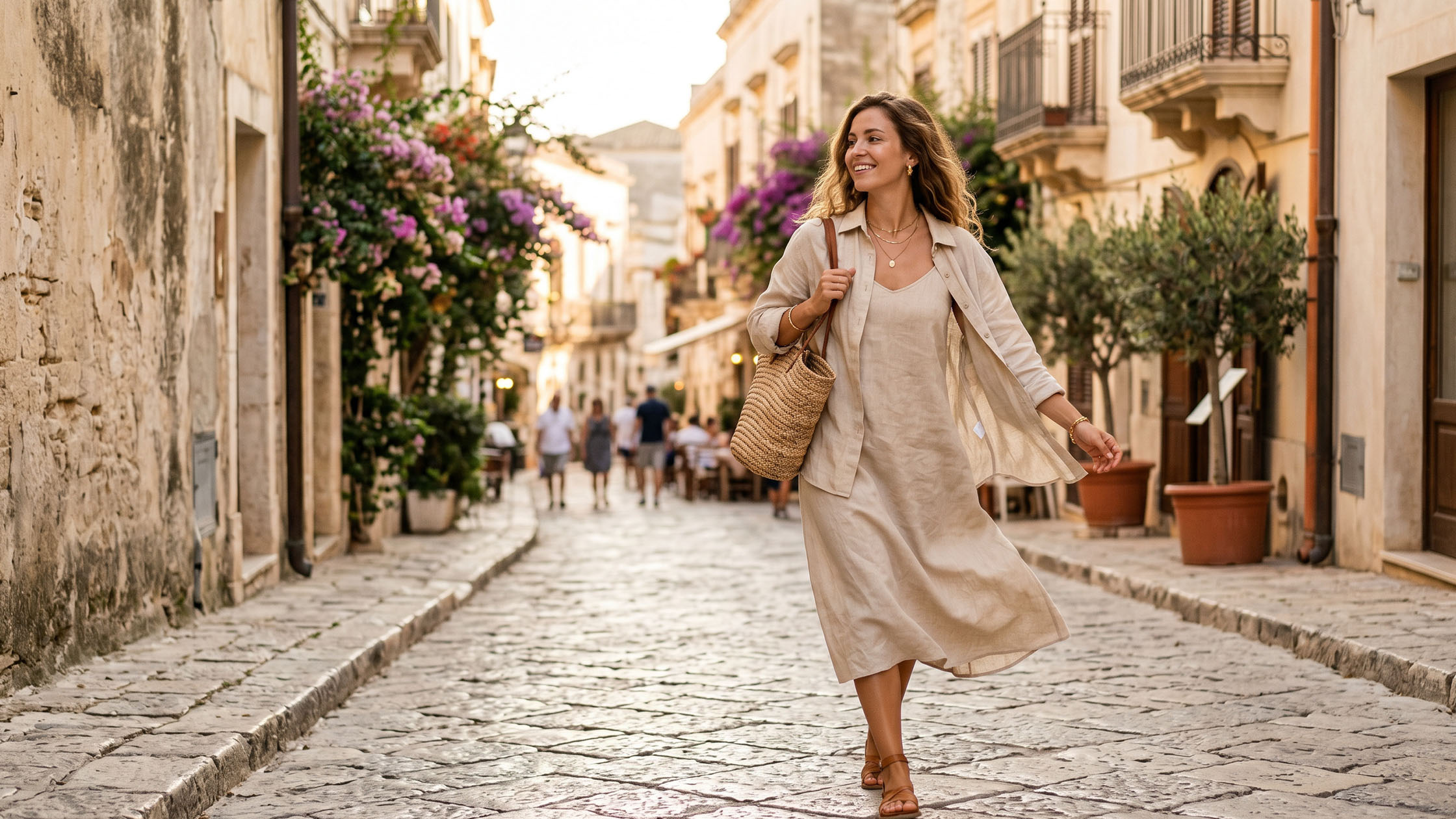
Straw hats and woven raffia bags are a perfect complement to summer outfits. Leather sandals in shades of brown and caramel make a harmonious whole with natural yarn. Avoid heavy, synthetic accessories that will overwhelm a light outfit. Raw leather belts accentuate the waist beautifully in loose dresses. Espadrilles with a jute sole are an excellent choice with wide trousers. Minimalism in your choice of accessories lets the clothes play first fiddle in the outfit.
Jewellery and accessories that harmonise perfectly with natural fabrics
Gold jewellery with a matte finish contrasts beautifully with the matte surface of the fabric. Wooden bracelets and leather-cord necklaces underline an eco-friendly style of dress. Avoid glittering cubic zirconia and heavy plastic ornaments. Delicate pearls go beautifully with smart office jackets. Silk scarves tied in the hair add lightness and colour to an outfit. Subtle touches heighten the desired impression of quiet luxury.
The right backdrop for clothes enhances their visual appeal. Accessories are the finishing touch in refined summer fashion.
FAQ: Expert answers to the most common questions about premium linen fabrics
Let us dispel the last remaining doubts about using natural fabrics. Specific answers help with the everyday handling of a demanding wardrobe.
Does linen shrink a lot the first time it goes in the washing machine?
Natural fibres tend to shrink by around five per cent on first contact with water. Most top-shelf fabrics undergo decatising at the mill. This treatment prevents the dimensions of the finished garment changing after purchase. Always check the information on the label before putting an item in the washing machine. Washing in cool water minimises the risk of unwanted shrinkage. When designing your own clothes, allow a margin of fabric for any shrinking of the yarn.
How can you safely remove stubborn stains from summer clothes?
A quick reaction is the key to dealing with stains on natural fibres. Rinse out fruit or wine stains immediately with cold water. Avoid vigorous rubbing, which damages the structure of the fabric and bleaches the yarn. Use gentle stain removers designed for natural fabrics. Plain laundry soap applied to the spot works well on greasy marks. Leave the product on for a few minutes before the main wash in the machine. Aggressive chemicals burn holes in delicate fabric.
Will a linen dress work at formal occasions?
High-grade blends with silk or viscose are perfectly suited to smart outings. Dark colours and minimalist cuts add gravitas to summer outfits. A properly ironed dress looks extremely refined and luxurious. Natural creases that form while sitting are accepted in a modern dress code. Avoid thin, see-through fabrics for official meetings and weddings. Choosing elegant accessories raises the formal character of the whole outfit.
Practical knowledge makes everyday life with natural fabrics easier. Conscious use brings the most satisfaction from your purchases.