

- today
- label News
- favorite 0 Likes
- remove_red_eye 1536 Visits
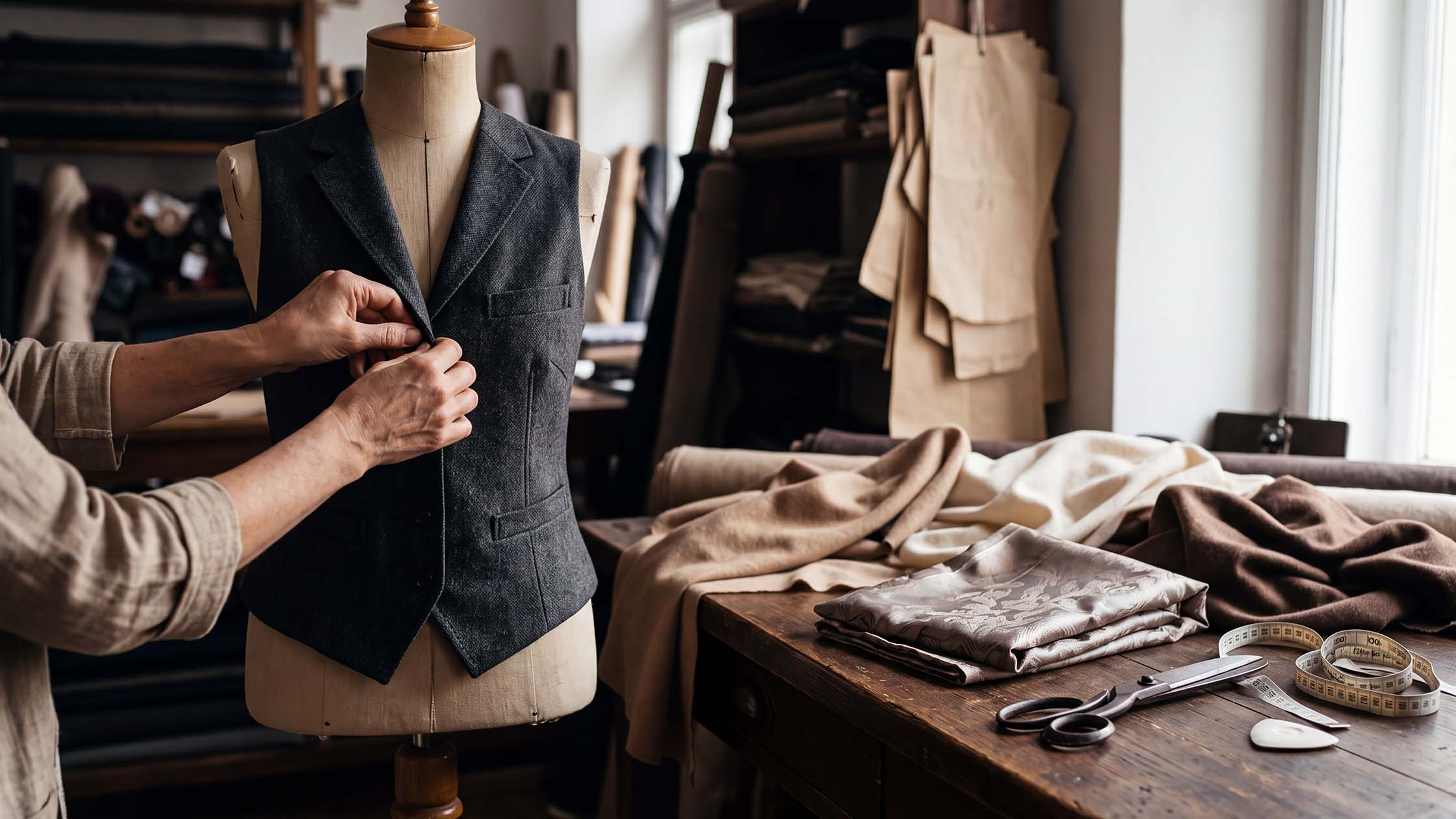
The basics of bespoke tailoring: what guarantees a flawless waistcoat shape?
Why is careful choice of fabrics the key to keeping the shape?
The success of your project depends on the right combination of materials. A poor choice will make the garment quickly lose its original shape and start to wrinkle in an unattractive way. Fine fibres have natural resilience and shape memory. As a result, the garment you sew fits the body perfectly and returns to its shape when you take it off the hanger. Cheap synthetic substitutes suffer permanent deformation from the warmth of your body. Investing in natural fibres guarantees that your work will last for years. The right suiting fabrics for a waistcoat give the construction the proper stiffness. You must remember to keep a balance between the softness and the stability of the fabric. A stiff material will restrict your movement, and one that is too soft will not hold its shape across the chest. Preparing the fabric properly before cutting will prevent it from becoming deformed later. Remember to press all the pieces thoroughly.
Project analysis: matching the weight to the figure and the season
Every project calls for an individual approach to the thickness of the fabric. Heavy wools work very well in the colder months and naturally mask small imperfections of the figure. They provide a strong structure and hold their shape well without extra reinforcement. Summer projects call for lighter materials of lower weight. You then have to pay more attention to the internal construction of the garment. Thin linen or cotton needs proper support in the form of interfacings. Matching the weight to the season guarantees you thermal comfort and proper air circulation. A fabric that is too thick will cause discomfort and excessive sweating in summer. A material that is too thin in winter will not give you proper insulation and will look out of keeping with the rest of the outfit. The choice of the right weight directly affects how the side seams lie. Thicker fabrics need wider seam allowances to avoid bulk.
Understanding the properties of the individual fabrics will make it easier to plan the whole sewing process. A good plan is the basis of a durable and attractive wardrobe.
Which suiting fabrics for a waistcoat work best in practice?
Choosing the right material is the most important decision before you start cutting. Different fibres behave differently in tailoring and in wear.
Fine wool and cashmere for classic elegance and durability
Classic elegance rests on proven, fine materials. Sheep's wool and cashmere are fabrics with excellent thermoregulating properties and high resistance to creasing. These fibres respond naturally to the moisture and temperature of your body. As a result the garment breathes and keeps a flawless look all day. Cashmere gives projects a luxurious finish and exceptional softness. Worsted wool with a smooth finish is ideal for formal occasions. It gives an elegant sheen and works very well with the iron when shaping details. By choosing these materials you invest in a timeless look and durability. Remember to decatise the wool properly before cutting, so that the finished garment does not shrink. Fine fibres call for sharp shears and thin pins. This prevents damage to the structure of the fabric during preparatory work.
Airy linen and breathable cotton in modern summer projects
Warm days call for lighter, more breathable solutions. Linen is an excellent choice for informal gatherings and summer celebrations. It has a characteristic raw texture and a natural tendency to crease. This quality gives garments a relaxed, nonchalant character. Cotton offers a smoother finish and greater stability of form. It works well in sporty, everyday projects. Both these materials need careful pressing and suitable stiffening of the fronts. It is worth combining them with thin interfacings to keep them light while giving the garment the right form. The breathable structure of linen and cotton gives you maximum comfort in the heat. When choosing linen, pay attention to its factory finish. Softened linen drapes much better and is more pleasant to the touch from the first time you put it on.
The importance of the right weave for resistance to creasing
The way the threads are woven has an enormous influence on how a fabric behaves in wear. A dense twill weave increases durability and resistance to deformation. Fabrics in plain weave are usually lighter and more prone to creasing. Jacquard weaves bring a three-dimensional texture and extra stiffness to a project. The choice of weave decides how often you will have to iron your garment. Loosely woven fabrics lose their shape faster and need steaming into shape more often. Pay attention to the resilience of the weave when you shop. A good fabric should quickly return to its original shape after being crushed in your hand. Fabrics with a dense weave are less prone to fraying at the edges. This makes sewing and finishing the inner seams much easier.
The right main fabric determines the final character of your project. Always choose it with regard to its purpose and the occasions you plan to wear it for.
The invisible heart of a garment: jacquard lining fabrics
The inside of a garment is responsible for its structure and comfort in wear. Details that are invisible at first glance bear witness to the tailor's skill.
Why does a decorative lining raise the prestige and uniqueness of a waistcoat?
The inside of a garment is an excellent place to express your individual style. It is worth replacing plain, dull fabrics with something exceptional. This is exactly where richly patterned jacquard lining fabrics work superbly. Such a choice gives the garment a luxurious character and shows attention to detail. Patterns woven using the jacquard technique are durable and resistant to abrasion. A contrasting colour or a bold motif on the back will bring even the most classic front of the garment to life. A decorative inside is the hallmark of top-class bespoke tailoring. Your work will gain a unique look that you will not find in mass production. A carefully chosen pattern on the back catches the eye when you take off your jacket. It is an excellent way to show off your craftsmanship and attention to detail.
Breathability and comfort: luxury silk compared with viscose
Comfort in wear depends to a large extent on the fabric that is in direct contact with your body or shirt. Natural silk is synonymous with luxury and unrivalled comfort. It regulates temperature superbly and is extremely smooth to the touch. Silk needs careful washing and is delicate to work with. Viscose is an excellent and cheaper alternative of plant origin. It offers high breathability and draws moisture away well. Avoid cheap polyester linings. Polyester does not let air through and causes excessive sweating. The choice between silk and viscose depends on your budget and your expectations of durability. Both materials will guarantee you the right slip and comfort. Viscose is easier to cut and sew than slippery silk. It is a safe choice for people starting out in bespoke tailoring.
Internal construction: the role of interfacing and back-shaping tapes
The fabric alone will not hold the right shape without an internal framework. Tailoring interfacing is the basis for building stable fronts. A properly chosen thickness of fusible interfacing prevents the fabric from stretching and gives it the stiffness you want. Shaping tapes sewn into the armholes and neckline protect the edges from deformation. The back of the garment often has an adjustment in the form of a strap with a buckle. It needs reinforcing so that it does not tear when tightened. Carefully fusing the interfacing and using tapes guarantees that the garment will keep its shape through many years of heavy use. Internal construction is just as important as precise outer seams. The interfacing should always be matched to the thickness and elasticity of the outer fabric. An interfacing that is too stiff will create an unnatural shell instead of subtly shaping the figure.
Carefully finishing the inside is an investment in durability and your own comfort. Solid construction is the foundation of good tailoring.
The finishing touch to the outfit: buttons for waistcoats and blazers
Small accessories serve both a practical and an aesthetic purpose. Well-chosen trimmings can completely change the look of a finished project.
How to choose the right size, contrast and material of buttons for the fabric?
Choosing the fastening is an important moment in the design process. The size must be in proportion to the width of the fronts and the distance between the buttonholes. Fastenings that are too large will overwhelm a delicate fabric, and ones that are too small will make everyday use awkward. The ideal buttons for waistcoats and blazers are made of natural materials such as buffalo horn, mother-of-pearl or corozo nut. Plastics quickly lose their shine and lower the standing of the whole garment. Contrasting colours catch the eye and give the project a sporty character. Fastenings in the shade of the main fabric guarantee a formal, understated look. Always buy one spare in case of loss. The size of the fastening affects the proportions of the whole figure. Classic designs call for understated trimmings that do not distract from the quality of the fabrics used.
Craft details: perfect placement and professional stitching of buttonholes
The precision of your detail work shows your skill. Placing the fastenings evenly requires accurate measuring and marking of the points on the fronts. The distances between them must be identical so that the garment sits symmetrically on the figure. Stitching buttonholes is an art that needs patience and the right thread. Hand-stitching with silk thread is a detail characteristic of luxury tailoring. It provides durability and a beautiful three-dimensional look. Machine-made buttonholes, the straight-ended "lingerie" type, are a quicker alternative, requiring a good machine and the right thread tension. Always do test runs on scraps of fabric before working on the finished garment. Correct thread tension while stitching stops the fabric puckering around the slit. Precise execution of this element shows your professionalism.
Details decide how your work is finally perceived. It is worth giving them enough time and attention.
FAQ: the most frequently asked questions about sewing suit waistcoats yourself
Making clothes yourself raises many questions at the stage of planning your purchases. Proper preparation makes the work easier and prevents mistakes.
How much main fabric and lining do you need to sew a classic waistcoat?
Calculating exactly what materials you need spares you stress when cutting. A standard design for an adult man requires about seventy centimetres of main fabric, one hundred and fifty centimetres wide. This applies to plain fabrics without a pronounced pile direction. Checks or stripes need to be matched at the side seams and shoulders. In that case you must add about thirty centimetres of allowance for matching the pattern precisely. The back and the inner pieces will take about seventy centimetres of lining. Always buy ten per cent more fabric than the pattern calls for. This allowance will come in handy in case of a mistake or the need to decatise. Before you visit the shop, prepare an exact list of the items you need. It will help you avoid unnecessary expense and make sure you forget nothing.
How do you care for the finished garment so that it keeps its shape permanently?
Proper care extends the life of clothing and keeps its shape flawless. Natural fibres need gentle treatment and the avoidance of high temperatures when washing. Wool garments are best taken to a professional dry cleaner. You can remove small stains with a damp cloth or a natural-bristle brush. Wash linen and cotton garments by hand in cool water with a mild detergent. Always dry clothes flat, away from direct sources of heat. Store them on wide hangers with a suitable shoulder profile. Regular airing and brushing keeps them fresh without the need for frequent washing. Storing them in covers made of breathable fabric protects clothing from dust and moths. Avoid plastic bags, which trap moisture and cause an unpleasant smell.
Knowledge of how much fabric you use and of the rules of care is the basis of conscious tailoring. Your work deserves proper treatment for years to come.