

- today
- label News
- favorite 0 Likes
- remove_red_eye 2785 Visits
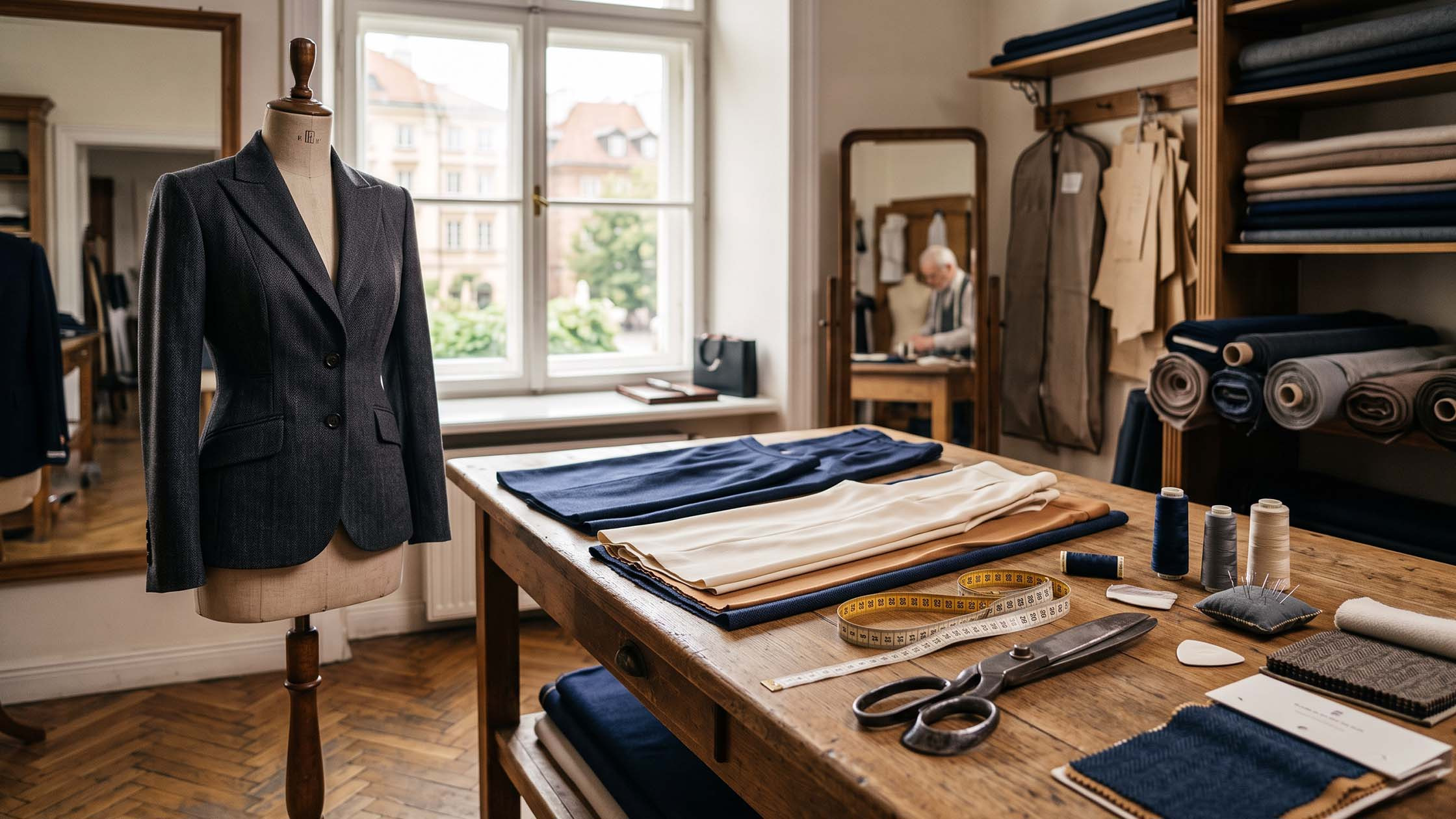
A made-to-measure coat as an investment for years
The advantage of bespoke tailoring over high-street fashion
When you choose mass-produced clothing, you often compromise on the fit across the shoulders or the length of the sleeves. Bespoke tailoring removes this problem completely. A master tailor takes your measurements and builds a pattern that allows for every asymmetry of your body. You have full control over how the garment is made. You decide on the style and the width of the lapels, and you choose specific top-quality coating fabrics . Such a garment serves you for many seasons without losing its shape. High-street clothing quickly loses its form after a few dry cleans. Your made-to-measure piece keeps its flawless look. It is a rational approach to fashion and to your finances.
How to prepare for your first visit to the tailor?
Before your appointment at the tailor's workshop, go through your favourite clothes and think about their shortcomings. Collect inspiration in the form of photos or sketches showing styles that match your taste. Think about the weather in which you plan to wear the new coat. In winter you need thicker weaves, and in early spring lighter yarns. Set your budget for the service and for the fabrics. A good craftsman will ask about your preferences for collar stiffness and pocket depth. Bring a blazer or a thick jumper with you. The tailor will allow for the extra volume underneath when taking your measurements. Such precision guarantees complete freedom of movement in the finished garment.
Careful preparation for the sewing process guarantees satisfaction with the final result. You get a garment cut to the measure of your needs.
Exclusive coating fabrics: how to make the right choice?
Choosing the right material decides how durable your garment is and how it looks. You need to know the properties of the individual yarns before making your final decision.
How the quality of the yarn affects the way a style hangs
Cheap fabrics with a low weight wrinkle and become deformed at the seams. High-quality fibres have the right weight and resilience. As a result the finished garment flows softly over the figure and does not stand away in unwanted places. A dense weave protects against the wind and stops the fabric from bagging at the elbows or seat. Stiff yarns work very well in styles with strongly defined shoulders. Soft, fluid fibres are an ideal choice for cuts tied at the waist. An experienced craftsman always checks the handle of the fabric before cutting. The right pliability of the material allows precise shaping of darts and French darts.
Natural compositions versus synthetic blends
Natural fibres such as sheep's fleece or cashmere provide excellent thermal insulation and let the skin breathe. You do not sweat in them in heated rooms or on public transport. Synthetic additions such as polyester or acrylic lower the cost of producing the fabric. Unfortunately they significantly worsen comfort in wear and cause the surface to pill quickly. A small admixture of polyamide, at the level of a few per cent, is acceptable. It increases the fabric's resistance to wear in places exposed to friction. When you invest in a made-to-measure service, choose one hundred per cent natural compositions. They will give you the highest comfort and a noble look through many years of use.
A conscious choice of material is the foundation of a successful tailoring project. Natural fibres always outclass their synthetic counterparts.
Coat wool in the leading role: warmth and elegance
Traditional sheep's wool is the most popular choice for winter outerwear. It offers unrivalled thermal comfort and an enormous variety of textures.
Which weight of wool works in autumn, and which in winter?
Weight describes the heaviness of a linear metre of fabric. For cool autumn days choose fabrics weighing between three hundred and four hundred grams. They will give you adequate protection from the wind and will not overheat the body. In winter you need a much sturdier barrier against frost. Thick coat wool weighing more than five hundred grams is an excellent choice for January and February. Such a fabric forms a kind of armour that resists low temperatures. Remember to take the weight of the garment itself into account. A material that is too massive in a long, ankle-length cut will weigh on your shoulders. It is worth discussing this with your craftsman before buying a particular COUPON of fabric.
The most popular wool weaves for the 2026 season
Current trends clearly favour bold, full-bodied structures. The hit of tailoring studios is the diagonal weave, characterised by slanting ribs. It gives the fabric high resistance to creasing and reflects the light beautifully. Another popular choice is classic Flausch, with its napped, smooth surface. It looks extremely elegant and suits formal business outfits. Lovers of retro style readily reach for tweed with its rough finish and flecked colours. This weave hides small stains very well and gives the garment an informal character. The choice of weave affects the final visual impression of your project and how you will use it day to day.
Matching the thickness and structure of the wool to the season guarantees comfort in wear. The right weave underlines the character of your outfit.
Luxurious cashmere and virgin wool for the discerning
If you are looking for the highest quality, it is worth considering the fine varieties of yarn. They guarantee exceptional softness and a prestigious look.
The unique properties of soft premium fabrics
Cashmere, obtained from goats living in the extreme conditions of the Himalayas, is synonymous with luxury. Its fibres are several times finer than a human hair. They provide incredible thermal insulation at minimal fabric weight. A coat made from this material is as light as a feather yet amazingly warm. Virgin wool, from the first shearing of young sheep, is characterised by similar delicacy. It does not itch and is extremely pleasant against the skin. Both these fabrics take dye beautifully. As a result the colours are deep and rich. Investing in such fine materials guarantees a garment of exceptional aesthetic and practical qualities.
Caring for fine coating fabrics
Delicate fibres need proper treatment to keep their original appearance. Washing them in a household washing machine is strictly forbidden. Water and detergents will permanently ruin the structure of cashmere and make it shrink. Any stains should be entrusted to a trusted dry cleaner who specialises in premium clothing. For everyday care, it is enough to air the garment regularly in the fresh air. This allows the fibres to regain their resilience and get rid of unwanted odours. It is worth getting a special natural-bristle brush. Gentle brushing with the nap removes dust and prevents unsightly knots from forming on the surface of the fabric.
Fine yarns offer the highest level of comfort and beauty. They require conscious, gentle care.
Fabrics for transitional coats and spring trench coats
The period between spring and autumn calls for lighter solutions that protect against changeable weather. The right choice of fabric will protect you from the wind and unexpected rain.
Heavier cotton and fine linen in a new guise
A classic trench coat needs a fabric with a compact structure that holds its shape. High-weight gabardine-type cotton is ideal here. Its dense twill weave naturally repels water and protects against gusty winds. Cotton is kind to the skin and easy to care for. Linen in a coating weight is a proposal for the warmer months. It is characterised by high breathability and a distinctive raw texture. Modern methods of treating linen reduce its tendency to crease. It is often combined with silk or cotton to give it greater stability. Such blends work very well in looser, oversized styles.
Waterproof finishes for natural yarns
Traditional fabrics undergo specialist processes that increase their functionality. Hydrophobic impregnation makes raindrops run off the surface of the fabric without penetrating its structure. This process does not affect the breathability of cotton or linen. You gain protection from moisture while keeping full thermal comfort. Another solution is waxing cotton, known from British hunting clothing. It gives the fabric a distinctive handle and one hundred per cent waterproofing. Waxed coats develop a unique patina over time and mould themselves to the shape of the wearer's body. It is an excellent choice for people who value a rustic style and high practicality.
Lighter fabrics with the right finish are the basis of a transitional wardrobe. They combine elegance with protection from the whims of the weather.
Linings: the invisible but key element of a coat
The inside of a garment is just as important as its outer layer. It determines comfort in wear and affects the durability of the whole tailored construction.
Why does a lining matter so much for comfort?
The inner layer of fabric separates your body from the rough seams and the supporting structure of the garment. It provides the right slip, making it easier to put on and take off the coat. Without it the garment would catch on jumpers and blazers, making it hard to move freely. Good linings protect the main fabric from bagging at the elbows and seat. They take up the strain that arises when you sit down or drive. They also act as an additional thermal barrier, keeping the heat close to the body. Choosing the right inside is a decision that affects the everyday use of your new garment.
Breathability and hygroscopicity of inner fabrics
The most expensive wool will not do its job if you line it with polyester that does not let air through. An artificial inside creates a greenhouse effect, causing excessive sweating and discomfort. You must choose inner fabrics with high hygroscopicity. The ability to absorb and release moisture is a feature of natural fibres and of man-made fibres of cellulose origin. They let the skin breathe and keep the body at an optimal temperature. Getting into a heated car on a winter day, you will not feel a sudden blast of heat. The air circulation between the layers of fabric will be preserved.
A well-chosen inside raises the practical qualities of any coat. It gives freedom of movement and optimal thermoregulation.
How to match linings perfectly to wool and cashmere?
Combining the outer and inner layers takes a feeling for aesthetics and technical knowledge. You must take into account both the colours and the physical parameters of the two fabrics.
The golden rule of contrast, or safe tone-on-tone pairings?
Choosing the colour of the inside is an excellent opportunity to personalise your project. The classic approach is to choose a shade close to the colour of the main fabric. A tone-on-tone combination looks extremely elegant and discreet. Bolder customers opt for strong contrasts. A navy coat with a burgundy or bottle-green inside gains a unique character. It is worth considering patterned linings, in check or with floral motifs. Such a hidden detail pleases the eye every time you take the coat off and bears witness to the craftsmanship of the product.
Matching the thickness of the inner layer to the outer one
The weight of the two layers must work together. A thick winter Flausch needs a sturdy, full-bodied lining in a diagonal weave. An inner fabric that is too thin will soon wear through from friction against the stiff wool. With light spring trench coats the situation is the reverse. A thick lining will upset the proportions and weigh down the delicate cotton. Here you should use thin, floaty fabrics in a plain weave. The tailor always assesses the resilience of both materials before joining them. This prevents the garment from puckering at the hem and guarantees that the whole thing falls perfectly.
A well-considered pairing of the two layers determines the harmonious look of the garment. Aesthetics must go hand in hand with technical parameters.
Viscose, silk or acetate lining: which to choose?
The market offers several kinds of lining fabric with differing properties. Learn their advantages and drawbacks before making your final decision.
Natural silk: luxurious slip and thermoregulation
Silk is the absolute peak of the hierarchy of finishing fabrics. It is characterised by incredible smoothness and a subtle sheen. It provides excellent slip, making it easy to put the garment on over thick knits. Its greatest advantage is natural thermoregulation. In winter it warms, and on warmer days it gently cools the skin. Remember that it is delicate. A silk lining in a garment worn daily for work will soon wear through at the seams. It is an ideal choice for luxurious evening and formal coats worn only occasionally. It also needs specialist dry cleaning.
Viscose and cupro as durable alternatives for coats
Viscose is a man-made fibre obtained from natural wood cellulose. It combines the advantages of natural fibres with high durability. It breathes excellently and does not build up static when worn. It is the most common and most rational choice in bespoke tailoring. A higher-performance variety of viscose is cupro, known as vegan silk. It is made from the cellulose found in cotton seeds. Cupro has a beautiful matte sheen and exceptional softness. It is extremely resistant to stretching and abrasion. It is an excellent compromise between the luxurious look of silk and the practical durability of viscose.
Viscose and cupro are the most practical solutions for everyday use. Keep silk for special occasions and luxury projects.
Coat construction and how the fabric behaves
The style of a coat must go together with the physical parameters of the chosen material. Not every fabric will work in every tailored cut.
The classic tailored overcoat and stiff, heavy fabrics
The classic tailored overcoat (the Polish dyplomatka) is the most formal and fitted cut in both men's and women's wardrobes. It needs fabrics of high density and stiffness. A yarn that is too soft will not hold a sharp shoulder line and distinct lapels. Thick Flausch or wool with a touch of fine camel hair is ideal for this style. A stiff material allows the waist to be shaped precisely and a flawless form to be kept all day in the office. The construction of the overcoat relies on numerous darts and seams that shape the figure. A firm fabric makes the craftsman's work on these details easier.
The wrap-coat cut: which fabrics work best?
The wrap-coat cut is characterised by having no buttons and by being tied at the waist with a wide belt. This relaxed style calls for materials with completely different properties. Stiff fabrics will create unattractive folds where it is tied and visually thicken the figure. Here you need to opt for soft, fluid fibres. Pure cashmere or blends of wool with alpaca work superbly. Their pliability allows the fabric to be draped softly around the waist and the fronts of the coat to fall freely. Such a choice guarantees a nonchalant and extremely feminine look.
Understanding the physics of the fabric lets you choose the ideal style. A consultation with your craftsman will save you from a design mistake.
Details that underline the quality of a coating fabric
The finish of a garment shows its class and its craft origins. Well-chosen trimmings raise the prestige of the whole project.
Horn and mother-of-pearl buttons and metal finishes
Plastic fastenings can spoil the effect of the most expensive cashmere. Bespoke tailoring uses only natural materials. Buttons made of buffalo horn are a classic of the genre. Each has a unique pattern and shade, which adds character to the garment. For lighter trench coats, mother-of-pearl buttons are used, reflecting the light in a noble way. On coats of military origin, such as pea coats, heavy metal buttons with an embossed crest look superb. The colour and texture of the buttons should match the shade of the fabric and the style of your wardrobe.
Cuffs, collars and precise topstitching
Hand-finished edges are the hallmark of tailoring studios. Topstitching, the visible seam running along the lapels and cuffs, stops the fabric from delaminating. Done by hand with a thick silk thread, it makes a beautiful decorative detail. The shape of the collar and the width of the cuffs are matched to the proportions of your face and the length of your arms. The craftsman takes care to match the pattern perfectly at the joins between pieces. In check garments, the horizontal and vertical lines must run smoothly across the seams. This takes enormous precision and uses more fabric during cutting.
Precise details and natural trimmings bear witness to the craftsman's skill. They are the finishing touch to your project.
Premium tailoring in the age of international shopping
Access to luxury materials is no longer limited by geographical barriers. You can get the yarns of your dreams from anywhere in Europe.
How to order fabrics online without touching a sample?
Buying an expensive material online calls for caution and trust in the seller. Pay attention to accurate descriptions of technical parameters such as weight and composition. Reputable online shops provide high-resolution photos that show the texture and weave close up. It is worth watching videos that show how the fabric behaves in movement. You will see how the yarn drapes and reflects the light. If in doubt, contact the shop's staff. The experts will help you judge whether the COUPON you have chosen will work for the style you plan.
Safe and fast shipping of fabrics across Europe
Shops serving international customers, such as designers from Germany or France, maintain the highest logistical standards. Ordered COUPONS are packed in rigid tubes or boxes that prevent creasing in transit. The ordering process is optimised for users from different countries. Delivery costs and times are clearly stated before the transaction is finalised. Thanks to cooperation with global courier firms, luxury fabrics reach customers within a few working days. The language barrier and distance have ceased to be an obstacle to realising your sewing dreams.
Modern sales platforms make premium fabrics easier to get hold of. The ordering process is safe and intuitive.
Ecology and sustainability in coat fashion in 2026
Environmental awareness shapes the modern approach to clothing production. Consumers are looking for solutions that are kind to the natural environment.
Certified farming and ethical sourcing of fleece
Discerning customers pay attention to the origin of the materials their clothes are made from. Reputable yarn producers use wool from farms that apply ethical shearing methods. Certificates confirm care for animal welfare and the absence of harmful pesticides on the pastures. Similar standards apply to the production of linen and cotton. By choosing fabrics from certified sources you support responsible farming. You can be sure that your garment was made with respect for nature and for the workers involved in the production process.
Garment longevity as the best form of conscious consumption
Bespoke tailoring fits the idea of sustainable development by creating clothes meant to last for years. Instead of buying a new coat every season, you invest in one perfectly made piece. The high quality of the materials and the craftsmanship guarantee resistance to wear. If it is damaged, a craftsman can easily repair the seams or replace a worn lining. A made-to-measure garment does not end up in landfill after a few months of use. It is an investment that pays back over time and genuinely reduces your carbon footprint.
Ethical sourcing of materials and the durability of products are the foundations of modern fashion. Conscious buying decisions protect the natural environment.
Classics versus the latest runway trends
When you decide on a sewing service, you face a choice between timeless elegance and seasonal novelties. It is worth finding a happy medium that suits your style.
A timeless colour palette: from camel beige to navy
When investing in luxury fabrics, it is safest to bet on classic colours. The camel shade is an absolute icon of elegance that suits most types of complexion. It brightens the face and goes superbly with the autumn atmosphere. Navy is a versatile choice for business and formal outfits. It inspires trust and combines easily with other items in your wardrobe. Greys in shades of anthracite or ash are a great alternative to overwhelming black. These colours resist passing fashions and guarantee that your coat will look stylish for many decades.
Patterns, checks and herringbones that reign this season
If you already have plain coats in your wardrobe, it is worth experimenting with bold patterns. The classic herringbone gains new life thanks to an enlarged scale and contrasting colour combinations. It gives the garment a three-dimensional structure and catches the eye. The Prince of Wales check is a suggestion for lovers of British retro style. It works very well in informal styles and sporty blazers. When choosing a patterned fabric, remember to match the scale of the motif to your figure. Small patterns suit shorter people, while large checks look better on tall figures.
Classic colours guarantee versatility and timelessness. Patterns add character and let you stand out from the crowd.
How to care for a wool coat with a silk lining?
Luxury fabrics need a proper care routine. Following a few rules will extend the life of your favourite coat.
Professional cleaning and daily brushing
Avoid frequent visits to the dry cleaner. Aggressive solvents dry out natural fibres and rob them of their resilience. Take the garment for cleaning only in the case of heavy soiling, or once at the end of the season. The basis of daily care is brushing. When you get home, hang the garment on a wide hanger and run a natural-bristle brush over it. This removes dust and dried mud. Brushing lays the nap in one direction, restoring the fabric's original lustre. Remove small stains locally with a damp cotton cloth.
Storing heavy coats outside the summer season
Preparing a garment properly for its summer rest prevents moth attacks and deformation. Always freshen the coat before putting it away in the wardrobe. Insects are drawn to the remains of perspiration and skin cells left on the fabric. Use only wide wooden hangers with shaped shoulders. They will stop the fabric from bagging around the shoulders. Protect the garment with a breathable cotton or linen cover. Avoid plastic bags, which trap moisture. Put sachets of dried lavender or cedar blocks inside the cover to repel pests.
Regular, gentle care preserves the beauty of natural fibres. Proper storage protects your investment out of season.
FAQ: the most frequently asked questions about designing coats
Customers of tailoring studios often ask similar questions before they begin working together. Below you will find answers to the most important of them.
How many metres of fabric are needed for a long women's coat?
Fabric consumption depends on several factors. They include your height, the planned length of the coat and the width of the chosen bolt of fabric. As a rule, a coat reaching mid-calf for a person of average height needs from two and a half to three linear metres. If you choose a fabric with a large check, you need to add an extra half a metre to match the pattern at the seams. Roomy styles with a wide collar and patch pockets also require more fabric. The exact calculations are always made by the tailor after taking measurements and agreeing the construction details.
Is a detachable lining a good solution for a freezing winter?
An extra insulating layer fastened with a zip or buttons makes a garment more versatile. It lets you wear one coat from early autumn to late spring. In winter you fasten in an insulating layer of quilted viscose or thin felt and gain additional insulation. In spring you take it out and enjoy a light transitional coat. Remember that the fastening system stiffens the construction of the garment. It also requires the coat to be sewn with a little extra ease to accommodate the additional layer. It is an excellent solution for people looking for maximum functionality in a single garment.
Clearing up doubts makes it easier to decide to sew your own coat. Technical knowledge helps in planning the budget and the style.